March – April
Snowmelt and the first spring rain. Flow rising, the gorge cold and quiet, and the fall at perhaps a third of its summer volume.
 Start your enquiry
Destinations / Henan / Field note
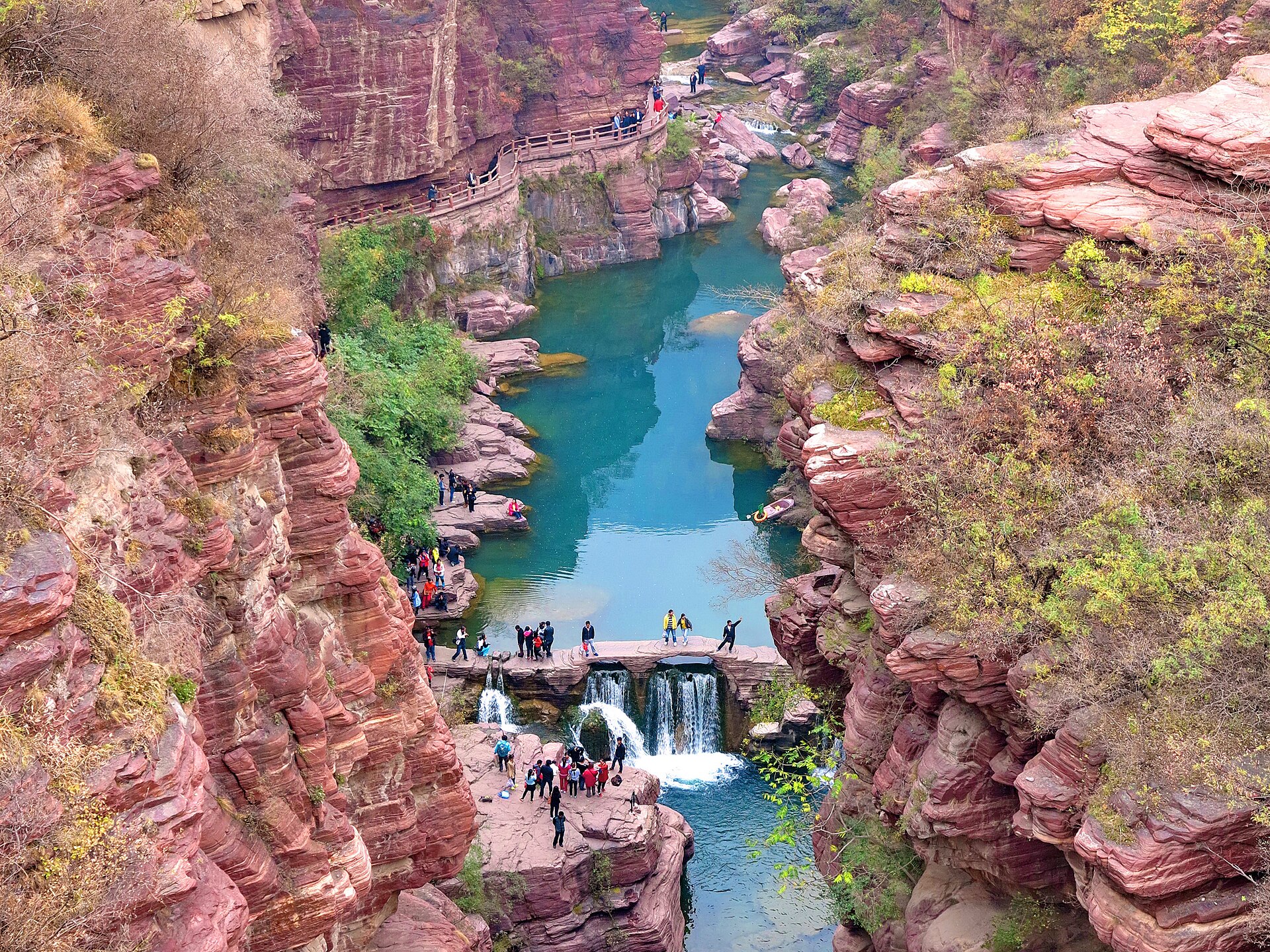
Three hundred and fourteen metres of falling water at Yuntai, in a gorge that is dry for part of the year. What feeds it, when it runs, and why the photograph is a seasonal document.
Explore the guide ↓Northern Henan · Yuntai · field note
The Yuntai waterfall is the highest single drop in the Taihang and one of the highest in China: 314 metres from the lip of a limestone amphitheatre to the floor of Quanpu Gorge, in one unbroken fall. It is the reason the valley is a 5A scenic area and the reason most people photograph Yuntai at all.
It is also a seasonal object. The catchment above it is small — a few square kilometres of plateau — and the fall depends directly on rain and snowmelt rather than on a river. That means it has a spring snowmelt season, a summer monsoon peak, an autumn decline and a winter low, and the difference between the peak and the low is the difference between a waterfall and a wet streak on a wall.
Four seasons of the same cliff.
Snowmelt and the first spring rain. Flow rising, the gorge cold and quiet, and the fall at perhaps a third of its summer volume.
The best balance: decent flow, dry weather, and before the summer crowds. The month the fall most reliably matches its reputation.
Peak flow, and the only time it is genuinely loud. Also the wettest, busiest and most closure-prone weeks of the year.
Falling steadily, with clear water and the best light. Still impressive in early September; a thread by the end of October in a dry year.
Low to nothing. In cold snaps the seepage freezes against the wall and the gorge becomes an ice-climbing curiosity rather than a waterfall.
A small catchment and a managed flow.
The plateau above the amphitheatre drains a limited area, which is why the fall responds to individual storms rather than to a river regime.
In dry periods the park has used auxiliary supply to keep a flow over the lip, and describes the practice as protecting the visitor experience. It is not a natural flow in those weeks, and it is worth knowing before you plan a trip for it.
In January and February the fall can freeze into a column on the wall, which is its own attraction and the reason some climbers come.
How to plan for a waterfall.
Build the Yuntai day around the red gorge, which does not depend on rainfall, and treat the waterfall as the bonus. The gorge is the reliable thing.
The state of the fall is a local fact, not a published one. Ask shortly before you travel rather than six months earlier.
A wet week fills it; a thunderstorm closes the valley. The best conditions are a wet month followed by two dry days.
Tell us when you are coming and whether the fall is the point or the bonus. If it is the point, the month matters more than the route.
Start my journey brief ↗