The reserve climbs from a dry river valley at 2,000 metres to permanent ice above 5,000, and compresses six vegetation zones into a morning's walk. That is why the birdlife is better here than the scenery alone would suggest.
Because the valley floor sits at 2,900 metres and the summits at 6,032, a walk from the gate town to the high lakes passes through almost the whole range of Himalayan vegetation in a single day. The bands are not gradual: spruce forest gives way to rhododendron scrub, which gives way to meadow, which gives way to bare scree, within a couple of hours of walking.
For a visitor that means the wildlife is not somewhere else. It is on the route, in the first hour and the last, and the difference between seeing it and not is mostly about time of day and noise.
The six bands.
Altitude, vegetation, and what uses it.
Band
Metres
Vegetation
What to look for
Dry valley scrub
2,000–2,900
Berberis, spiraea, dry grasses
Bharal in winter, marmots, upland buzzard
Mixed forest
2,900–3,500
Pine, spruce, birch, maple
Blood pheasant, serow, mixed tit and nuthatch flocks
Subalpine conifer
3,500–4,200
Spruce and fir, juniper, oak
Musk deer, Sichuan hill partridge, white eared pheasant
Scrub and meadow
4,200–4,600
Rhododendron, kobresia turf, knotweed
Bharal, Tibetan snowcock, plateau pika
Scree and cushion plants
4,600–4,800
Saussurea, rhodiola, blue poppies
Snow leopard (rare), bharal, rosefinches
Ice
above 4,800
None
Lammergeier overhead, nothing on the ground
The pheasants, which are the reason birders come.
Four species, all of them on the valley floor.
White eared pheasant
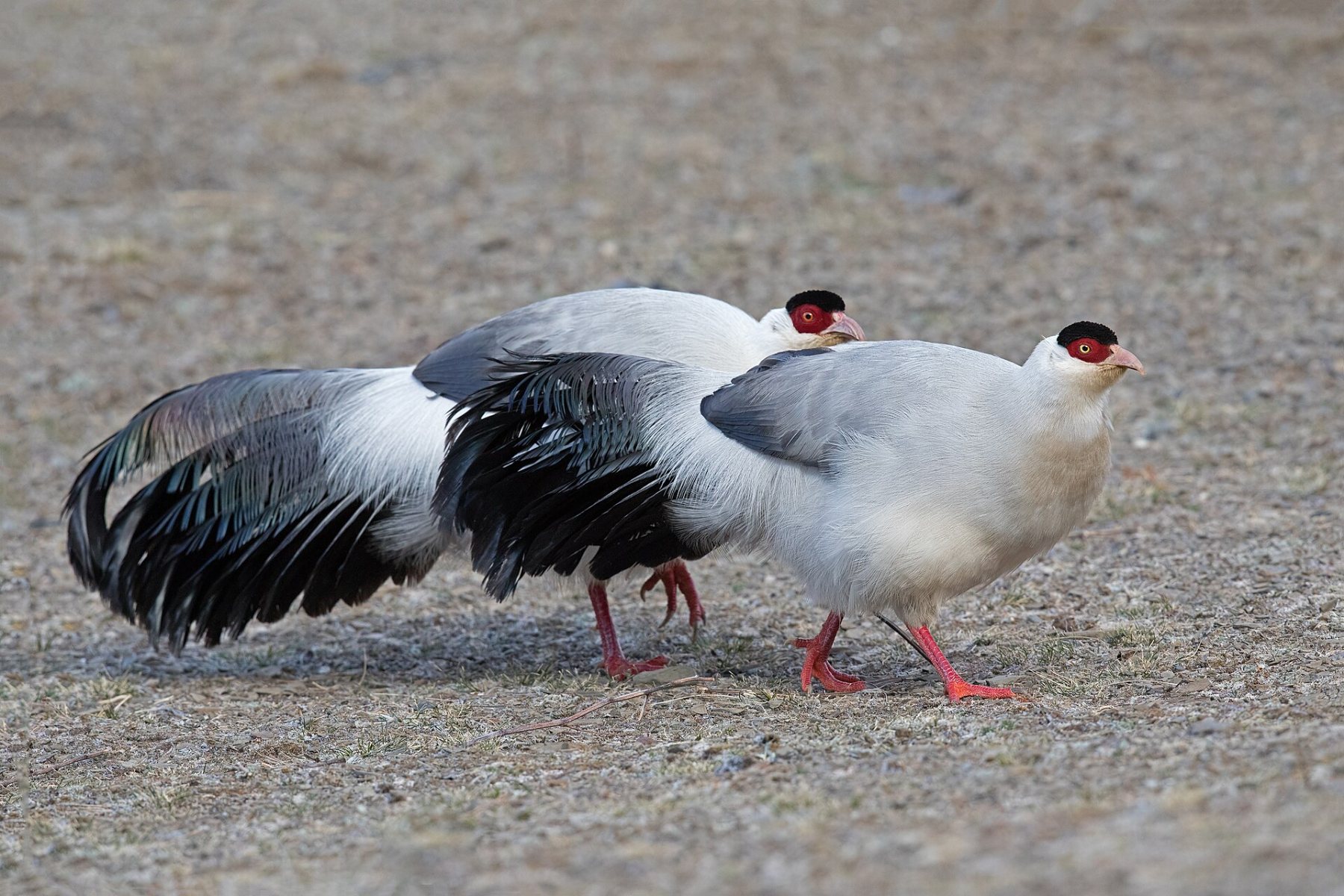
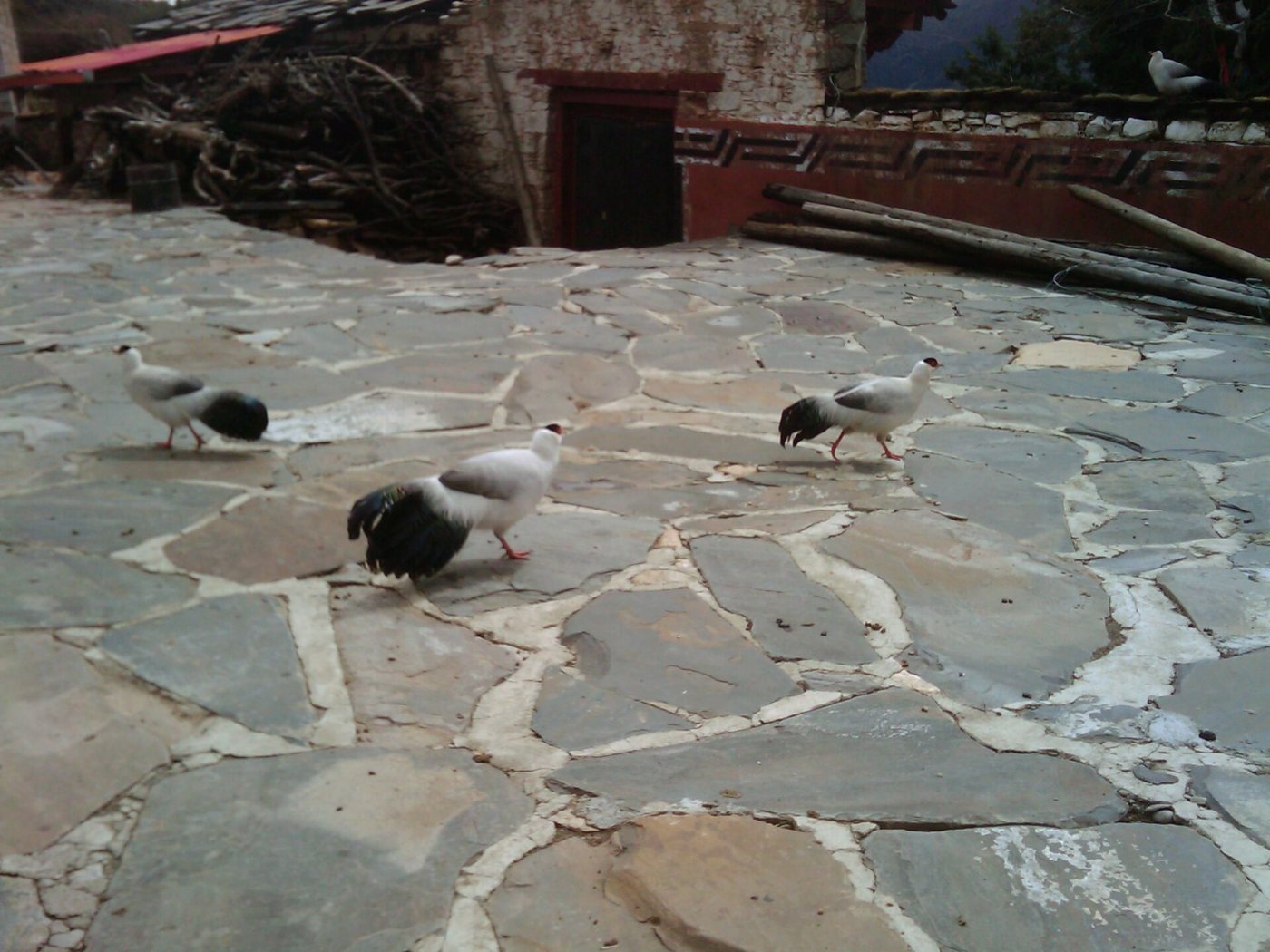
The one you will actually see: a big, confident bird, white-bodied with a black crown, a crimson face and a metallic blue-green tail. It is a Chinese endemic and it is unusually tame around monasteries, where monks have fed it for generations. The courtyard version is a photograph; the forest version is a glimpse of tail disappearing into spruce.
Blood pheasant
Smaller, greyer, with a red face and a startling crimson breast and tail. A bird of the mixed forest just above the valley floor, usually in parties, usually moving fast.
Sichuan hill partridge
Heard far more often than seen: a rising whistle from the scrub on the slopes above Chonggu in the early morning.
Chinese monal
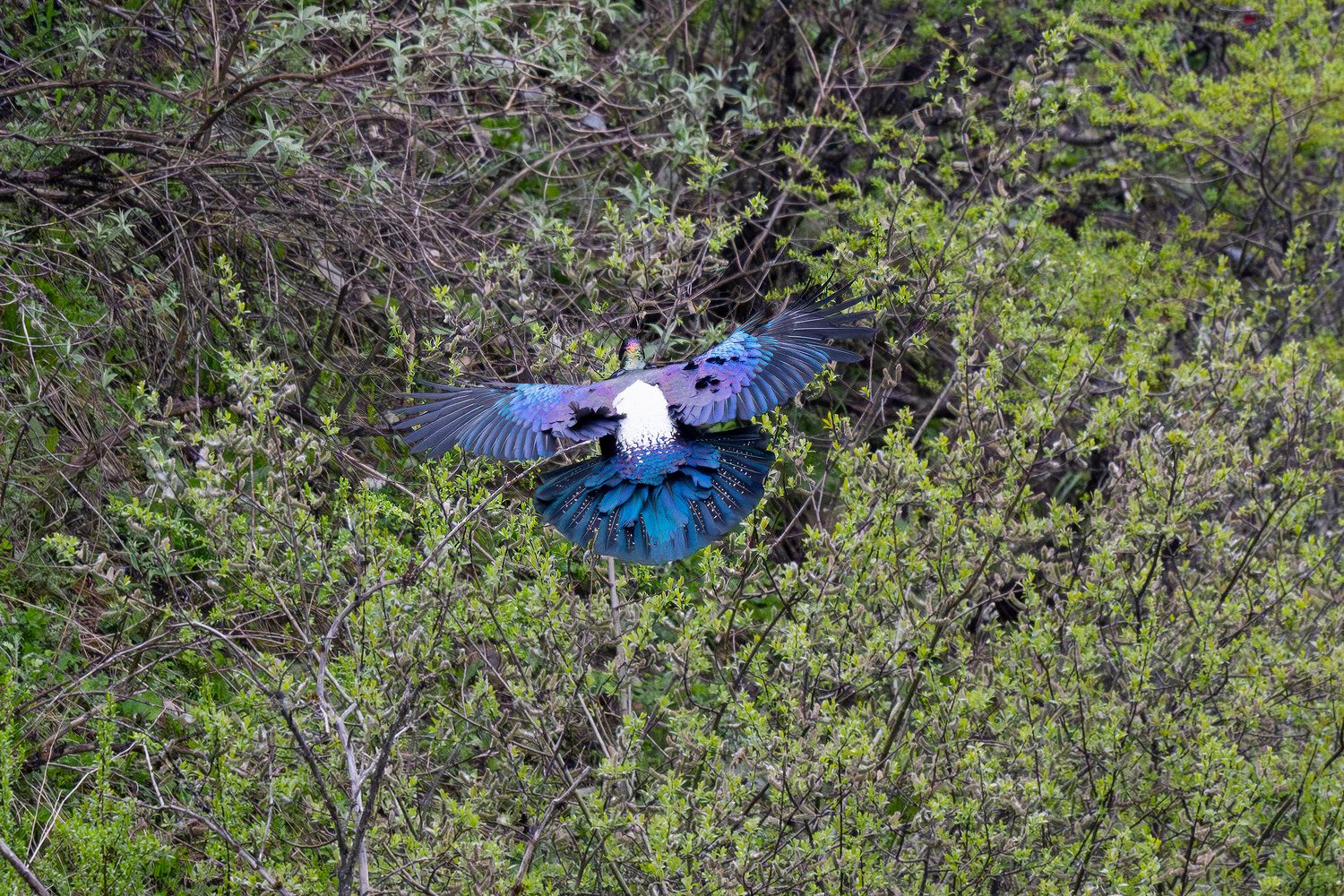
The prize, and the hardest. A large pheasant of the high scrub and scree edge, iridescent green-headed with a white back and a chestnut tail, and it does not tolerate approach. Most records here are of birds flushed at distance or seen in flight.
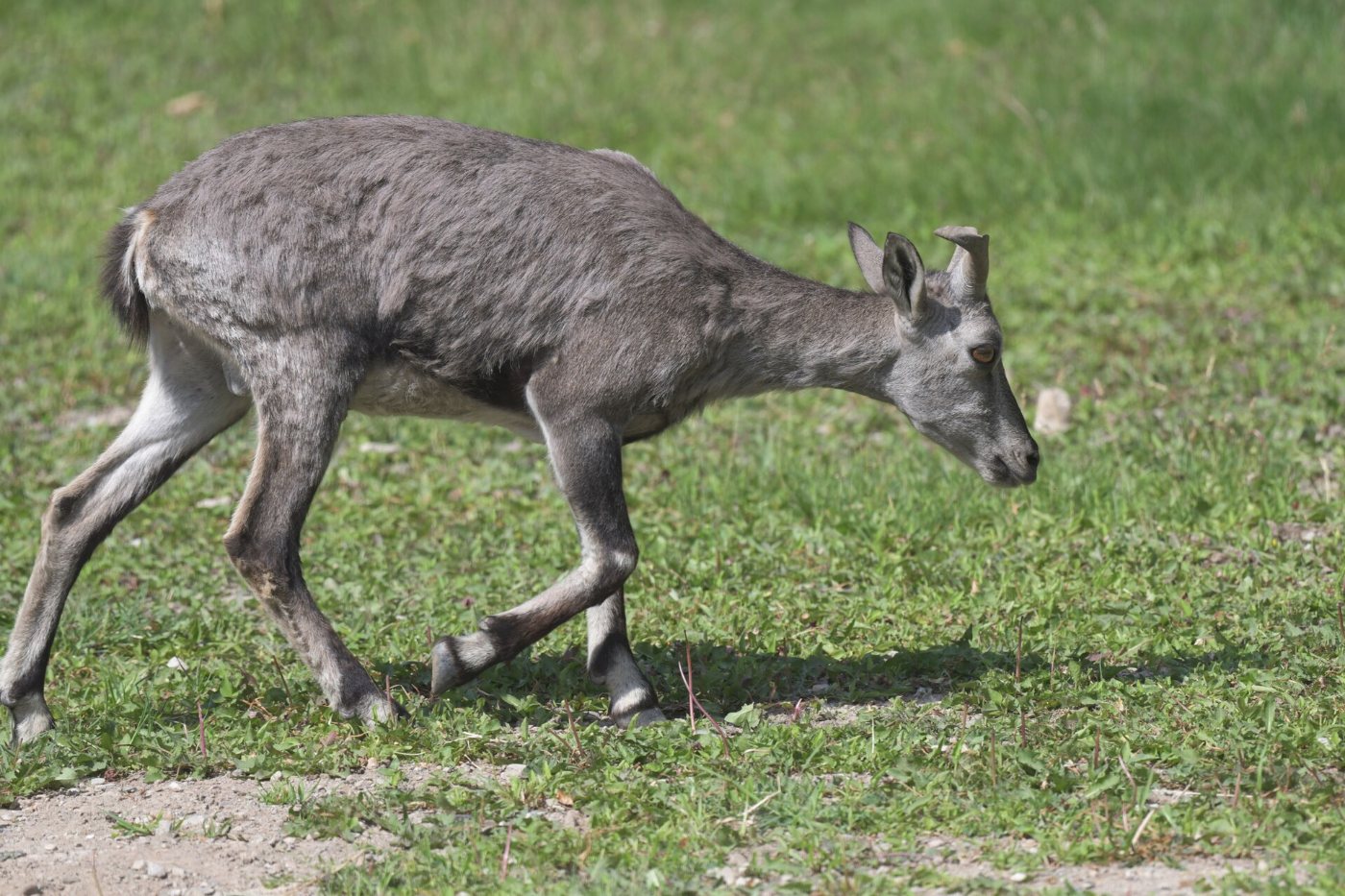
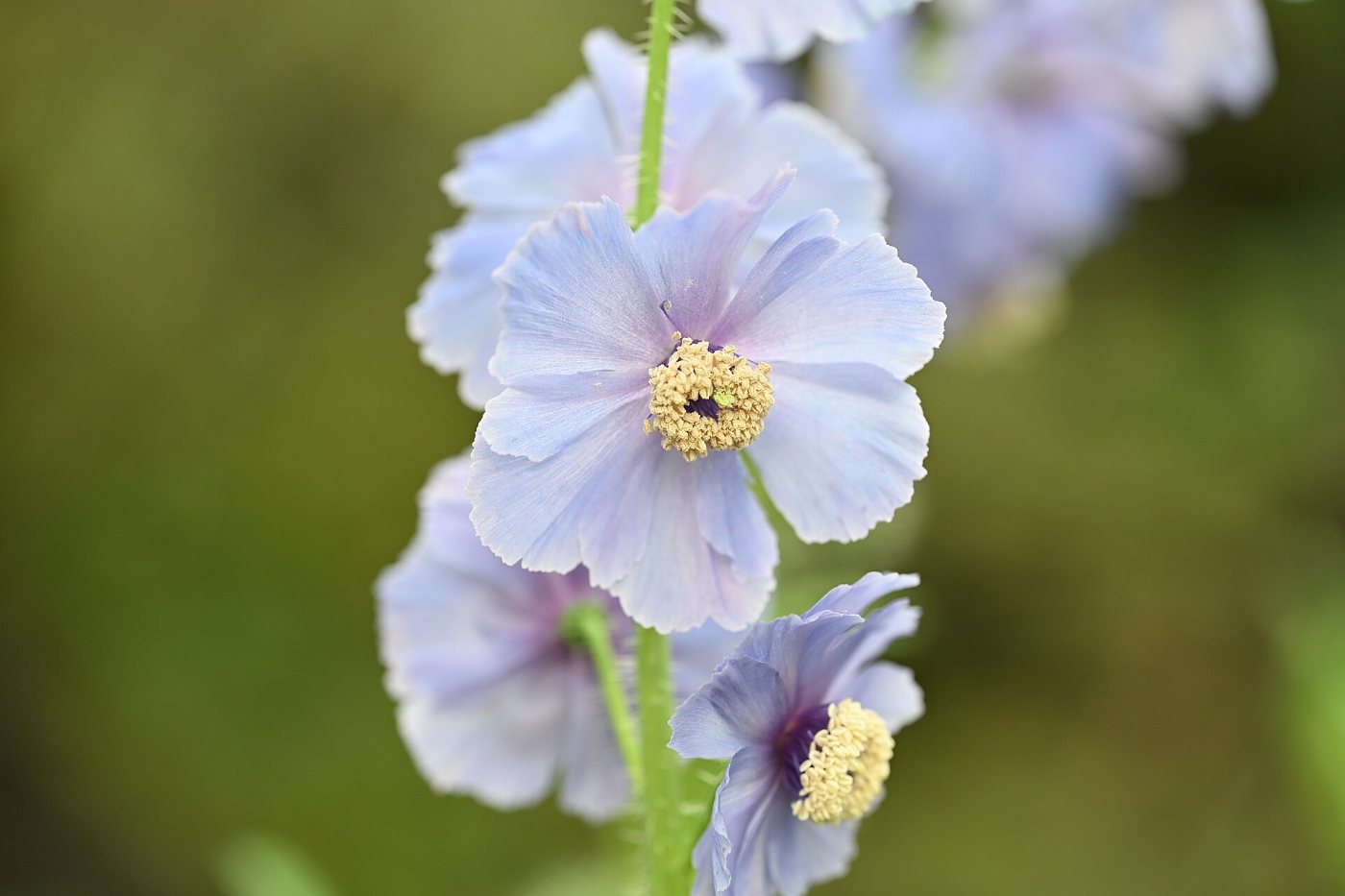
Chinese monal, photographed in flight on Balangshan in the same Hengduan range.White eared pheasants in a monastery courtyard in Daocheng county.Bharal, the blue sheep, on open ground at the edge of the forest.A blue poppy of the genus Meconopsis, the high-altitude poppy of the Hengduan.
Mammals, mostly at dawn.
What is actually there, and what you will actually see.
Bharal
The blue sheep, and the most visible large mammal in the reserve: over two thousand of them, habituated to walkers on the Luorong slopes and around the boardwalk. Grey-brown in summer, blue-grey in winter, with a pale rump and, on the males, horns that curl outwards.
Musk deer
A small, solitary, fanged deer of the conifer forest, hunted for centuries for the gland that carries its name. You will not see one; you may find its latrine pits on a forest trail.
White-lipped deer
A large high-altitude deer of the open plateau above the treeline, in herds. More likely outside the reserve, on the Haizi Shan grassland, than inside it.
Snow leopard
Present, recorded, and effectively unseeable. The reserve is within the range and the prey base is there; sightings are a matter of weeks of patience at 4,500 metres, not a day trip.
Macaques
Tibetan macaques work the forest edge near the road and the villages, and they are habituated to the point of being a nuisance. Do not feed them and do not leave a bag unattended.
The plants, which are the real speciality.
Alpine botany is what this range is famous for.
Blue poppies
Meconopsis, the Himalayan poppies, in blue, violet and occasionally yellow, flowering in the scree and meadow between 4,000 and 4,800 through June and July. The spiny-leaved species are the ones on the open scree.
Rhododendrons
Dozens of species, from low cushions at 4,600 to shrubs taller than a person in the forest band. The flowering window runs from April at the bottom to July at the top, which means you can chase it up the mountain through the season.
Saussurea and the woolly rosettes
The high scree is full of plants that have solved the same problem: staying warm. Hairy rosettes, dense cushions, deep taproots. A hand lens is worth more than a long lens here.
Rhodiola and the medicinal trade
Rhodiola is dug commercially across this plateau, which is one reason the scrub above the treeline is more disturbed than it looks. Do not buy wild dug roots from roadside sellers.
The larches
Not a rarity, but the reason for the autumn crowd: Larix potaninii turns gold in the last week of October, and the contrast with snow and dark spruce is the image everybody comes for.
Where to look, hour by hour.
Four places where the odds are better than average.
The monastery courtyard at dawn
White eared pheasants, red-billed choughs and, in winter, blood pheasant. Arrive before the first shuttle and stand still for twenty minutes.
The Chonggu stream
White-capped redstarts and plumbeous water redstarts on the rocks, plus rat snakes in summer. A short lens and patience beat a long lens and walking.
The Luorong slopes
Bharal, usually in the late afternoon on the grassy shoulders above the pasture. They are used to people and will let you get surprisingly close if you move slowly and do not stop to stare.
The scree above the lakes
Blue poppies and cushion plants in July; snowcock calling from the ridge. Nothing else up there, which is the point.
How to watch, and what not to do.
The reserve's rules and the obvious ones.
Dawn and dusk
Between 09:00 and 16:00 the valley floor belongs to the shuttles. The animals have not left; they have moved ten metres into cover. Walk early or stay late.
No feeding
Bread and biscuits kill high-altitude animals slowly and make them aggressive quickly. The macaques near the villages are the visible result.
No drones
Prohibited in the reserve, and the noise clears a meadow faster than a person can.
Stay on the ground you are allowed on
The meadow turf at Luorong and the slopes around Pearl Lake are fragile and slow to recover. The boardwalk is not a suggestion.
Binoculars over cameras
A pair of 8x42s will show you more of this valley than any lens you can carry. Most of what is here is small, brown and moving.