Wildlife / Panda forest
Panda country, on foot.
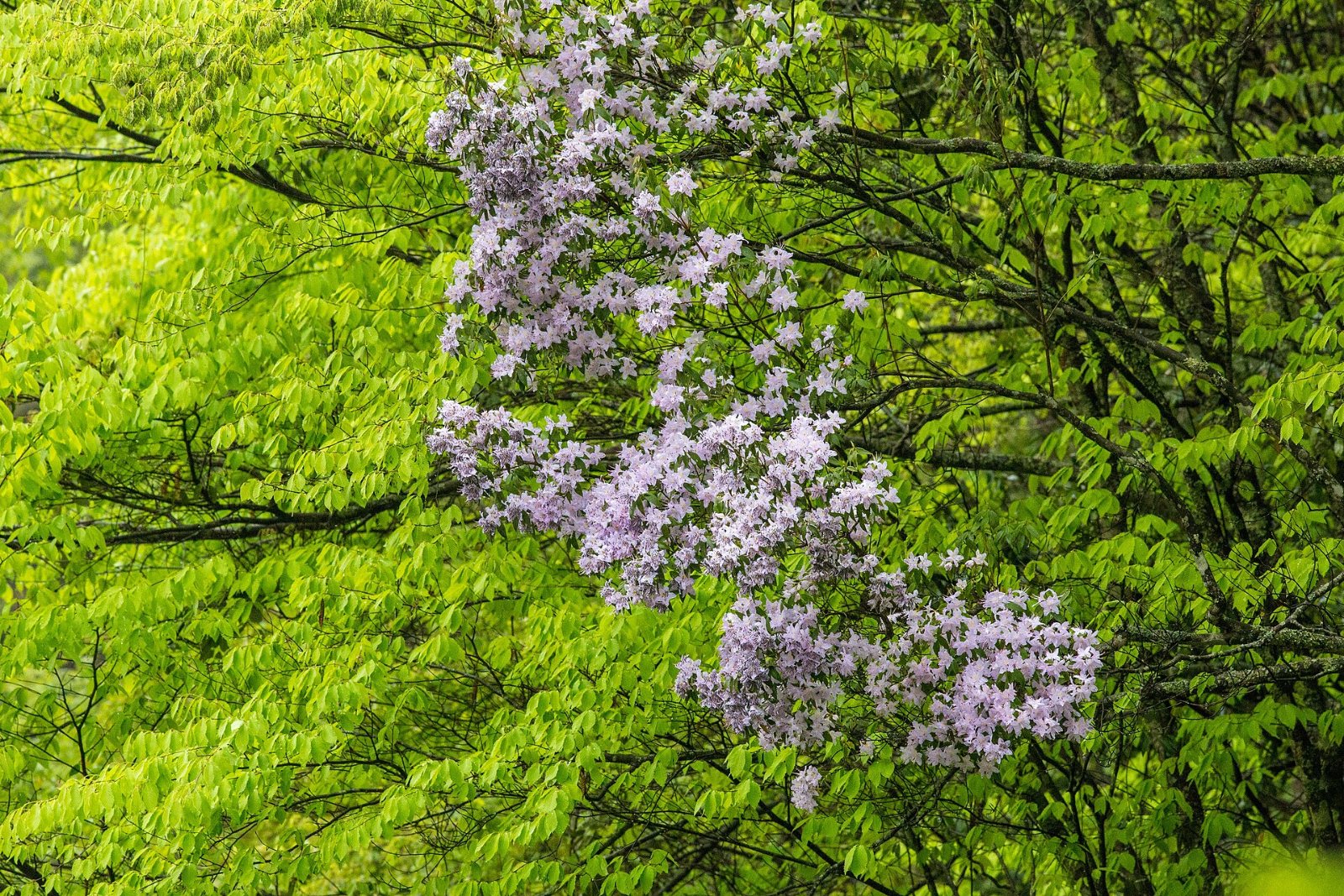
Two days in Sichuan that people often confuse: the base, where you are certain to see a panda, and the forest, where you almost certainly will not.
Start this journey brief →Sichuan · Tangjiahe, 1,800 m
Best windowMar–May · Sep–Octspring green and autumn colour; our season table marks July–August and December off
Altitude1,200–3,000 mforest and valley walking, not a summit objective; Baixiongping station sits at 1,800 m
Park scale19,300 km²the Giant Panda National Park's Sichuan section, holding nearly 1,400 wild pandas
Approach4–5 hours from Chengduroad transfer to Qingchuan, then the reserve's own shuttle
The base and the forest are different trips.
Wolong's Shenshuping centre sits at about 1,700 m in Wenchuan county, an hour and a half to two hours from Chengdu. More than fifty pandas live there in large enclosures on a wooded slope, and a sighting is not a matter of luck. It is the most comfortable way to spend an hour with the animal, and it is a captive one.
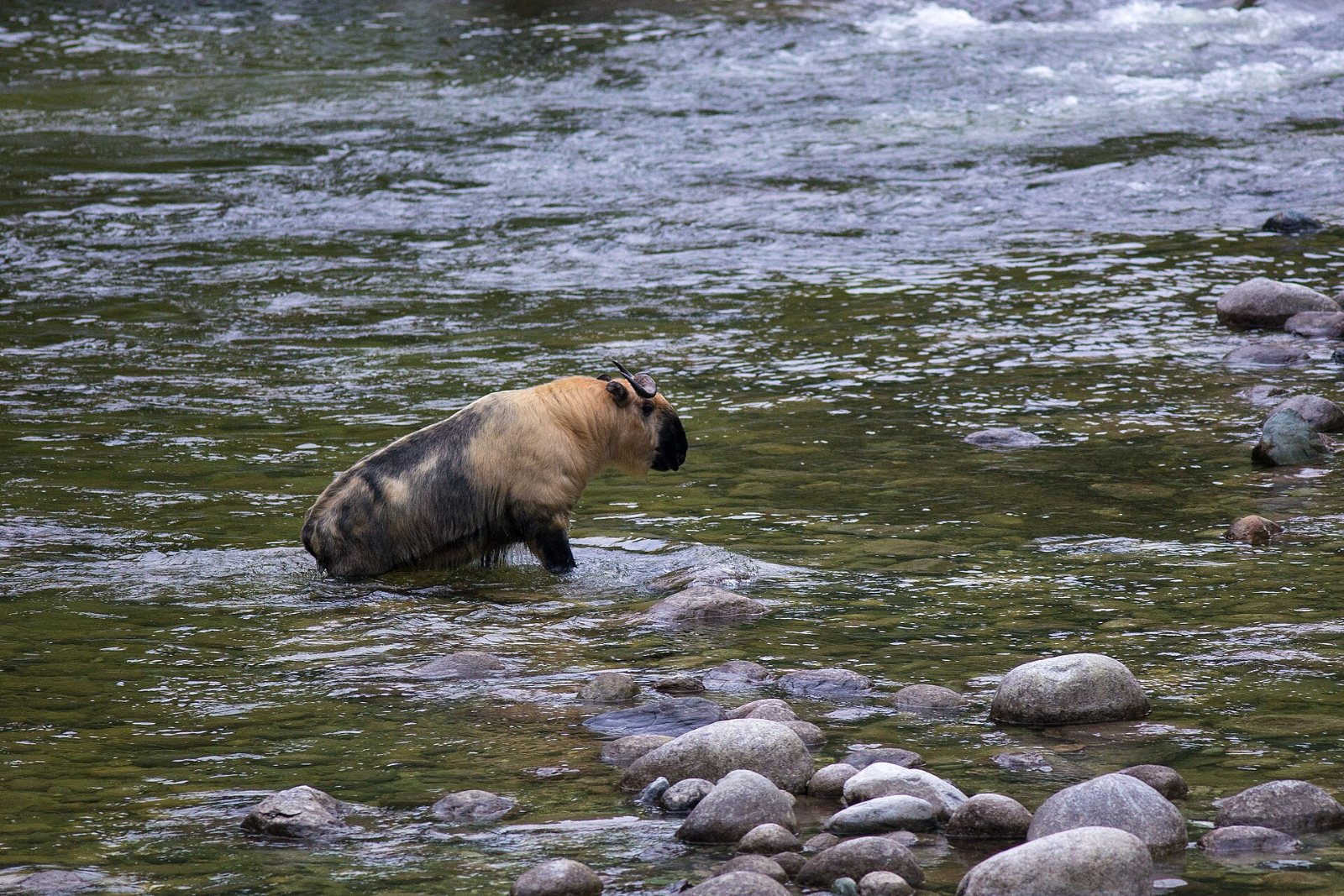
Tangjiahe, at the northern end of the same national park, is the other half. Keepers at the Baixiongping station identified 31 individual pandas from dung samples in 2025 and 13 more from camera images; in February 2026 a camera there caught a mother with a cub. That is the honest arithmetic of the forest: the animals are present, resident, and entirely uninterested in your itinerary. What you get instead is the habitat working — takin on the river stones, tufted deer at the forest edge, macaques in the canopy, and a landscape that looks nothing like a enclosure.
How we would build the days.
- Base first, forest second
Spend the first morning at Shenshuping. Gates open at 09:00 and the animals are active early; book a day ahead and the ticket is cheaper than at the gate. It gives context for everything you see later.
- Move up to Qingchuan
Tangjiahe is a separate journey north, roughly four to five hours by road from Chengdu. Private cars stay outside the gate, so the day starts with the reserve shuttle — and the reserve is about 60 km of road end to end.
- Walk the edges of the day
Dawn and the last two hours of light are when the forest is busy. The middle of the day belongs to sitting still, reading tracks and letting the group go quiet.
- Give it three days
One morning in the forest is a lottery ticket. Three mornings, with a guide who knows which valley was active last week, is a plan.
What the reserve actually asks.
Tickets & hours
Tangjiahe charges ¥55 per visit plus ¥60 for the shuttle, and stays open 08:00–17:00 from April to November, 09:00–17:00 from December to March; ticket sales end at 16:00. Shenshuping runs 09:00–17:00 with last entry at 16:30, around ¥85 booked ahead and ¥90 at the gate.
Booking
The reserve asks visitors to reserve ahead and caps numbers on public holidays. We confirm the current rule and the day's quota within 48 hours of arrival rather than trusting a season-old screenshot.
What you will actually see
Takin, tufted deer, Tibetan macaque and golden pheasant are realistic on a good day. A wild panda is not something a guide can deliver; tracks, droppings and a chewed bamboo stand are the normal reward, and they are worth the walk. If a sighting is the entire point of the trip, the Qinling reserves in Shaanxi are the stronger bet — a different journey, in a colder season.
Cold, wet, slow
At 1,800 m the mornings are cold and the underfoot is wet for much of the year. Boots with grip, a warm layer and no cotton. Distances are modest; the pace is set by what is moving, not by the map.
Ready to take it further?