
West Sichuan
Destinations / West Sichuan
Daocheng Yading.
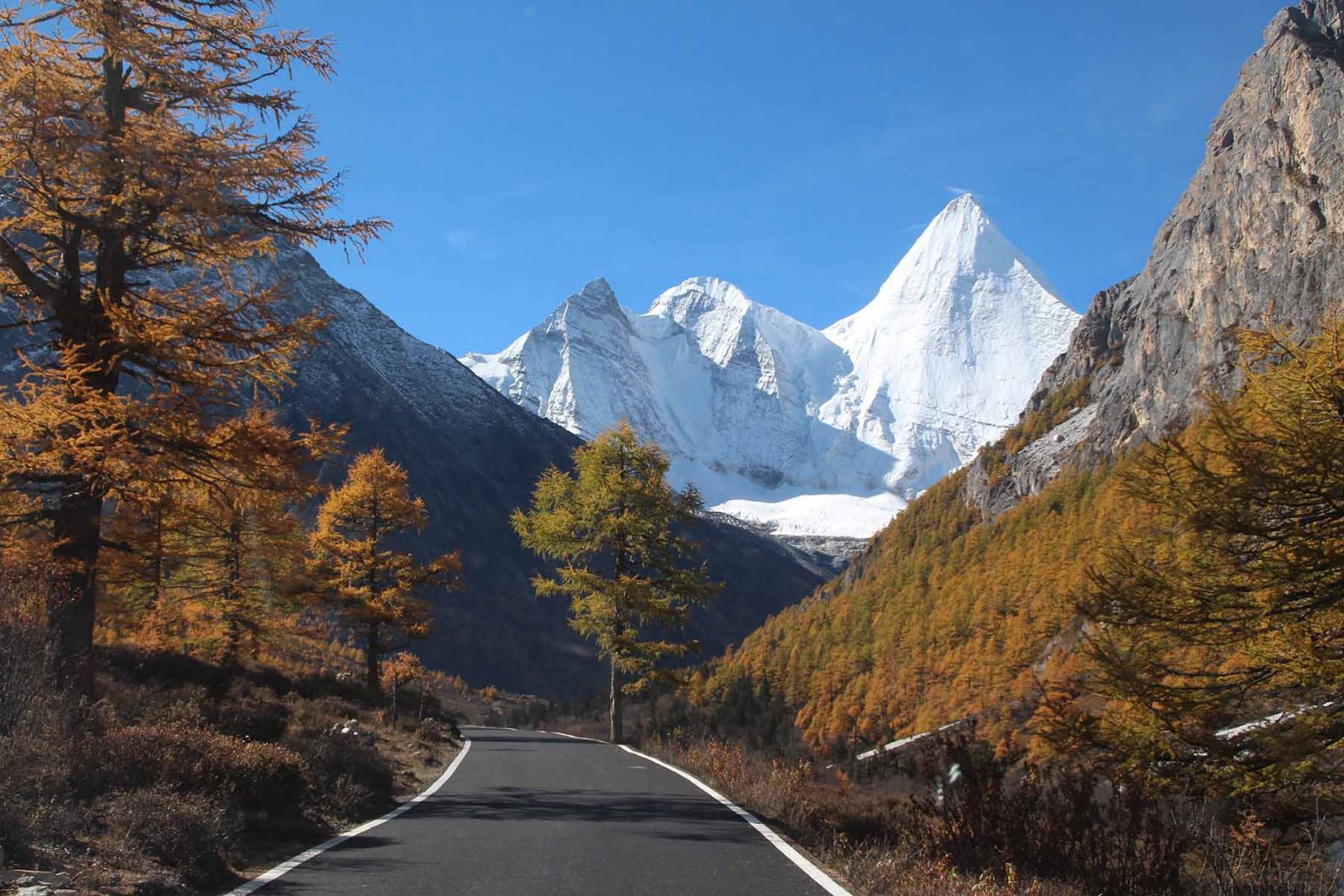
Three sacred peaks above a valley floor at 3,900 metres, and the two high lakes at 4,500. It is the most photographed mountain landscape in China, and the one where a single decision — whether you sleep inside the gate — splits the trip in two.
3,900 m at the gate · 4,500–4,700 m at the high lakes
01 / Read the place
Up the valley, in order.
Yading is one valley climbed in stages. Every stage is a different altitude, a different walk, and a different decision about where to sleep.
- 01
Xianggelila town
2,900 m · the base below the gate
- 02
The gate and the village
3,900 m · where sleeping changes the trip
- 03
Chonggu and Pearl Lake
3,900 → 4,100 m · the short valley
- 04
Luorong pasture
4,180 m · the meadow under all three peaks
- 05
Milk and Five-Colour lakes
4,500–4,700 m · the long route
- 06
The three peaks themselves
6,032 m · 5,958 m · 5,958 m
Walking detail, timings and the altitude argument are on the trek page; this guide stays with what the place is and where it sits.
What you see ↓02 / What you see
Three views, one valley.
The reserve is small enough that all three sit inside a single drainage — but they ask for different days.
The three peaks
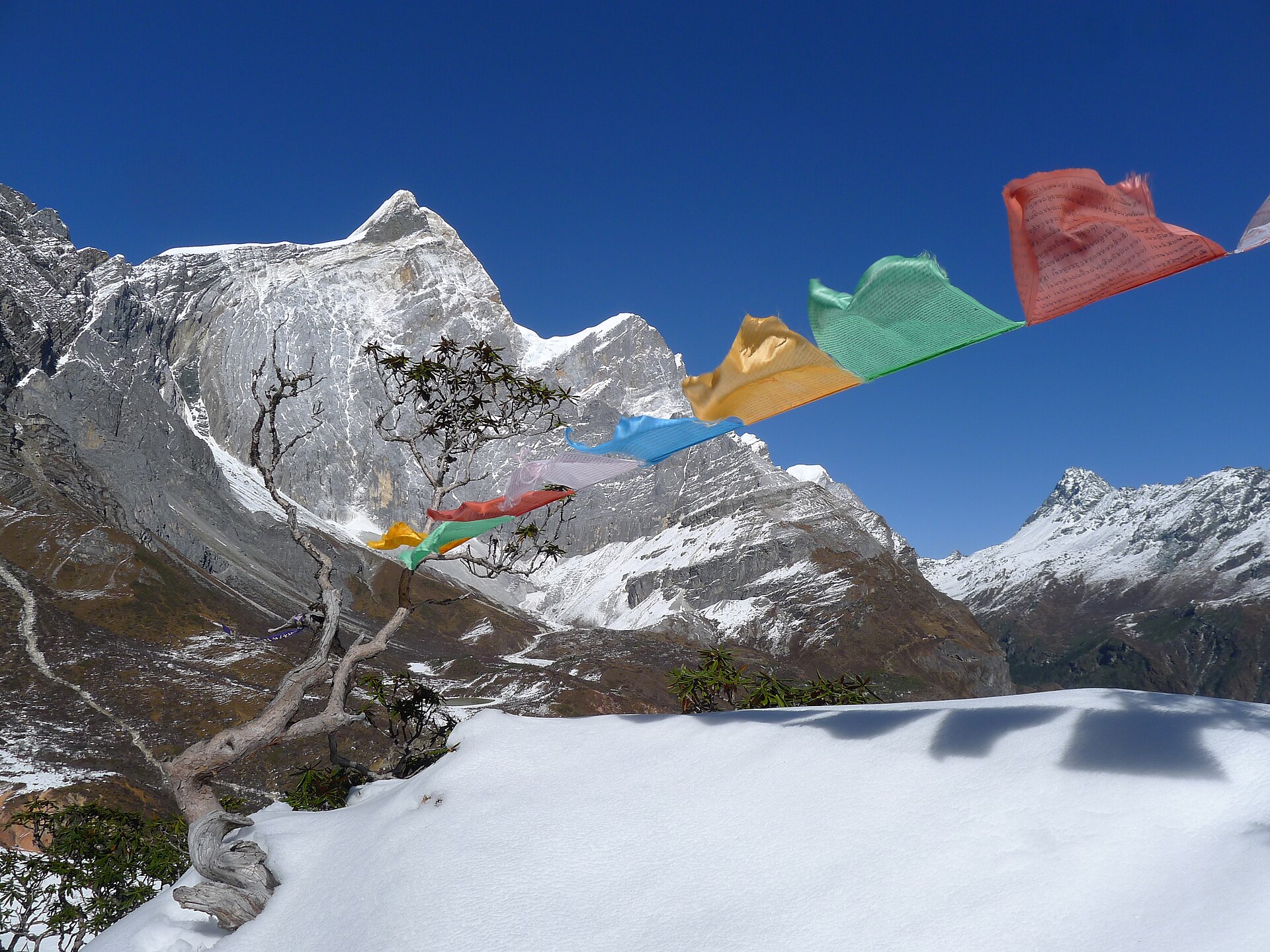
Xiannairi, Jampelyang and Chanadorje are the bodhisattvas of compassion, wisdom and power. They are also, separately, three very different mountains to look at: a broad seated mass, a sharp pyramid, and a heavy shoulder of rock.
The peaks ↗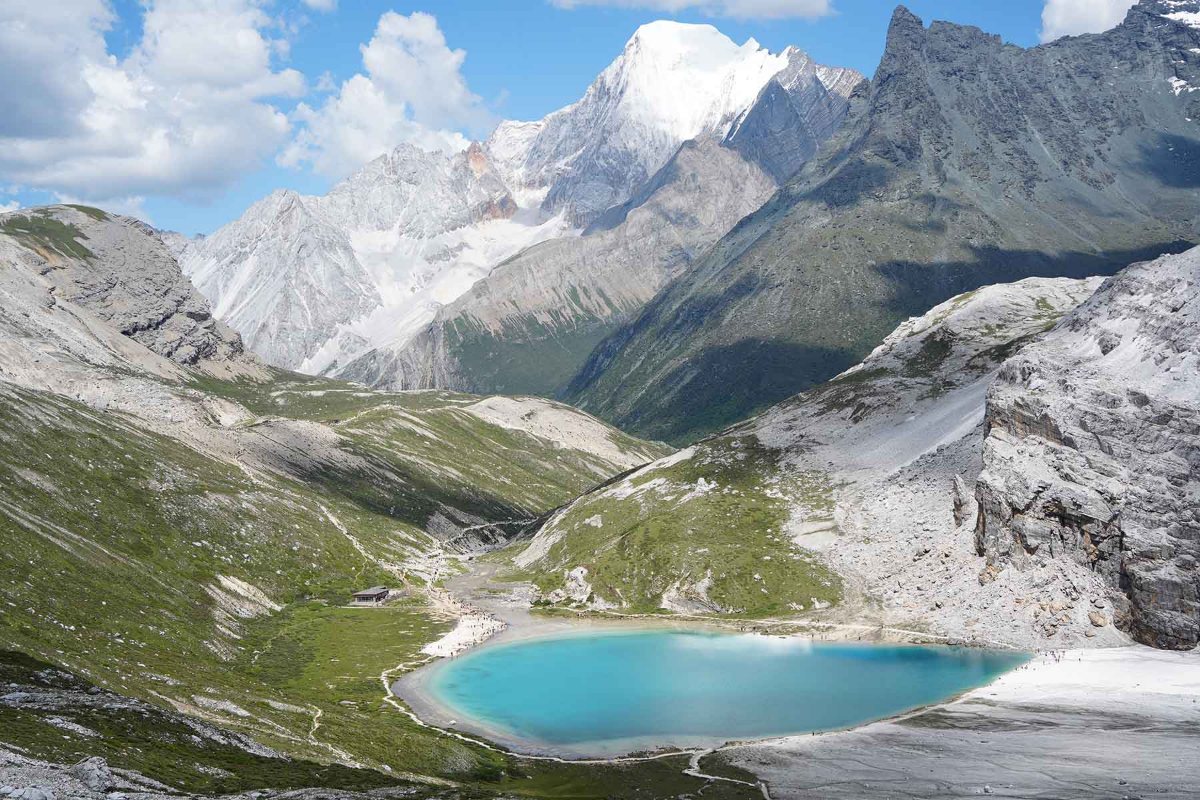
The high lakes
Milk Lake and Five-Colour Lake sit in the same basin under Jampelyang, roughly 500 m of climb above the pasture. The colour is glacial rock flour, not depth, and it changes with the cloud.
The long route ↗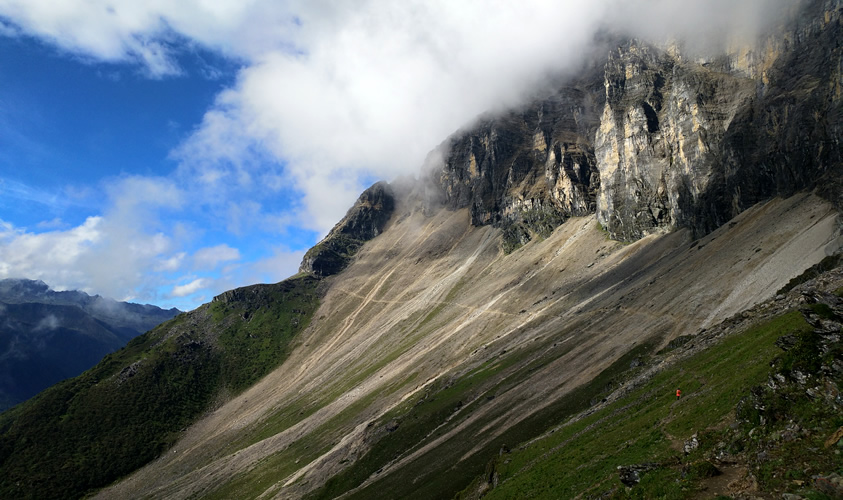
The wall above the pasture
The upper valley closes into a rock wall and a long ramp of scree. This is the ground the long route crosses — and the reason the walk is a half-day rather than an hour.
The eight days ↗03 / Pick your month
A short autumn, and a long closure.
The lakes are open from mid-April to late November. Outside that line the valley still opens, the long route does not.
Open month Cold, closed or limited Best window
Mid-Apr – late Nov · The long route
The upper route to Milk and Five-Colour lakes opens around 15 April and closes around 25 November. The dates are an administrative line, announced each year, and the reserve moves them by a few days. The trek page carries the current pattern.
Sep – Oct · The best window
Clear mornings, the larches turning gold through October, and the highest chance of seeing all three peaks in one day. It is also the busiest fortnight of the year, and the fortnight to book furthest ahead.
Dec – Mar · Short route only
The valley and the Pearl Lake walk stay open through winter, on cheaper tickets and with almost nobody there. The lakes are under snow and the long route is shut. This is a real trip, but a different one.
04 / Stay curious
A pilgrimage before it was a park.
The three peaks are bodhisattvas. The circuit around them is older than any boardwalk, and not all of it is walkable now.
- 01
Three bodhisattvas
Xiannairi is Chenrezig, compassion, and the broadest of the three at 6,032 m. Jampelyang is Manjushri, wisdom, and the sharpest. Chanadorje is Vajrapani, power, and the heaviest. The names on the maps are the Tibetan ones; the Chinese names are translations of them.
- 02
The kora, and its closure
The clockwise circuit of all three peaks is a multi-day pilgrimage that long predates the shuttle bus. It runs through ground the reserve classes as undeveloped, and since November 2025 that ground has been closed to walkers by order — the kora is not currently a route you can join. The two day walks inside the developed area are unaffected.
- 03
Joseph Rock, 1928
The botanist and explorer photographed the range for National Geographic in 1928, and the article is why the English-speaking world had a name for this valley long before it had an airport. A much later film did the same job for everybody else, which is why the shuttle fills by nine.
05 / Ways in
Three ways in.
By air is fast and hard on the body. By road is two days and much better for acclimatisation.
Either way, Yading sits on a corridor that keeps going — north to Litang and the G318, south into Yunnan.
Fly to 4,411 m
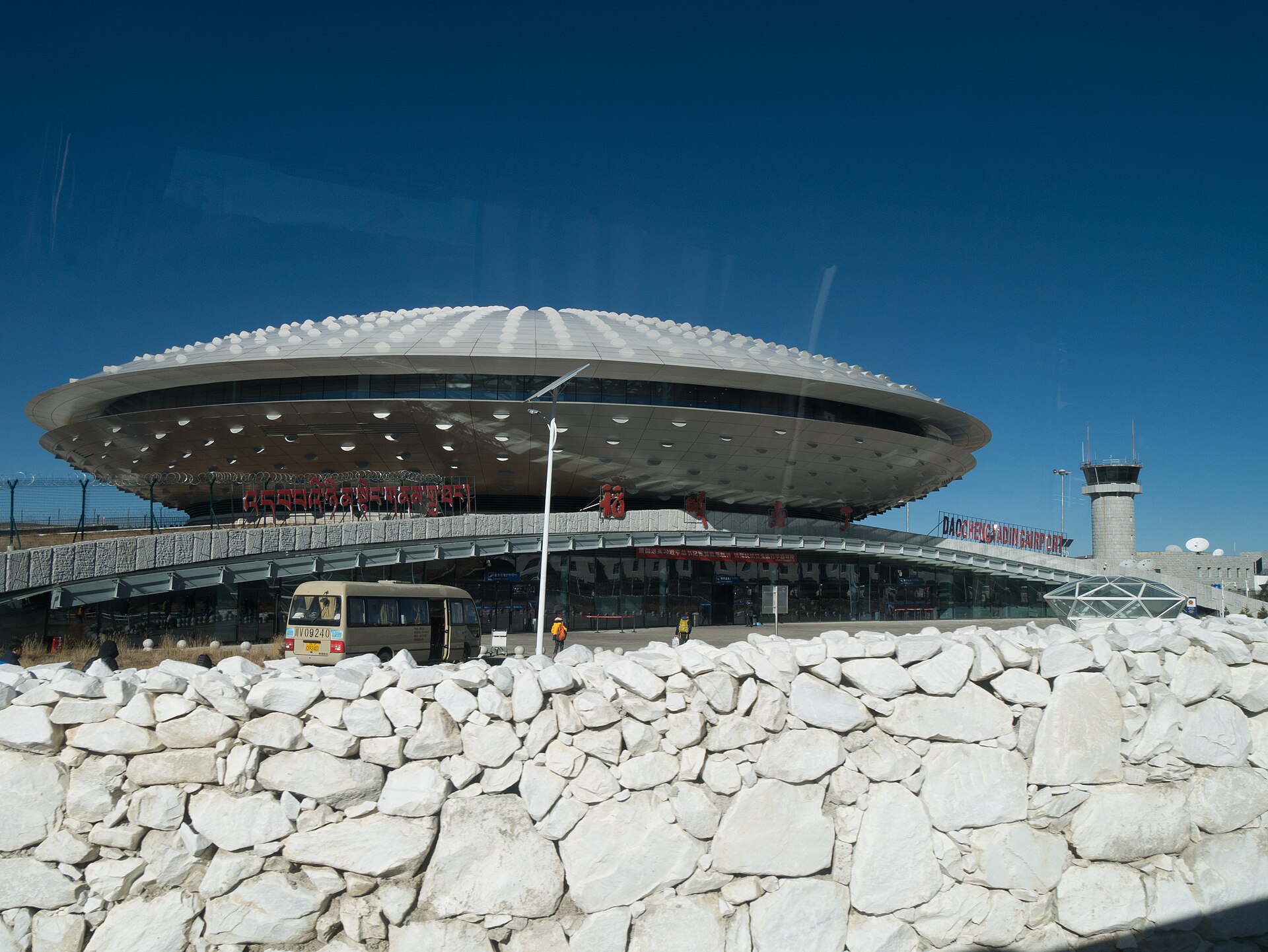
Daocheng Yading airport is one of the highest civil airports in the world, and the terminal is an hour or two from the gate. Landing and walking the next day is how people end up in the clinic at Daocheng; the place page sets out the buffer.
Drive the western road
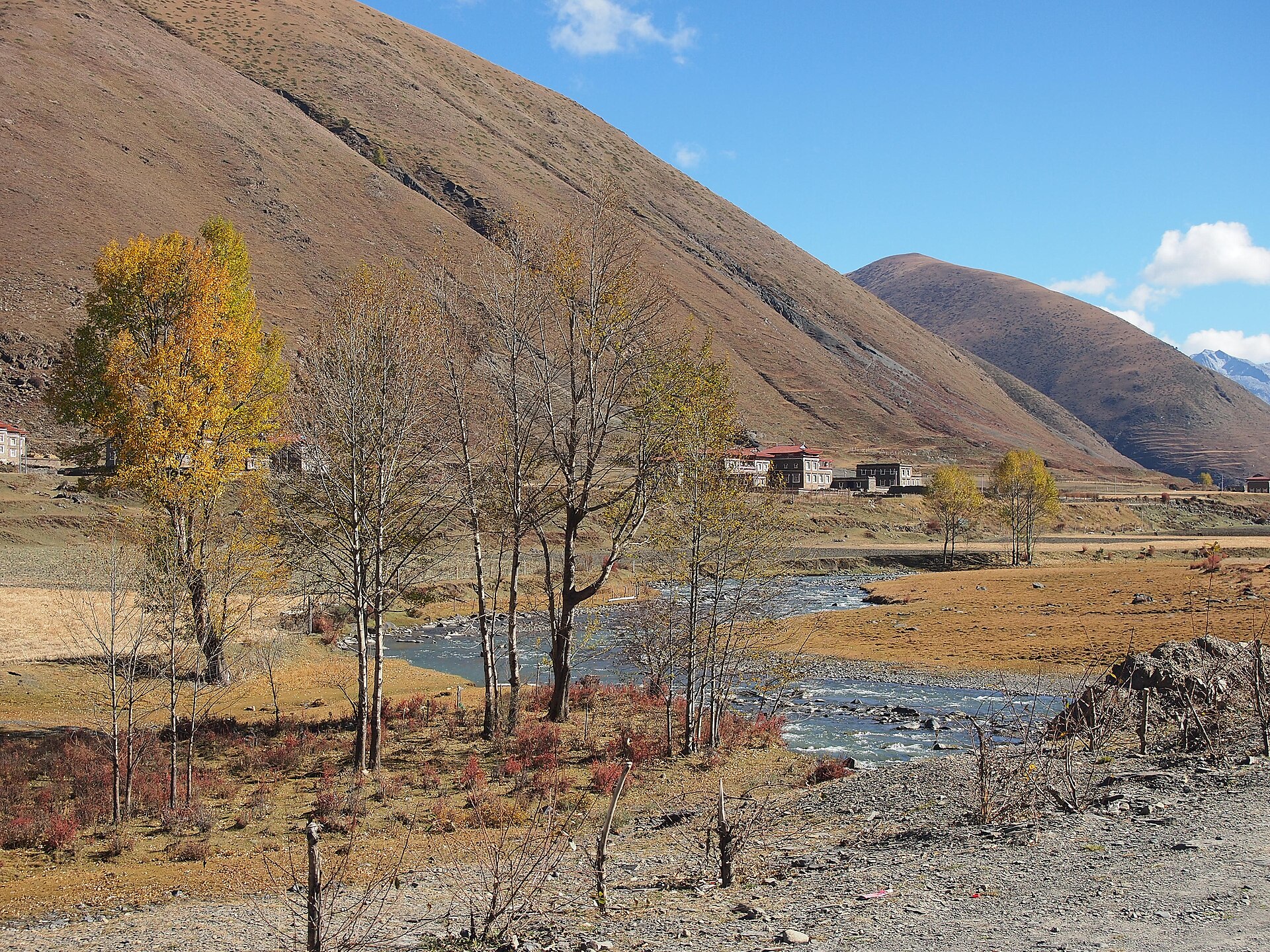
Chengdu, Kangding at 2,560 m, Xinduqiao, Litang, then down to Daocheng: two days of driving that doubles as acclimatisation. This is the approach that makes the first night at 3,900 m survivable.
North to Litang, south to Yunnan
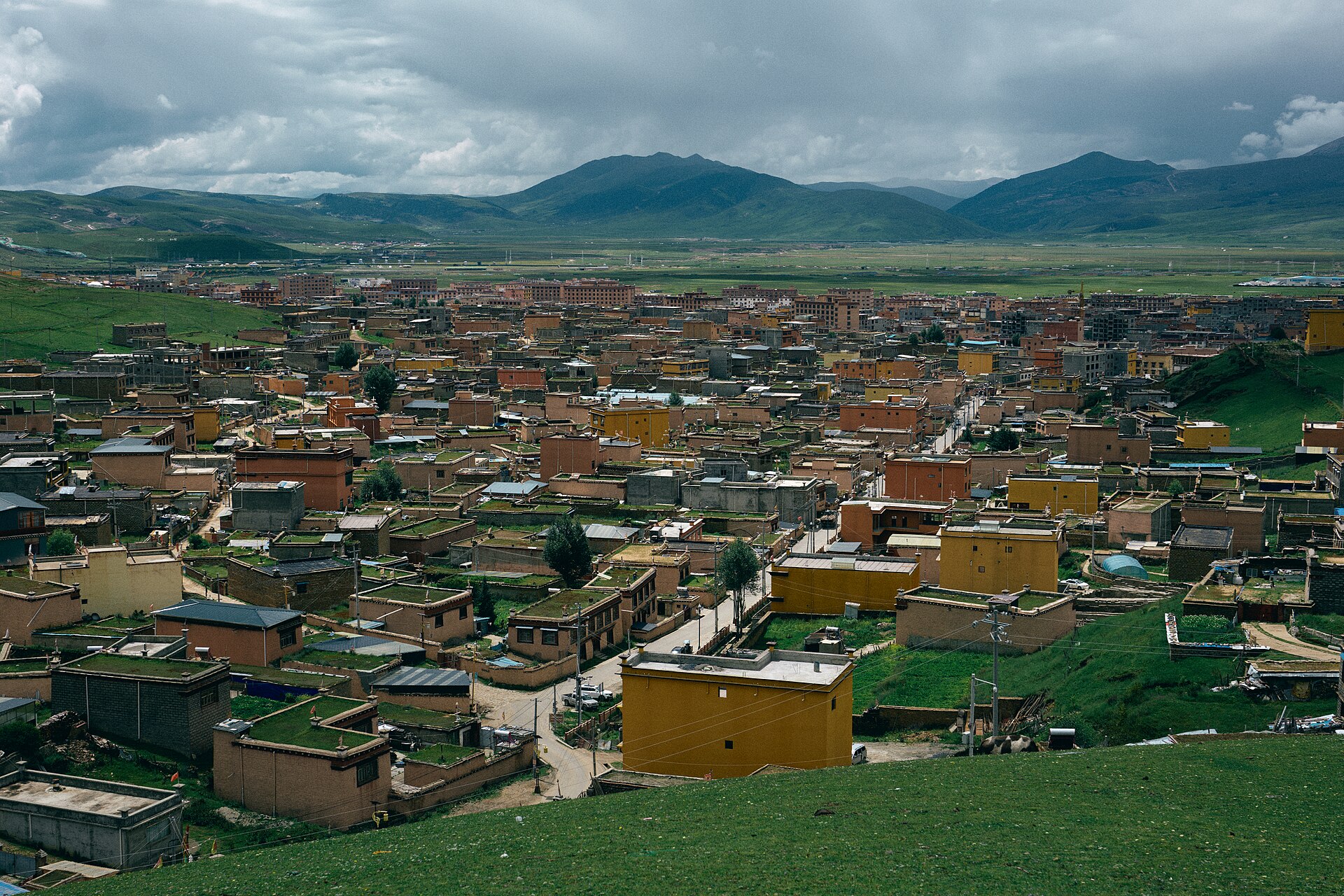
The road north climbs to Litang on the G318; the road south runs through Xiangcheng into Yunnan and on to Shangri-La. Yading works as one stop on that corridor rather than as a return trip to Chengdu.
06 / Before you go
The useful details.
Tickets, the closed ground, and the altitude arithmetic.
Tickets
Entry is 146 yuan and the shuttle inside the gate is 120, sold together; winter tickets are cheaper. The shuttle runs to Chonggu and on to Luorong — everything past Luorong is on foot, and there is nothing else to buy once you are inside.
The closed ground
Since 20 November 2025 the reserve has closed all walking routes in its undeveloped area — outside the scenic area’s operating boundary — to trekking, camping and climbing, by order. Several routes that were sold as recently as last season now run through closed ground. Ask before you book one.
Altitude, honestly
The airport is at 4,411 m and the village at 3,900. A night at 2,560 in Kangding first is worth more than any supplement. The general altitude note covers the pacing; the gate is not the place to learn it.
The first shuttle
The reserve fills from nine. On the first shuttle you get two clear hours and the best light on the peaks, and you meet the crowd coming the other way.
07 / Common questions
The questions that come up first.
Access, altitude and what the closure actually covers.
01Can I reach the high lakes in winter?
No. The long route to Milk and Five-Colour lakes closes around 25 November and reopens around 15 April, and the reserve treats it as a hard line rather than a weather call. The valley and the Pearl Lake walk stay open all winter.
02Is one day enough?
For the short route, yes: gate, Chonggu, Pearl Lake, and back out is a comfortable day. For the high lakes it is not — the walk is a half-day up and a half-day down on top of the transfer, and doing it against the shuttle timetable is what makes people turn around.
03Do I need a permit?
Not for the scenic area; a ticket and the shuttle cover it. The reserved ground is a different matter: the undeveloped area of the nature reserve has been closed to walking since November 2025, so no permit is being issued for it either.
04How hard is the altitude?
Hard enough that it decides the trip. The airport sits at 4,411 m, so there is no gradual arrival by air. Coming by road through Kangding at 2,560 m gives you two days of climb instead of two hours, and the difference shows on the first night inside the gate.
05Can I walk to the hidden lakes?
Not at the moment. Routes to Boyul and the Frog Lakes run through the reserve’s undeveloped area, which closed to walkers in November 2025. Any itinerary still selling those days needs a dated confirmation of access before it is booked.
06How does it connect to Yunnan?
South through Xiangcheng, then over the pass into Yunnan and down to Shangri-La — a long day, and the reason Yading can sit inside a bigger route rather than at the end of a return drive to Chengdu.
Something not covered here? See how a private route is put together ↗ or send us your question ↗
Your Yading journey.
Tell us when you can travel, whether you want the high lakes or the valley alone, and whether you would rather fly in or come over the western road. We will come back with a written outline — and confirm the reserve’s current closure dates before any dates are fixed.
Start my journey brief