
The most common paperwork question about our trekking routes is some version of “do I need the Tibet permit?” The short answer is no. The longer answer is more useful.
Where Tibet ends.
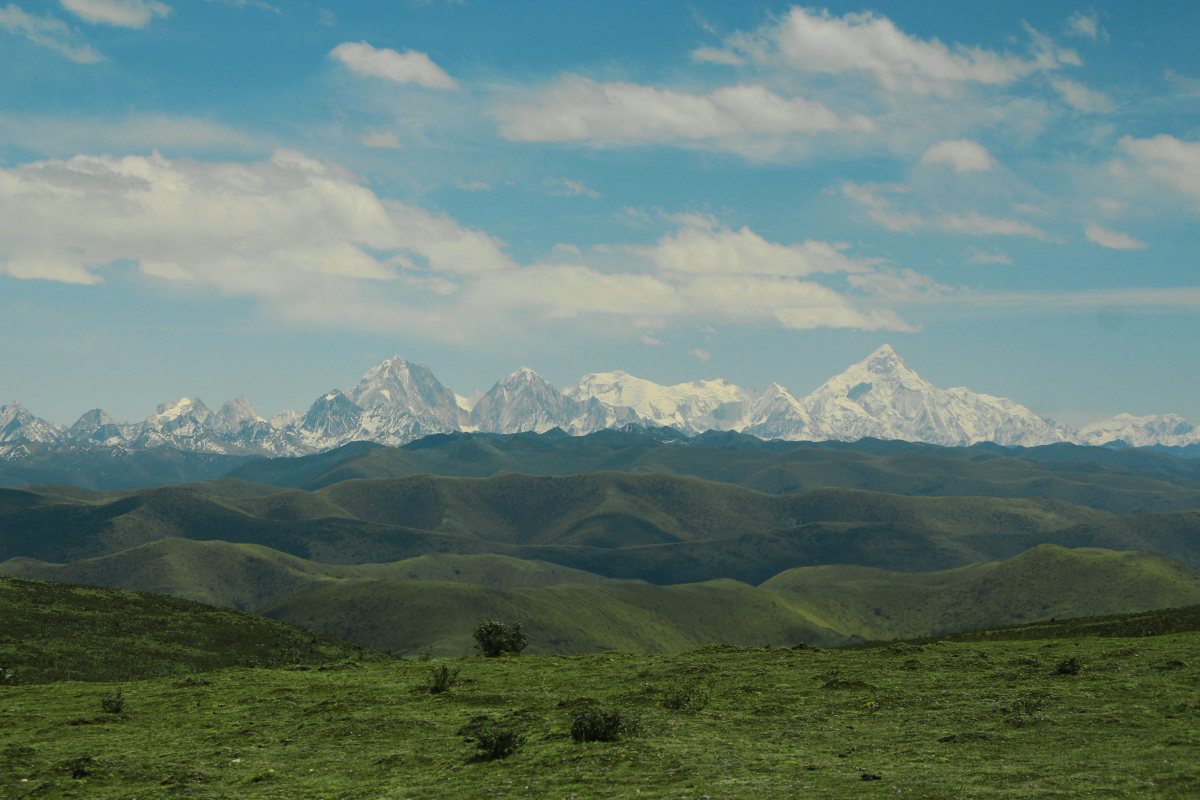
The confusion is old and understandable. The plateau region is called Tibet in English and Kham in Tibetan, and Kham runs across three provinces: the western march of Sichuan (the Ganzi prefecture of Kangding, Danba, Tagong, Ganzi town, Batang and Yading), a slice of Yunnan, and the high grasslands of Qinghai where the snow leopard week works out of Yushu. The Tibet Autonomous Region — the place the permit rules govern — begins west and south of all of it. Lhasa needs a permit. Kangding does not.
What the TAR regime actually is.
Inside the TAR, foreign travellers need a Tibet Travel Permit that cannot be applied for by the traveller — it comes with a booked tour, along with the licensed guide and vehicle the region requires. We keep the full account, with realistic lead times, in our Tibet permits guide. None of that machinery applies in Ganzi or Yushu. There is no Tibet Travel Permit, no mandatory guide, no tour-vehicle rule for a foreigner who wants to hike the Zimei valley or walk into Yading.
What our routes actually need.
Your passport, used normally: hotels register every guest, foreign or not, exactly as anywhere in China. Beyond that, the paperwork is site-specific and ordinary — park entry tickets at Yading and Hailuogou, reserve rules at Labahe and Wolong. The one special case in the collection is the snow leopard week: access to the Sanjiangyuan field areas runs through a licensed local guide and an entry arrangement with group numbers capped, which the tour includes — it is an access rule for a working conservation landscape, not a border regime.
The rules that still apply.
Three caveats keep this honest. First, sensitive periods exist: around politically charged anniversaries, checkposts in western Sichuan can slow down or temporarily restrict access, usually with a detour rather than a cancellation — the 24-day journey’s routing flexibility exists partly for this. Second, rules drift: park ticketing, reserve caps and Yading’s seasonal closure of the upper walks (mid-November to mid-April) are all site decisions that change, which is why each route page carries its own current notes. Third, none of this is visa advice — your China visa or visa-free entry is a separate question, covered in the planning guide.
When the answer changes.
One sentence on the routes where it genuinely is Tibet: the Everest and Kailash itineraries on this site live in the TAR and use the full permit-plus-guide-plus-vehicle regime, with the lead times the permits guide describes. If your trip is Kham — the Konka treks, the Yala trek, Riwuqi, Yading, the reserves, the mammal week, the snow leopard week — the paperwork answer is the easy one. The hard part is still just picking a pass.
Permit boundaries and site rules checked 7 November 2026 against our Tibet permits guide and the route pages. Rules drift — confirm at enquiry.
Plan the paperwork?
Tibet permits, for when you actually go to Tibet
The 24-day journey across all of Kham