
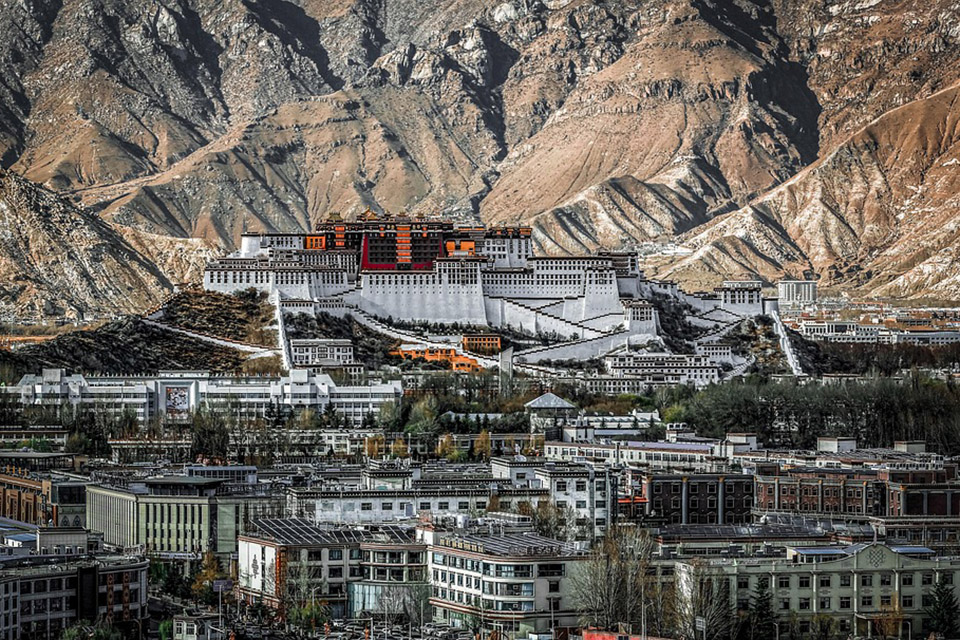
Tibet is the one part of China where an experienced independent traveller cannot simply arrive and improvise. Foreign passport holders, including travellers from visa-free countries, need a permit to enter the Tibet Autonomous Region, and that permit cannot be applied for by the traveller. It is applied for by a licensed Tibetan travel agency, against a fixed itinerary, on your behalf.
That single rule shapes everything downstream: how far ahead you commit, which entry point you use, how much of the route you can change once you are there, and why a request for “four days in Lhasa and then we will see” tends not to survive contact with the process.
Why it is not a DIY province.
Permits for the region are issued through the Tibet Tourism Bureau, and only agencies registered in Tibet can submit an application. There is no counter at the airport where an independent traveller can queue. The agency also supplies the licensed guide and the vehicle that foreign travellers are required to travel with, which is why the permit is normally inseparable from a booked tour rather than an add-on you buy separately.
Two common misunderstandings are worth clearing early. First, visa-free entry to China does not exempt anyone from the Tibet permit — the two systems are unrelated. Second, permits are not issued for a date range in isolation; they are issued for a stated route and a stated number of days, and the route on paper is expected to match the route on the ground.
The documents, in order.
Depending on where you go, three documents can come into play. Most travellers need the first, some need the second, and a few itineraries need the third.
- Tibet Travel Permit. The main document, issued for the region and checked when you board a flight or train to Lhasa, and again on arrival. The original is required — a photograph on your phone is not sufficient — so it is usually couriered to a hotel in Chengdu, Xi'an or another mainland city before you fly in.
- Alien's Travel Permit. Historically required for counties outside Lhasa, and applied for locally by your guide once you are in Tibet, usually within a day or two. Which counties require it changes, and several agencies reported in late 2025 that it was no longer being requested for Everest Base Camp or the Kailash kora. Treat that as a question to put to your agency, not a fact to plan around.
- Military or border permit. Needed for sensitive border zones and some closed routes, applied for in Lhasa, and slow: allow up to 30 days and accept that approval is not guaranteed.
Journalists, diplomats and some government officials are handled through a separate channel and are frequently refused; that is not a route an ordinary tour booking can work around.
How far ahead.
Fifteen to thirty days before travel is the realistic window for an application, and longer for remoter objectives. The Kailash kora and anything near a border crossing should be treated as 30 days minimum. Permit offices are closed over public holidays, so a Spring Festival or Golden Week departure needs its application lodged well before the holiday rather than during it.
Practical sequencing, in the order that avoids wasted money:
- Confirm the route and the dates with the agency.
- Send passport and visa scans, and a clearly readable passport photo page.
- Wait for the permit to be approved, then book flights or trains into Lhasa.
- Keep the first night in Lhasa low-effort — see our note on altitude and the first nights.
Booking the flight first is the most expensive mistake in this sequence. Airlines will not care that a permit was refused, and permit timing is the one variable outside your control.
Why the plan is fixed.
A Tibet itinerary is not a wish list. The permit names the places you may visit and the days you have, and the guide and vehicle are licensed against that. Small adjustments — a later start, an extra night in the same town — are usually possible. Substituting a different valley, crossing into an unlisted county or extending the trip by three days is not, at least not without a new application and a wait you probably do not have.
This is also why Tibet rewards a slightly conservative design. If the route has slack in it, a closed pass or a slow permit day costs you a viewpoint. If it has none, it costs you the trip. Our Tibet destination notes and the Kailash, Everest Kama Valley and Shishapangma routes are all built with that in mind.
The annual closure.
Tibet normally closes to foreign travellers for roughly two to four weeks each year, most often between mid-February and late March or early April. The window overlaps the Tibetan new year and the national legislative sessions, and the exact dates are announced only one to two months in advance — usually in January.
Two consequences. Do not plan a February or March Tibet trip without confirming the closure dates with an agency first, and do not assume an application submitted in that period will progress. Applications for travel immediately after the reopening can still be prepared during the closure, which is how April trips get made.
What to send, and what to keep.
An agency will ask for a scan of your passport photo page, a scan of your Chinese visa (unless you are entering visa-free), and confirmation of your arrival and departure points. If you enter overland from Nepal, the process is different again: the group visa is issued in Kathmandu and the permit is still required, so allow extra days there rather than treating Nepal as a shortcut.
Keep a digital copy of everything, and keep the paper original in the same bag you will have at the airport check-in desk, not in the luggage hold. The document is checked at boarding, again on arrival, and at points along the road.
Checked 3 November 2026 against published agency guidance and current permit practice. Rules for Tibet change at short notice and are applied locally; confirm the specifics of your route with the agency handling your booking before committing to flights.
Planning a Tibetan route?
Tell us the dates and we will confirm permit timing →