The reserve sells nothing worth carrying home. The buying happens an hour below it, in a market that runs on mushrooms, barley and a great deal of optimistic labelling.
Inside the reserve there is a kiosk at Zhalagang and another at Luorong, and between them they sell instant noodles, bottled water, oxygen and rain ponchos. That is the whole retail offer. Everything people describe as “Tibetan shopping” near Yading happens either in Shangri-La town at the gate or in Daocheng county an hour and a half away.
The second honest bit: most of what is sold as a souvenir is made in Chengdu or Yiwu and trucked in. The genuinely local things are food, and food is what this plateau actually produces well. Buy the mushrooms, the barley, the cured pork and the pottery, and skip the brass.
What is actually from here.
Local products worth the luggage space, with the season and the test that separates a good one from a bad one.
Product
Season
Where
How to judge it
Matsutake
Jul–Sep
Gate town market, county market
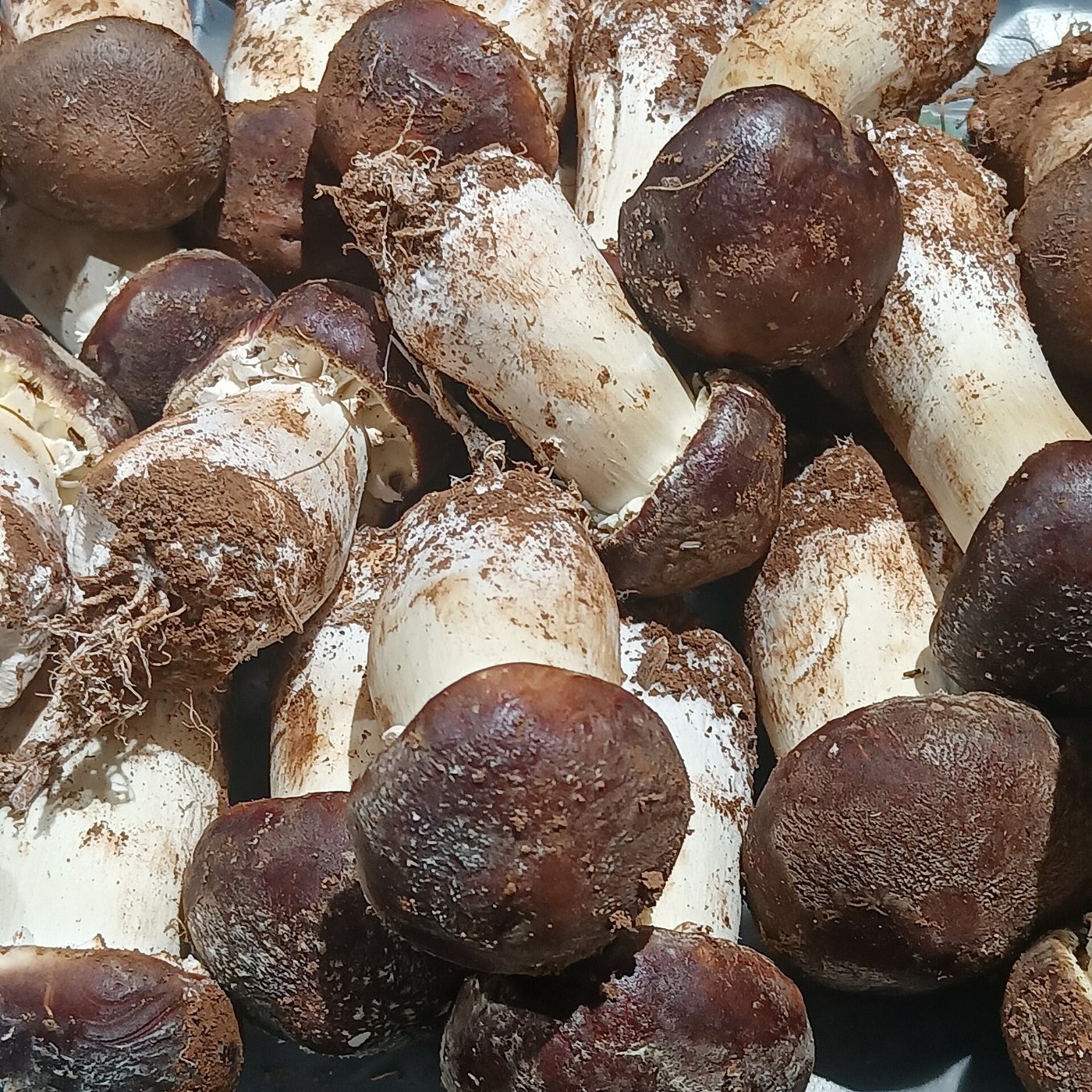
Closed cap, firm stem, clean smell of pine. Grade by size and openness; buy in the morning.
Cordyceps
May–Jun
County town, specialist shops
Count per gram, straight specimens, no wire or glue. Ask for the county of origin and expect a story.
Morel
Apr–May
Both towns
Dried is more reliable than fresh. The honeycomb should be intact, not crushed into powder.
Black barley
Year-round
County town
Stone-milled flour, sold by weight. Roasted barley for tsampa is the more useful purchase.
Yak beef, dried
Year-round
Both towns
Read the ingredients: meat, salt, chilli. If it lists soy protein, it is not yak.
Tibetan black pork
Nov–Feb, cured
County town
A national geographical-indication product: small black pigs, cured sausage and bacon. Vacuum-packed travels well.
Snow chrysanthemum
Aug–Sep
Both towns
Whole flower heads, deep red, no dust in the bag. Sold by weight, brewed like tea.
Honey
Year-round
Roadside and markets
Crystallisation is normal and not a fault. Ask which flowers; the answer is usually a slope, not a species.
Axi pottery
Year-round
County town, Axi village
National intangible heritage, unglazed, hand-built. Heavy, so buy one piece rather than four.
Tibetan silver
Year-round
Everywhere
“Tibetan silver” is a cupronickel alloy, not silver, and is priced accordingly. Buy it as costume.
The seasons, for buying rather than walking.
The market has its own calendar, and it is not the tourist one.
May and June
Cordyceps digging season. Families go up onto the high grassland at dawn and the county market fills with plastic bags of them by afternoon. It is the biggest cash crop of the year for many households, and the prices at the start of the season are the highest.
July to September
Matsutake. The forests above the gate town produce it, and the morning market in Shangri-La town is where restaurants from Chengdu buy. This is the one purchase where being in the right town at 07:00 matters.
Late September to October
Apples, walnuts, and the last of the mushrooms. The county town's main street fills with fruit trucks, and the prices are the lowest of the year because the supply is local and the season is ending.
November to April
Cured pork, dried mushrooms, barley, honey and pottery. The market is small, the sellers are the producers, and nobody is in a hurry. Winter is the better season for actually talking to people.
Where to go.
Four places, in ascending order of price.
Shangri-La town market
A morning market and a row of dried-goods shops on the main street, five minutes from the visitor centre. Convenient, mid-priced, and used by locals as well as hotels.
The county products centre
Daocheng's agricultural and cultural products centre on the main street of the county town, opened in 2026, gathers the geographical-indication lines — pork, barley, oil, honey, pottery — under one roof with fixed prices. Less haggling, fewer surprises.
The county market
The wet market in Daocheng town, where cordyceps and matsutake change hands at producer prices. Go early, bring cash, and expect to be quoted two prices until it is clear you are not a tour group.
The airport
A gift shop with everything above at three times the price, vacuum-packed and shelf-stable. It exists for people who forgot, not for people who planned.
How to judge it.
Five habits that cover most of the ways this market can go wrong.
Weigh it in front of you
Fungi are sold by weight and the scales are not always honest. Ask for the price per 500 g, watch the scale zero, and do the arithmetic yourself before agreeing.
Grade is everything, and it is visible
Matsutake is graded on size and on whether the cap has opened. An open cap is a lesser mushroom at a lower price; a seller who will not let you sort through the pile is telling you something.
Count, do not weigh, cordyceps
The trade unit is the number of pieces per gram, not the total weight. Count a sample, ask the price per piece, and check for wire threaded through the stem or glued joins.
“Tibetan silver” is an alloy
It is copper, nickel and zinc, sometimes with a little silver. That is fine as a souvenir at souvenir prices. It is not fine at a silver price, and the “old” patina is usually a chemical dip.
Printed thangka is not painted thangka
A real painted thangka takes weeks and costs accordingly. Anything rolled in a tube with a shrink-wrapped edge is a print, and should be sold as one.
Getting it home.
The perishable problem, and the customs one.
Fresh matsutake
Vacuum-packed with a cold pack it will travel 24–48 hours. Ask the shop to pack it; most do, for a fee. Do not put it in checked luggage in August and expect anything edible at the other end.
Dried goods
Dried mushrooms, barley flour, tea and cured meat are the low-risk purchases: light, stable, and unlikely to be stopped. Check the vacuum seal before you pay.
Customs
Fresh fungi, meat and dairy are restricted or banned by a number of countries, including Australia, New Zealand and the United States. Dried and commercially sealed products usually clear; a bag of fresh mushrooms usually does not. Check your own country's rules before you buy a kilo.
Pottery
Axi ware is unglazed and brittle. Ask for it boxed with padding, and accept that a large piece is a hand-luggage problem.
Matsutake in the first week of the season: soil on the stem, cap still closed, and a price that will halve within a month.