There are three places to sleep around this valley, and a thousand metres of altitude between the lowest and the highest. The choice decides more about your trip than any other booking you will make.
Yading is a valley with one road in, one village inside the gate, and a ticketed shuttle that carries everybody else up from a town a thousand metres below. That geometry makes the hotel question unusually simple and unusually consequential: you are choosing a bed at 2,900 metres, at 3,750, or at 3,900, and the mountain does not care which one you can afford.
The reserve’s own advice is one to two nights below 3,000 metres before the gate. Everything below is what that advice looks like when you have a flight to catch and a long route to walk.
The three bases.
Altitude, distance to the gate, and the honest trade each one makes.
Base
Altitude
To the gate
What it is for
What it costs
Shangri-La town (Riwa)
about 2,900 m
5–15 minutes
The first night, the pharmacy, the oxygen shop, the widest choice of beds
No dawn on the boardwalk; you join the 07:30 queue like everyone else
Yading village
3,900–4,060 m
inside the gate
Dawn at Pearl Lake before the buses, the stars, the last light on Xiannairi
Sleeping a thousand metres above the gate town on your first night
Daocheng county seat
about 3,750 m
80 km, 1.5–2 hours
Banks, the county hospital, the best food and the mushroom restaurants
Two hours of driving before you have seen a peak
Daocheng Yading airport
4,411 m
about an hour
Arriving and leaving; nothing else
It is an airport on a plateau, not a place to spend a night
The village, and the hour it buys you.
Yading village is the only settlement inside the reserve, and the only way to be in the valley before the first bus.
What it is
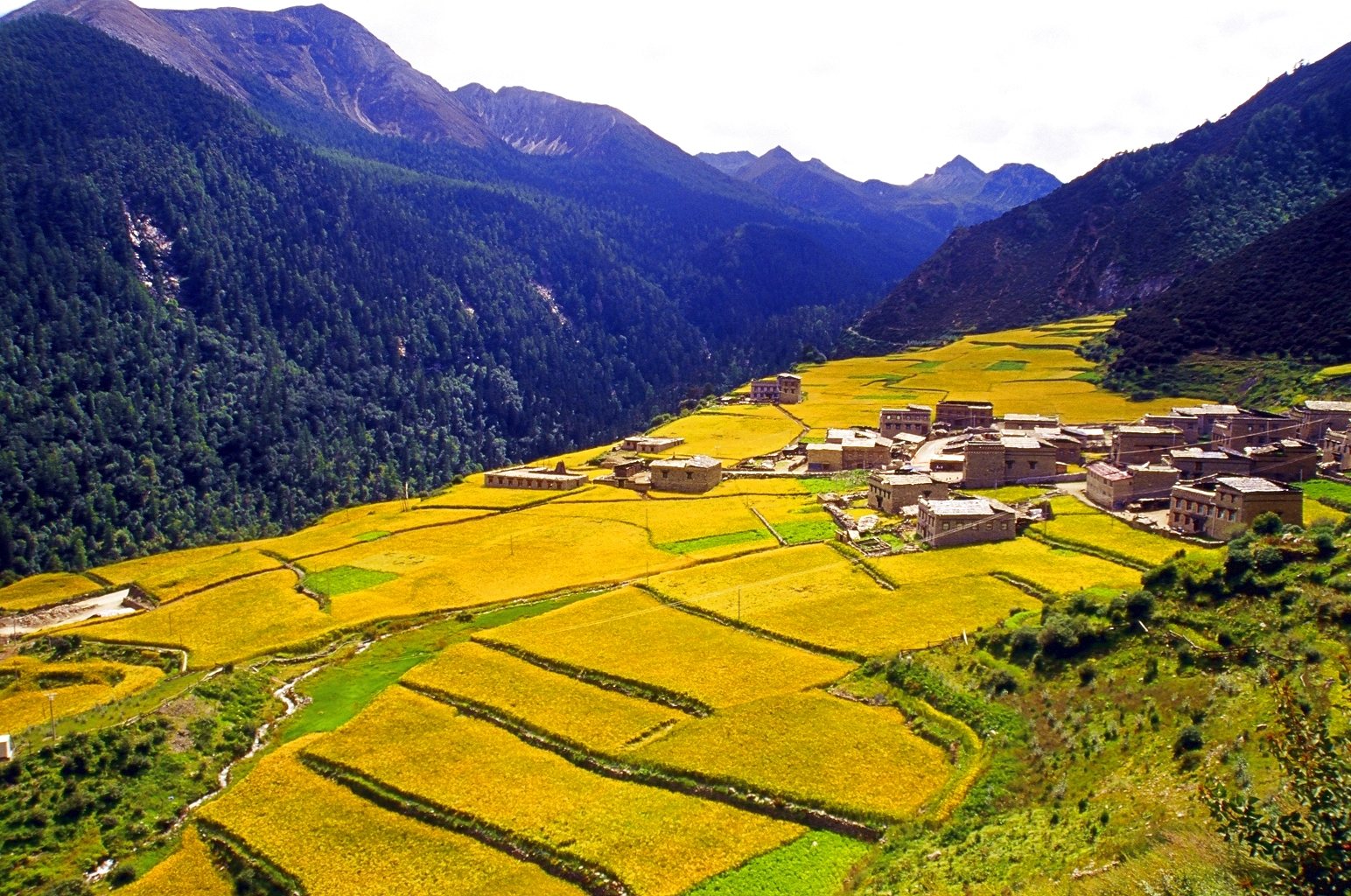
A straggle of Tibetan farmhouses and small hotels on a shelf above the valley floor, with barley fields below and the three peaks on the skyline. The shuttle stops twice in the village, at what everybody calls stop one and stop two, and from either you can walk to Zhalagang, where the carts and the long route begin.
The hour
The first shuttle leaves the visitor centre around 07:30 and takes about forty minutes over the pass. Day visitors therefore reach Chonggu at about 08:20. If you slept in the village you are on the boardwalk at 07:40, alone, with the light still low and Xiannairi doing the whole job on its own. That hour is the entire product. It is also the hour that photographs best, which is why the village is full of people carrying tripods.
What it asks of you
Three thousand nine hundred metres on your first night in the region. If you flew into the 4,411-metre airport that morning and came straight up, you have not acclimatised at all, and the village will be a bad night rather than a good one. Come up from the gate town after a night there and it is a different experience entirely.
What the rooms are
Mostly small Tibetan-run houses with eight to twenty rooms, converted in the last decade. Quality varies enormously within a hundred metres: one house has piped oxygen and underfloor heating, the next has a electric blanket and hot water between seven and ten in the evening. Ask before you book, not after.
The gate town, and the sensible first night.
Shangri-La town sits at 2,900 metres, ten minutes below the visitor centre, and it is where the acclimatisation advice actually happens.
Why it is the default
It is a thousand metres lower than the village and it has the things a body needs at the start of a high trip: a pharmacy, oxygen cylinders for sale, a clinic, hot food until late, and shops that sell gloves and sun cream. The reserve's one-to-two-nights-below-3,000 rule can only be followed here.
What it is not
Pretty, mostly. It is a service town that grew around a car park, with a main street of hotels, noodle shops and souvenir stalls. Nobody comes for the town. People come for the sleep.
How the morning works
Tickets are booked online against a passport; you collect or scan at the visitor centre, then the shuttle climbs the switchbacks over the pass. Staying here means a 06:30 alarm rather than a 07:30 one, and you will be behind the village guests at Chonggu by about forty minutes.
The county seat, for the edges of the trip.
Daocheng town at 3,750 metres is an hour and a half from the gate, which makes it a staging post rather than a base.
What it has
Banks and ATMs that work, the county people's hospital, the best restaurants in the county, a proper market, and the new agricultural-products centre on the main street. If you are driving in from Litang or flying out the next morning, this is where the practical business of the trip gets done.
When it makes sense
The night before an early flight, the night after a long drive, or as a base for the plateau itself — the poplars along the Bange river, the red marsh at Sangdui, Haizi Shan. It does not make sense as a base for the reserve: four hours of commuting a day is four hours not on the mountain.
The altitude catch
At 3,750 metres it is barely lower than the village. Coming from Chengdu in one day and sleeping here is a common mistake; the town is a pleasant place to be acclimatised in, not a place to acclimatise.
What to ask for when you book.
Six questions that separate a good room at 3,900 metres from a cold one.
Piped oxygen or a can
Some village hotels run dispersed oxygen into the rooms; others hand you a canister. The first is worth paying for if you are arriving straight from the airport, the second is a first-aid measure, not a night's sleep.
Heating, specifically
Underfloor heating, radiators, or an electric blanket. Ask which. In October the difference between the three is the difference between sleeping and not.
Hot water hours
Many houses heat water in batches. Ask when, and whether it is a boiler or a solar tank, because a cloudy afternoon in the shoulder season means cold showers by evening.
Luggage
The shuttle takes bags, but the village stops are on a slope and many houses have no lift. Ask whether somebody will carry yours up the stairs, and tip them.
Which stop
Stop one and stop two are several hundred metres apart. Ask which is nearer, and tell the driver.
Food
Village kitchens are small. If you want dinner after 20:00, arrange it in the morning; the alternative is instant noodles from the shop by the lower stop.
When to book.
The market here is not complicated, but it is very seasonal.
The last week of September to mid-October
Larches gold, skies clear, and every room within an hour of the gate booked. This is the one period where one to two months ahead is not caution but necessity.
National Day
The first week of October is the busiest week of the year in western Sichuan. Prices in the village and the gate town rise steeply and the reserve itself is crowded by 09:00.
Winter
From late November many village houses close and some gate-town hotels run on a skeleton staff. The ones that stay open are cheap and quiet, and the reserve is at its best for anyone who can take −15 at dawn.
The rest of the year
Two weeks ahead is usually enough outside the autumn window, and a few days is often enough in March and November. Book the first night before you fly, and decide the rest when you know how you feel.
Yading village in early autumn: the barley is cut, the larches have not turned, and the houses are the only roofs inside the gate.