The Guanyu pavilion
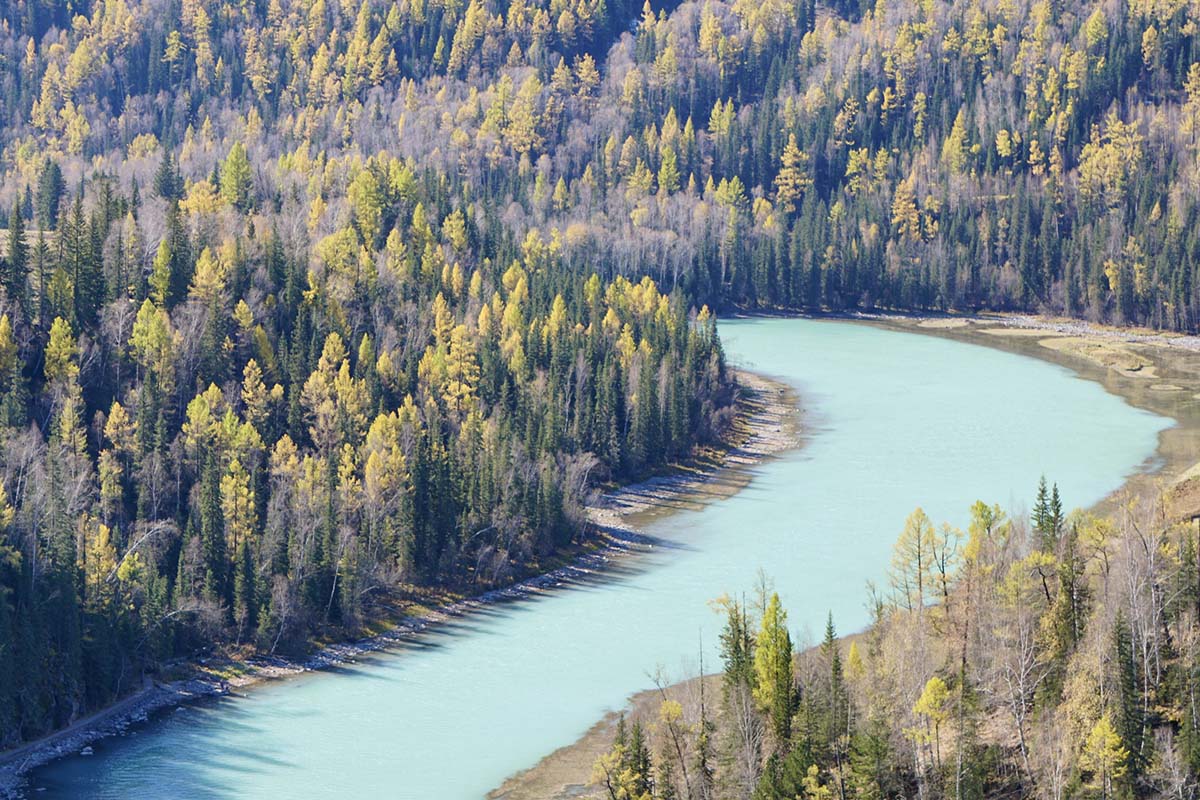
The viewpoint above the lake's outlet bend — the classic shot and the best fog-hour seat in the park.
 Start your enquiry
Destinations / Xinjiang /
Three timber settlements in China's corner of Siberia — the lakeside base, the valley bowl and the border hamlet — each with its own light, season and reason.
Explore the guide ↓Northern Xinjiang · Kanas country · 1,300–2,000 m
The Kanas country's three settlements each do a different job. Kanas lake is the base — the shuttle hub with the hotels and the pavilion over the lake bend. Hemu is the postcard — a wide valley bowl of wooden houses with the dawn-fog platform above it. Baihaba is the far hamlet — smallest, most remote, closest to the Kazakh border, and the one that needs a border permit.
How you combine them decides the trip: the autumn photo tour gives Kanas three nights and Hemu two; the summer trek pair walks the ridge between the villages; and winter closes most of the network except the ski country. The permit, the road closures and the leaf report are the three logistics that shape everything — all handled on our journeys, all worth knowing before you plan independently.
Six stops across the three settlements.
The viewpoint above the lake's outlet bend — the classic shot and the best fog-hour seat in the park.
Wolong, Moon and Shenxian bays — the river's three great S-curves, each best in different light through the day.
The platform above the village rooftops at first light: fog, woodsmoke and the snow line doing their daily show.
Fenced pastures, log houses and the border-belt silence — an hour of walking covers the village properly.
A half-day walking route over the birch ridge between the two main villages — the locals' commute, the trekkers' favourite half-day.
Village home dinners where the season allows — butter tea, dairy, and the valley's small, warm hospitality.
Permits, seasons and the honest limits.
Baihaba sits in the border belt and needs a border-area permit — free and arranged by us; independent travellers should arrange it in Burqin before the valley.
Late September is the colour fortnight; June–August is the green hiking window; December–March belongs to the ski belt and closes much of the village network.
Valley roads close with weather in any season; winter schedules keep a flex day and accept that some villages become unreachable.
Village homesteads are warm and simple. The best rooms go early in the colour fortnight — another reason our tours book the valley a season ahead.
The villages are famous, and in peak colour the platforms and boardwalks fill by mid-morning. The dawns and the walking routes are where the country still belongs to you.
Tell us the season — the villages have a correct order and rhythm for each one.
Start my journey brief ↗