December – February: the powder core
Deepest snow, coldest air — minus-thirties are possible. For strong skiers who want the full Altai experience and can dress for it, this is the real thing.
 Start your enquiry
Destinations / Xinjiang / Altai snow report
China's longest ski season runs in its far northwest corner. Here is the shape of a normal year at the three resorts and the village.
Explore the guide ↓The Altai · late October – early April
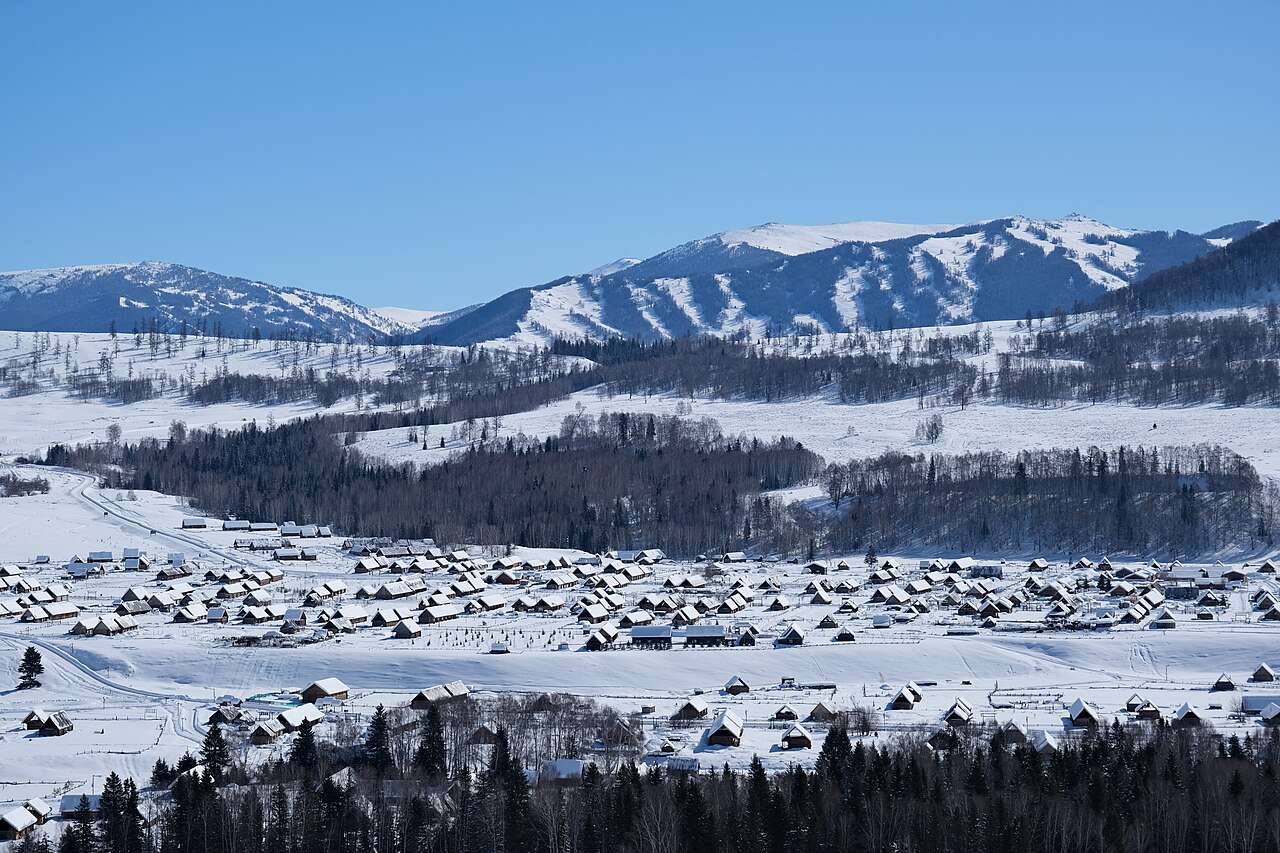
The Altai's ski calendar is remarkably stable in shape. Koktokay, in its granite gorge east of the city, typically opens first — the 2026–27 season began with a late-October start and the area markets itself on being Asia's earliest. Jiangjunshan in Altay city follows within days. The deep-snow heart of the season runs December through February, when Siberian air delivers the region's famously dry powder; March warms into long spring days; the resorts wind down by early April.
The 2026–27 season as we write this: Jiangjunshan opened 30 October with the beginner terrain, high runs following as snow allowed; Koktokay and Jikikpulin above Hemu open on their own snowfall clocks. Village access to Hemu behaves differently from resort access — storm cycles can close the village road for a day or two at a time, and winter itineraries flex around those windows rather than fight them.
Four seasons inside one winter.
Deepest snow, coldest air — minus-thirties are possible. For strong skiers who want the full Altai experience and can dress for it, this is the real thing.
Limited terrain, quiet slopes, and the season's first storm cycles. Good for a city-based warm-up week centred on Jiangjunshan.
Warmest skiing, stable weather, long days and still-deep coverage on the big mountains. The best month for a first Xinjiang ski trip.
Chinese New Year weeks are the busiest and priciest anywhere in China — avoid or book far ahead. We confirm the year's resort calendars and current prices at enquiry; they are set by the resorts, not by us.