Wildlife / Takin
The valley's bellwether.
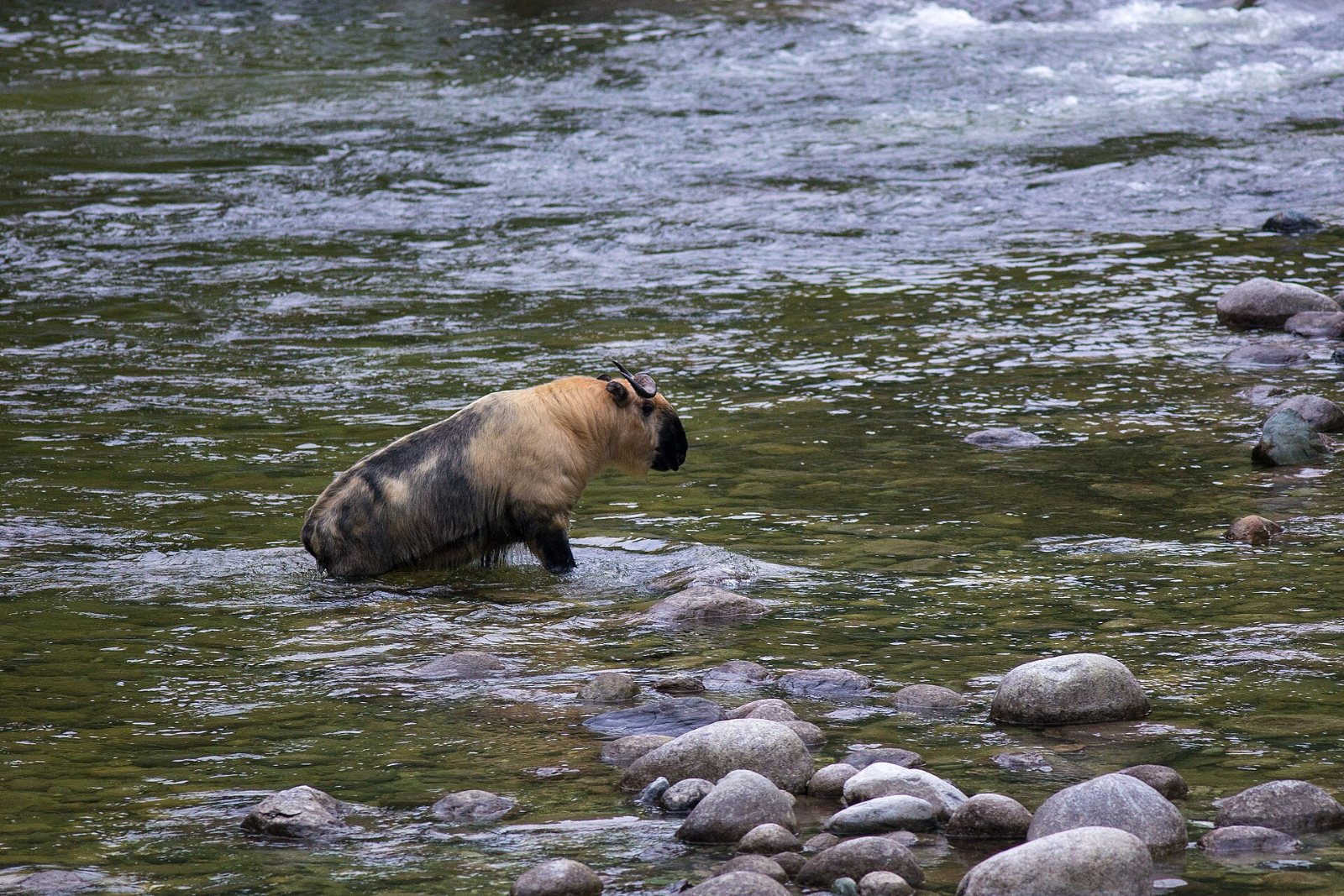
A goat-antelope the size of a small car, wading rivers in broad daylight — Tangjiahe is the one reserve in China where the takin is the reliable animal, not the rumour.
Start this journey brief →Sichuan · Tangjiahe, Minshan range
WhereTangjiahe reservethe northern end of the Giant Panda National Park's Sichuan section
OddsHighour own field estimate: takin, Reeves's muntjac and Tibetan macaque are the animals you plan around
Best rhythmFirst lightherds feed along predictable lines at the valley edges; the plateau clock applies to takin exactly as it does to cats
SleepInside the reserveone night at the reserve hotel — with a night tour on offer, weather and park permission allowing
Why the takin matters.
The Sichuan takin looks assembled from spare parts — a goat-antelope with a humped shoulder, heavy horns and a golden coat, built for the cold fog of the Minshan range. It is also the animal this valley is quietly built around. In most of China a takin is a rumour on a trail camera. In Tangjiahe, herds wade the main river in daylight and graze the valley walls close enough to watch without optics.
That reliability is not an accident of tourism; it is a health indicator. The share of juveniles in a takin herd is the single best read on how the whole valley is doing — a valley that calves well carries its future in the open. Tangjiahe's herds have done exactly that for years, which is why the rest of the cast here — muntjac, macaques, and the rarer guests — is worth trusting too.
How we build the days.
- Sleep inside the valley
Four to five hours north of Chengdu, then into the reserve — not to the gate hotel, but the one inside. That single decision turns one drive-in day into two field days, with first light already in position.
- Run the main valley first
The main valley is the takin ground: river fords, open banks, the edges herds use. A day of stopping rather than covering ground, with short flights of stairs and long, deliberate sits.
- Give the east valley its own morning
A different set of edges, a different set of animals — goral on the rocks, the macaques' commute, the odd muntjac crossing. Nothing is promised here, which is precisely why it pays.
- Take the night the valley offers
The reserve hotel runs a night tour when weather and park permission allow. Some of the cast — leopard cat, civet, and their neighbours — only clock in after dark.
What the valley actually asks.
The morning rule
First light is not advisory here. The herds feed along predictable lines at the valley edges and drift into the timber as the day warms; the visitors who see ten takin and the visitors who see two are usually separated by nothing more than a wake-up time.
Count the juveniles
It is the habit that separates watching from looking: count the young in every herd you see. A valley that calves well is a valley whose middle rows — goral, muntjac, pheasant — will also be full. It is the most honest data a visitor can gather.
The rest of the cast
Takin lead the list, but the same two days carry Reeves's muntjac and Tibetan macaque at High odds, goral and leopard cat at Medium, and the long tail — golden pheasant, marten, and even panda sign — beyond. The ungulates field guide explains why that middle row is the real trip.
Weather and footing
The Minshan range is damp, cool and slippery underfoot even in good months. Waterproof shoes, a warm layer for the valley mornings, and patience with the fog — which the takin do not mind at all.
Ready to take it further?