The Gyatso La
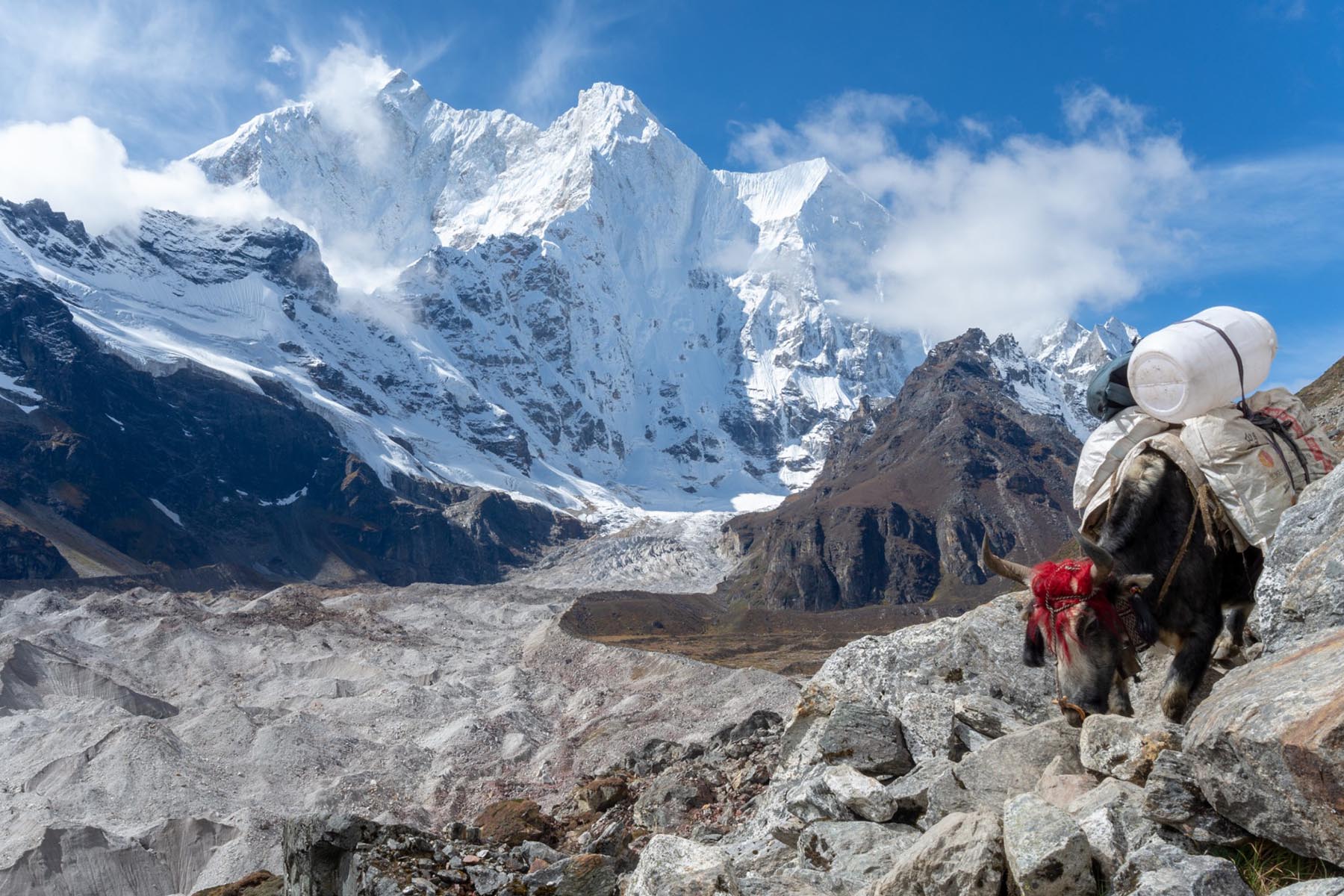
The pass on the Tingri road where the Himalaya opens up and Everest, Lhotse and Makalu stand in a row. Cold, windy, and the best single view of the trip.
 Start your enquiry
Destinations / Tibet / Everest
The road south from Tingri, over a 5,200-metre pass, to the valley below the north face — and the highest monastery in the world at the end of it.
Explore the guide ↓The Himalaya · Tingri & Rongbuk
Everest has two approaches and they could not be more different. The south side, from Nepal, is a trek through villages and forest to a base camp at 5,364 metres. The north side, from Tibet, is a road: from Lhasa west to Shigatse, then south through Lhatse and Tingri, over the Gyatso La at about 5,200 metres, and down into the Rongbuk valley. The mountain appears, enormous and unmistakable, from the pass.
The valley itself is a glacial trench at 5,000 metres, with the Rongbuk glacier at its head and the north face rising three kilometres above it. The monastery sits at 4,980 metres — the highest in the world — and has been rebuilt since the Cultural Revolution, with a small population of monks and nuns and a courtyard that looks straight at the mountain.
Access to the mountain has tightened. The tent camp that once stood at 5,150 metres was closed to visitors in 2019, and movement beyond Rongbuk is now restricted; what you reach is a viewing area and the monastery, not the climbers’ camp. That has made the experience quieter and more regulated, and it is the reason we confirm access for every departure rather than describing a route that no longer exists.
The pass, the valley, the monastery and the mountain.
The pass on the Tingri road where the Himalaya opens up and Everest, Lhotse and Makalu stand in a row. Cold, windy, and the best single view of the trip.
A working monastery with a courtyard facing the north face. Simple rooms, butter tea, and the mountain filling the window.
A gravel valley with moraine walls, glacial melt streams and the north face at the head. An hour of walking at this height is a full day’s effort.
A scruffy, wonderful frontier town on the old Kathmandu road, with the Himalaya on the horizon and the best acclimatisation night before the valley.
Spring and autumn, for the mountain to be visible.
The classic Everest window: clear mornings, strong winds on the summit, and the climbing season in progress. Cold at Rongbuk.
The monsoon. Cloud and snow on the mountain for weeks; the valley is green and the views are rare. Not the time for a first Everest trip.
The best months: stable air, clear mornings, and the post-monsoon light. Cold nights, empty valley.
Winter. The road south of Tingri can close after snow, and the monastery is largely shut. Access is confirmed case by case.
Two long days from Lhasa, and a permit.
Lhasa to Shigatse, Shigatse to Tingri, Tingri to Rongbuk: two long days minimum, and three is better. The last 100 km is slow, high and spectacular.
The Everest region sits outside the Lhasa permit area, so it needs more than the Tibet Travel Permit — historically the Alien’s Travel Permit and, for the border zone, a military permit. Practice has shifted in recent seasons; we confirm the current requirement for each departure.
Rongbuk guesthouse accommodation is basic and cold, and sleeping at 4,980 metres is a serious proposition. Tingri at 4,300 is the sensible alternative, with a dawn drive in.
A border that has moved for centuries.
Tingri and the valleys south of it were the trading route to Nepal, and the old town still has the feel of a place where goods change hands.
Rongbuk is a nunnery and monastery combined, rebuilt in the 1980s on the old foundations. The cave where the first abbess meditated is above the courtyard.
Everest is Chomolungma in Tibetan, and the north face is the one the first British expeditions saw in 1921. The history of the north side is a history of approaches, not summits.
Five thousand metres, and a cold night.
Rongbuk at 4,980 metres is higher than most people have ever slept. A staged ascent — Lhasa, Shigatse, Tingri — is not padding. It is the route.
Even in May, the valley is below freezing before dawn and the wind is constant. A proper down layer, a hat, gloves and goggles.
The rules on how far up the valley visitors may go have changed more than once since 2019. We confirm the current position for each departure and do not promise the old route.
Tell us how many nights you can give the ascent. The difference between a rushed and a good Everest trip is two nights at Tingri.
Start my journey brief ↗