Pick the month, not the day
Late October and early November are the highest-probability weeks of the year on both ranges. April and May are the second window, with more snow and fewer people.
 Start your enquiry
Destinations / Sichuan / Seasonal notes / The clear window
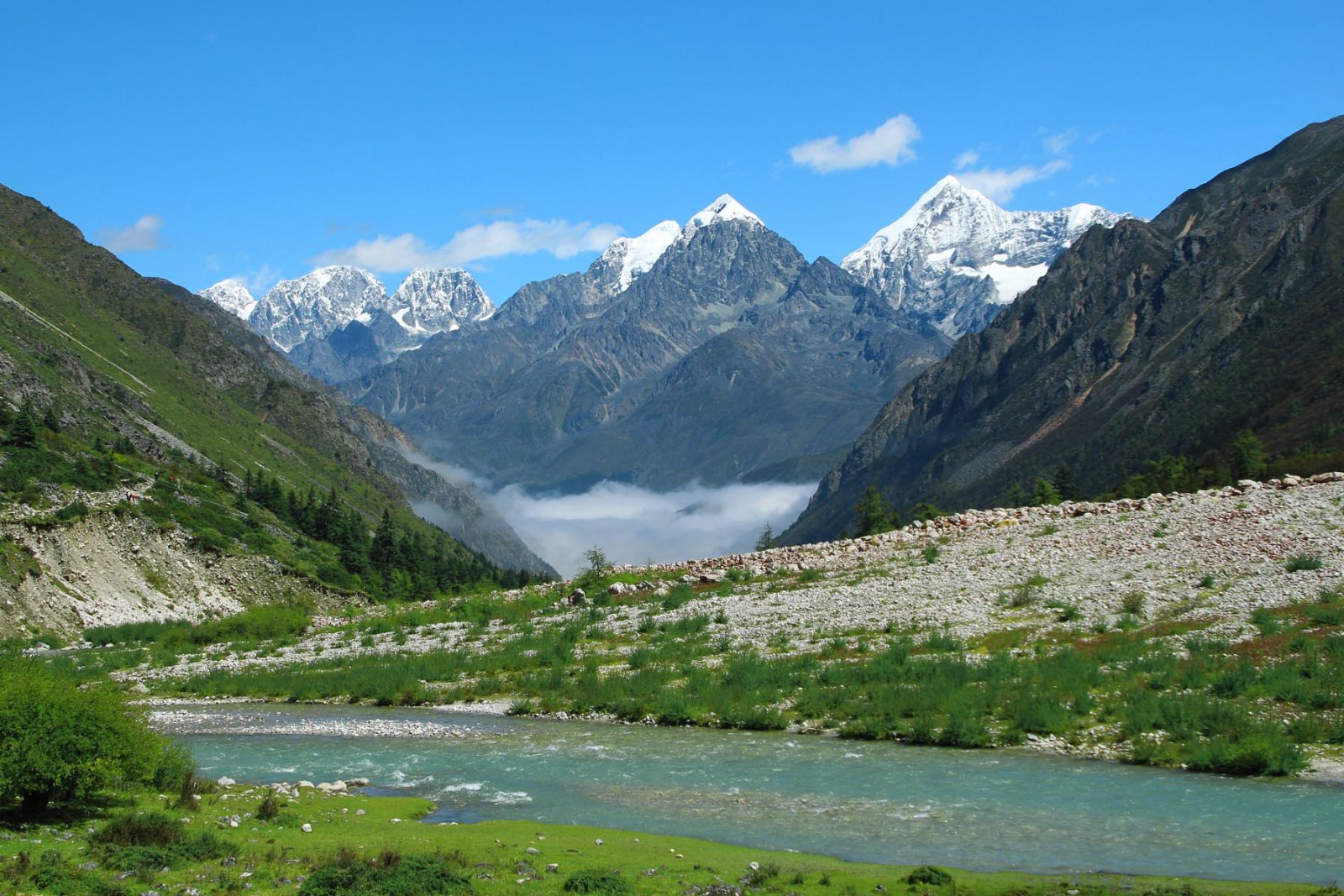
A 7,556-metre mountain that is in cloud most of the year. When Gongga and Siguniang actually appear, and how to plan around a probability rather than a date.
Explore the guide ↓The Daxue and Qionglai ranges
The high peaks of western Sichuan sit in a monsoon climate. From June to August the moisture arrives from the south, the cloud sits on the range for weeks, and the summits are simply not visible. From October the monsoon withdraws, the air dries, and the mountains appear — not every day, but often enough that a two-night stay has a reasonable chance.
Within a clear spell, the daily pattern matters as much as the season. The cloud builds through the morning and closes the summits by early afternoon on most days, even in October. The reliable hour is the first two or three after dawn, which is why the classic Sichuan photograph is a dawn shot and why every good itinerary has you outside before breakfast.
The consequence is that a summit view should be planned as a stay, not a stop. Two nights at the same altitude, in the same valley, roughly doubles your chance compared with one, because weather here moves in two- to three-day blocks rather than day by day.
Three decisions, in order.
Late October and early November are the highest-probability weeks of the year on both ranges. April and May are the second window, with more snow and fewer people.
Whether it is Hailuogou or the west side of Gongga, a second night at the same place is the single cheapest improvement to your odds.
The cloud closes in from mid-morning. A 06:30 start is not enthusiasm; it is the only reliable window in the day.