
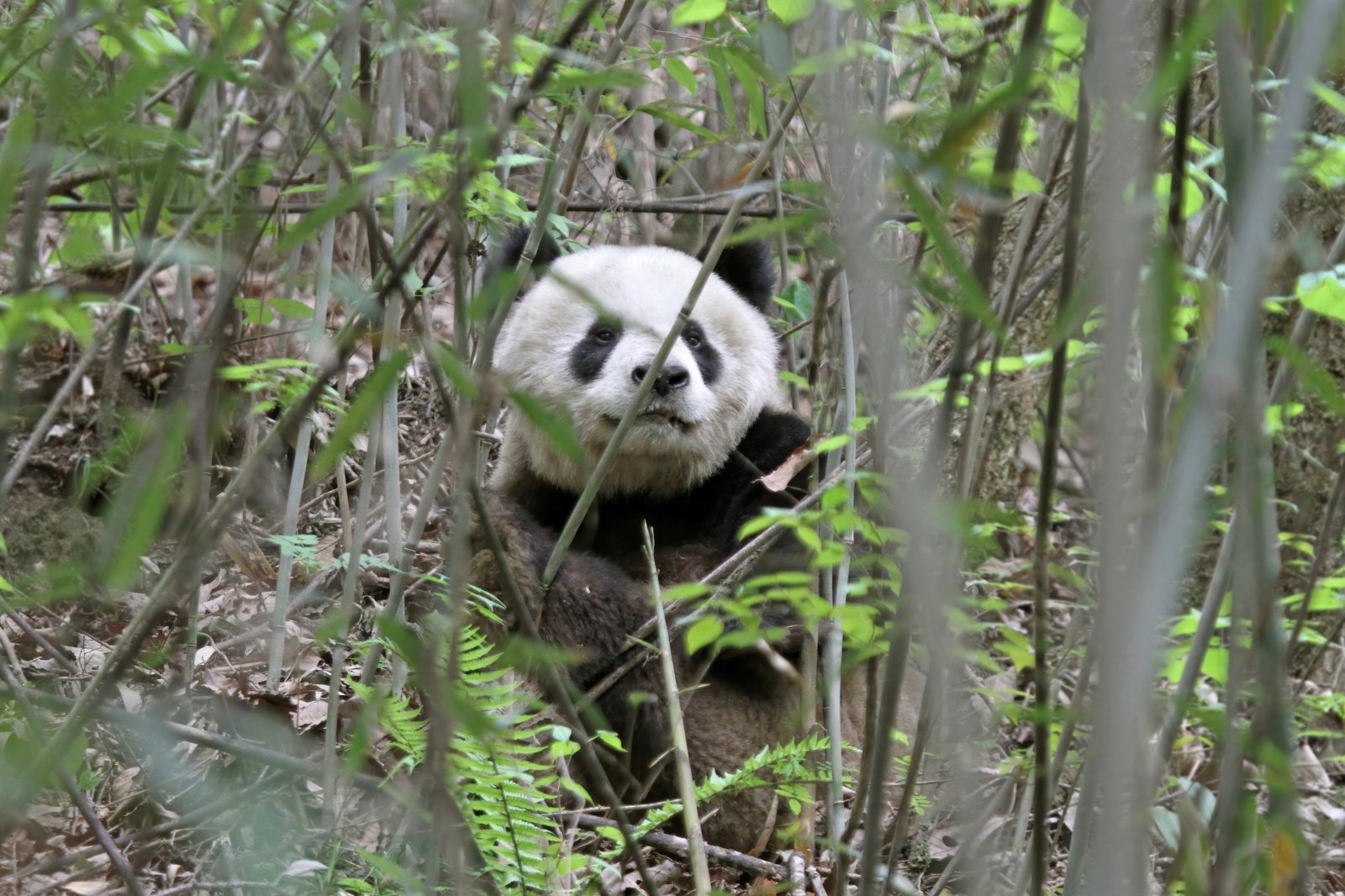
A Qinling giant panda sitting among bamboo stems and ferns on a forested slope

Wildlife / Qinling panda and ibis tour

Private rail-and-wildlife journey

The Qinling panda and ibis tour.

Two valleys on one rail line, an hour from Xi’an: the Qinling’s south slope, where China’s densest wild panda population lives, and the rice paddies below it where the crested ibis came back from seven birds.

  • Duration4 days
  • Nights3
  • Best windowApr – Oct
  • Starts & endsXi’an
Ask about this itinerary

Qinling panda in bamboo, Foping county · iNaturalist contributor · CC0

The pandas~130

wild pandas in Foping county, at roughly one per 2.5 km² in the core — the densest population in China

The ibis7 → 12,000+

the world population, from seven wild birds found in Yangxian on 23 May 1981

The railwayUnder an hour

Xi’an to Foping on the Xi’an–Chengdu high-speed line; Yangxian is the next stop east

The windowApr – Oct

late spring to late autumn — the Qinling sits north, winters bite and spring arrives late

Why this route

The mountain where the four treasures fit in one week.

The Qinling is China’s dividing range: the line the country draws between north and south, and the only mountain where panda, golden snub-nosed monkey, takin and crested ibis share the same valleys. The pandas here are a separate subspecies, holding out on one range much further north than Sichuan’s, and Foping county carries them at the highest density in the country.

What makes it work as a short journey is the railway. The Xi’an–Chengdu line stops at Foping itself, under an hour from Xi’an, and Yangxian — the ibis county — is the next stop east. So this is four days with two bases and no long drives: bamboo forest and camera-trap valleys on one side, working rice paddies with the birds standing in them on the other.

We are clear about the odds before anyone books. Panda density is the highest in China and you still will almost certainly not see one; what the forest gives you is bamboo a panda has just left. The ibis is the opposite — a genuinely watchable wild bird, at dawn, from a road, in the county that banned pesticides to keep it.

Route Briefing

Rail in to Foping, two nights in the reserve’s valleys, one stop east to Yangxian, rail out. Four days, one vehicle, no drive longer than an hour.

  1. Day 01Xi’an → Fopingrail in, reserve briefing, first valley dusk
  2. Day 02Sanguanmiao & the East Rivera full day on the reserve’s working trails
  3. Day 03Foping → Yangxiandawn valley, then the ibis county
  4. Day 04Paddy circuit → Xi’ansecond ibis morning, rail out

Species odds

What the mountain actually offers.

Our own field estimates, not a survey and not a promise. The Qinling is a forest where the evidence is easier to find than the animal.

Foping’s valleys

Sanguanmiao and the East River · two dawns

Regular
golden snub-nosed monkey troops — 1,900-strong population in the neighbouring Baihe valley, moving with the season
Good
takin on the steep ground, Reeves’s muntjac and Tibetan macaque in the bamboo edge
Unlikely
a wild giant panda — the density is the highest in China and sightings are rare; bamboo feeding sites are the realistic prize
Lottery
a brown panda: six of the eight ever recorded came from this county

Access runs through the reserve administration and its stations. There is no walk-in entry, and the core zone is closed outside survey work.

Yangxian’s paddies

The Han river valley · two mornings

Certain
crested ibis feeding in working rice paddies at dawn — hundreds of birds in the county, most of them wild
Regular
little egrets, Chinese pond herons and black kites over the same fields
Seasonal
nesting pairs in the tall trees near villages, February to June

The county banned agricultural pesticides to keep the ibis, and the result is a farm economy built on organic rice — the reason the birds are in the fields at all.

Day by day

The four days.

Two mornings on each subject. The Qinling is a mountain where weather decides, so the schedule keeps a spare dawn in both valleys.

  1. Day 01

    Into the other panda mountain

    Xi’an → Foping

    Meet at Xi’an North and take the high-speed line south through the Qinling tunnels — under an hour to Foping, a town of twenty-odd thousand in a valley that the railway put on the map. The reserve’s headquarters sit above it; the afternoon is for the briefing, the boundary maps and the camera-trap archive that shows what has walked past this week.

    Dusk in the first valley, low on the slope. This is not a panda walk; it is the introduction to how the forest reads — bamboo of two or three species, cut stems at panda height, droppings on the trail, and the takin paths that cross the same ground.

    • OvernightFoping
    • RailUnder an hour from Xi’an
    • DuskSanguanmiao valley
  2. Day 02

    A working day in the valleys

    Foping reserve

    Dawn on the reserve’s research trails: Sanguanmiao and the East River valleys, where the national survey routes run and the ranger stations sit. Golden snub-nosed monkeys are the realistic large mammal here — troops move with the season, low broadleaf forest in spring and autumn, high conifer in summer — with takin on the steeper ground and Reeves’s muntjac in the bamboo edge.

    The afternoon belongs to the panda evidence rather than the panda: bamboo feeding sites, tree markers, and the brown-panda story that belongs to this county alone — six of the eight brown pandas ever recorded were found here, beginning with Dan Dan in the 1980s. If the reserve’s monitoring team has a fresh location, we go there; if it does not, we do not invent one.

    • OvernightFoping
    • Windowdawn and late afternoon
    • Targetsgolden monkey, takin, panda sign
  3. Day 03

    One stop east, to the ibis county

    Foping → Yangxian

    A last dawn valley, then the train one stop east to Yangxian — the Han river valley on the Qinling’s south side, where on 23 May 1981 the world’s known wild crested ibis population was found to be seven birds in one hillside pine.

    The afternoon goes to the reserve’s breeding centre, where the half-wild aviaries and the ringing work behind the recovery are shown for what they are: a captive programme, clearly separated from tomorrow morning’s wild birds. Then the paddy roads at dusk, when ibis come in to feed in flooded fields a few hundred metres from the tarmac.

    • OvernightYangxian
    • RailOne stop east
    • Duskpaddy circuit
  4. Day 04

    The bird in the working field

    Yangxian → Xi’an

    Dawn on the paddy circuit, when the birds are closest and the light is behind you. February to June is nest season — adults turn pinker, pairs nest in the tall trees near villages — but the county’s paddies hold feeding birds through most of the year, which is the difference between this and almost every other Chinese comeback story: the animal is visible, in an ordinary field, without a permit.

    Midday rail back to Xi’an, an hour or so north, with the afternoon free for the city wall or the flight home.

    • Rail~1 hr to Xi’an
    • Windowdawn
    • Targetcrested ibis, wild, in paddies

What’s included

What is included, and what is not.

A short list for a rail-based mountain week.

Included

Arranged and paid before departure.

  • Private vehicle and English-speaking wildlife guide, four days

  • Reserve permits and station fees at Foping

  • Three nights: two in Foping, one in Yangxian

  • Breakfasts, and the valley lunches

Not included

Yours to arrange, or we quote it.

  • High-speed rail Xi’an–Foping–Yangxian–Xi’an

  • Dinners in town

  • Scope rental if you prefer your own glass

Enquiry

Ask us about this one.

Tell us your dates and whether the pandas or the ibis matter more. We will come back with what the reserve is reporting, where the birds are holding this month, and a written outline with a price.

Response time
One business day
Private tour
Your own dates
Best window
Apr – Oct

Trip details

Fields marked are required. This enquiry is filed against this itinerary, so you do not need to repeat the outline. There are no fixed departures to pick — this route runs to your dates, so put them in and we build around them.