Yading was a pilgrimage destination for centuries before it had a ticket office. The three peaks are not scenery in the Tibetan reading; they are three bodhisattvas, and the valley between them is arranged around that fact.
A mandala you can walk into, if the ground were open.
The Tibetan name for the group is Rigsum Gonpo, the three protectors: Chenrezig, the bodhisattva of compassion; Jampelyang, of wisdom; and Chakna Dorje, of power. In Yading they are mapped onto three physical mountains, arranged in a rough triangle around a glacial valley, and the whole landscape is read as their mandala.
That mapping is why the names matter and why they are so often mangled in English. Xiannairi is Chenrezig's mountain. Yangmaiyong — the one older English texts call Jampelyang, which is the same name in a different transliteration — is wisdom's. Chanadorje is power's. They are not three peaks in a range. They are one object.
Three protectors, three mountains.
Which is which, and what each one is for.
Xiannairi, 6,032 m
The compassion peak, and the highest thing in the reserve. Its north wall closes the head of the valley above Chonggu, wide and almost level at the summit, which is why it reads as a throne rather than a spire. Pearl Lake sits directly beneath it; in local belief the lake is the soul-lake of one of the two Tara figures flanking the peak.
Yangmaiyong, 5,958 m
The wisdom peak: a near-perfect pyramid, isolated, with the Luorong pasture laid out in front of it like an offering. This is the mountain Joseph Rock described in 1928 as the most beautiful snow peak he had seen, and it is the one that photographs without any help at all.
Chanadorje, 5,958 m
The power peak, an east-facing triangular face above the Chonggu grassland. Local narrative gives it the snake: a serpent that terrorised the valley, subdued by Chakna Dorje and turned to stone, with a spring said to emerge from its mouth in the seventh month of the Tibetan calendar.
Not a range
The three are close enough that on a clear morning from the meadow you can turn through a hundred and eighty degrees and see all of them. That is the point of the place, and it is why a list of three separate summits misses what Yading is.
The monastery at the foot of it.
Small, old, and still working.
What it is
Chonggu sits at about 3,880 metres on the slope below Xiannairi, a compact assembly of whitewashed buildings with a courtyard, on the route every visitor walks within the first hour. Tradition dates its founding to the Yuan period and gives its name a blunt meaning: filling a lake to make a monastery.
Why there
The site is the trailhead for the pilgrimage circuit and the point where the valley floor opens out. Monks still keep the lamps and say the daily offices; it is not a museum, and there is no set visiting time.
The founding story
The version told locally involves a lama who built here to honour the peaks, brought disaster on the valley, and then took the illness onto himself until the trouble passed. It is a foundation story, not a history, and it explains why the place is treated as protective rather than merely old.
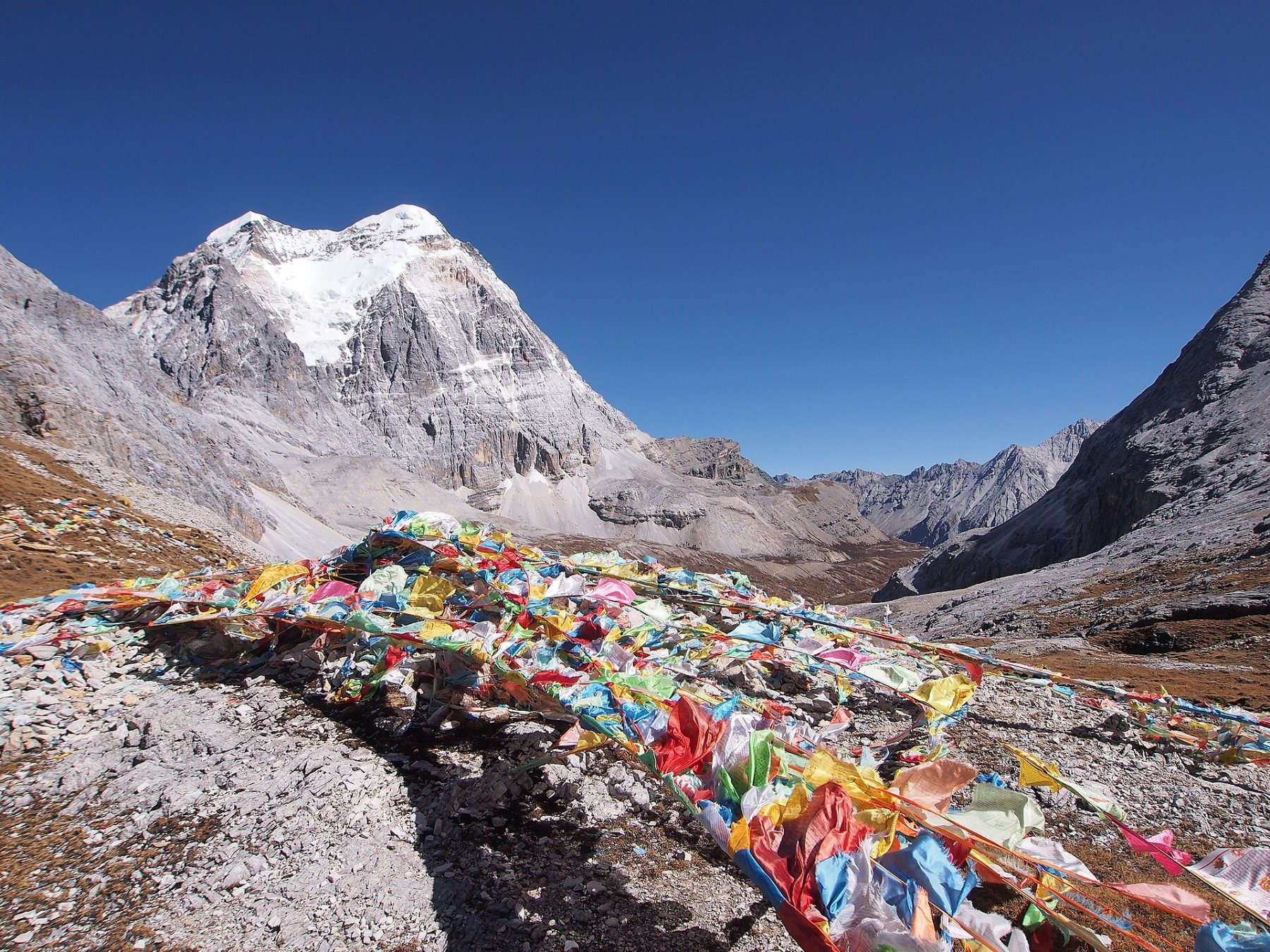
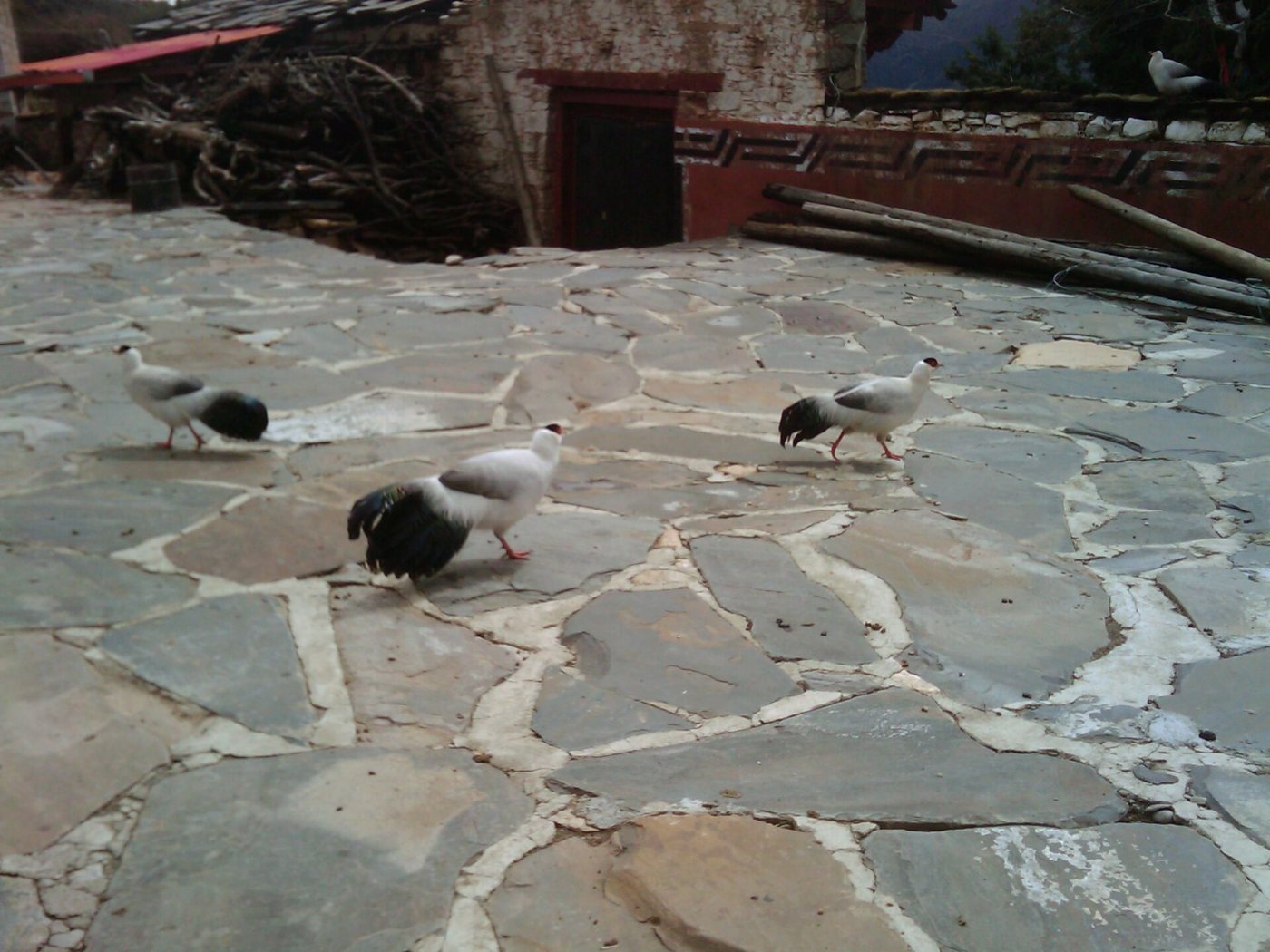
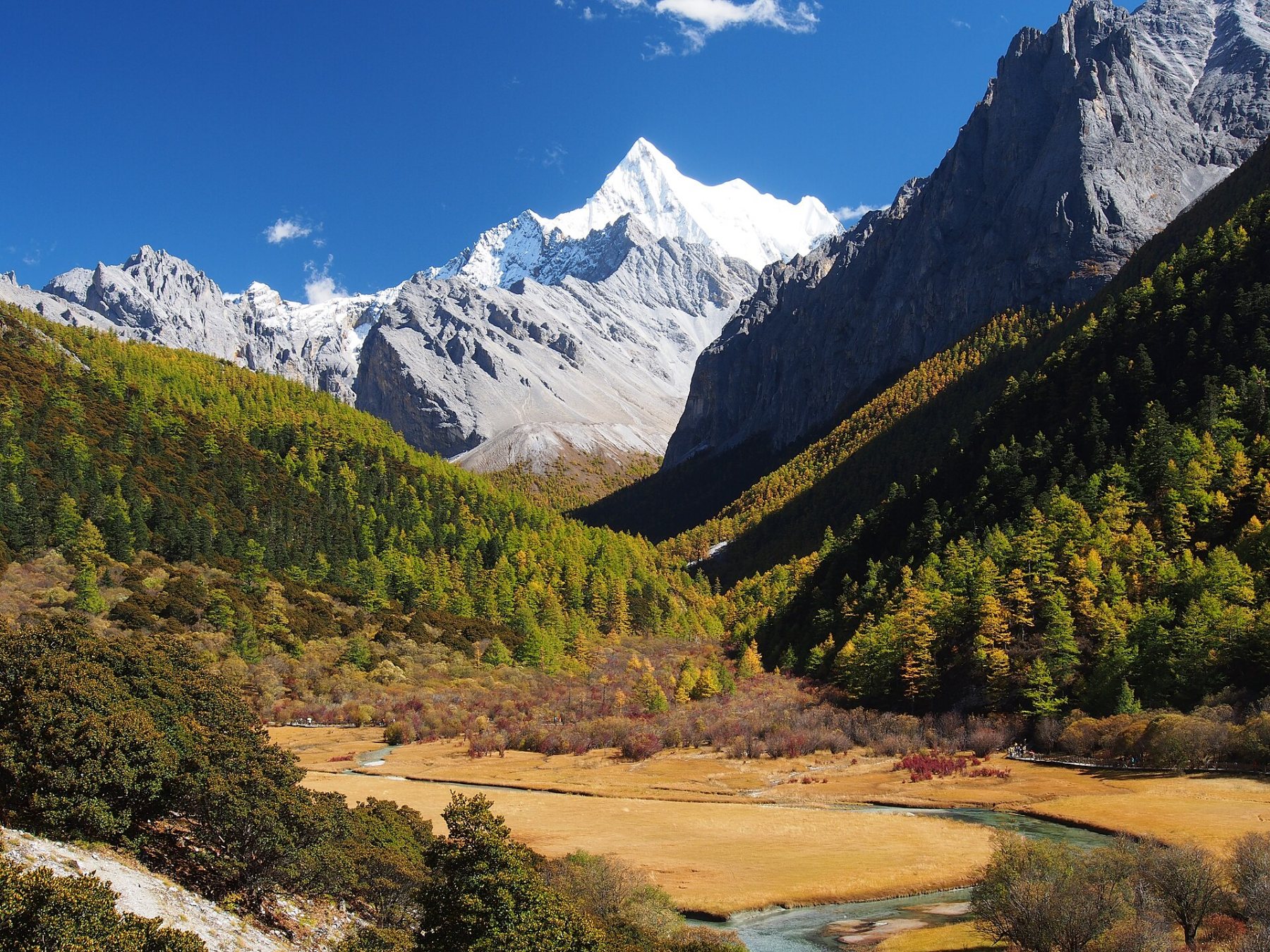
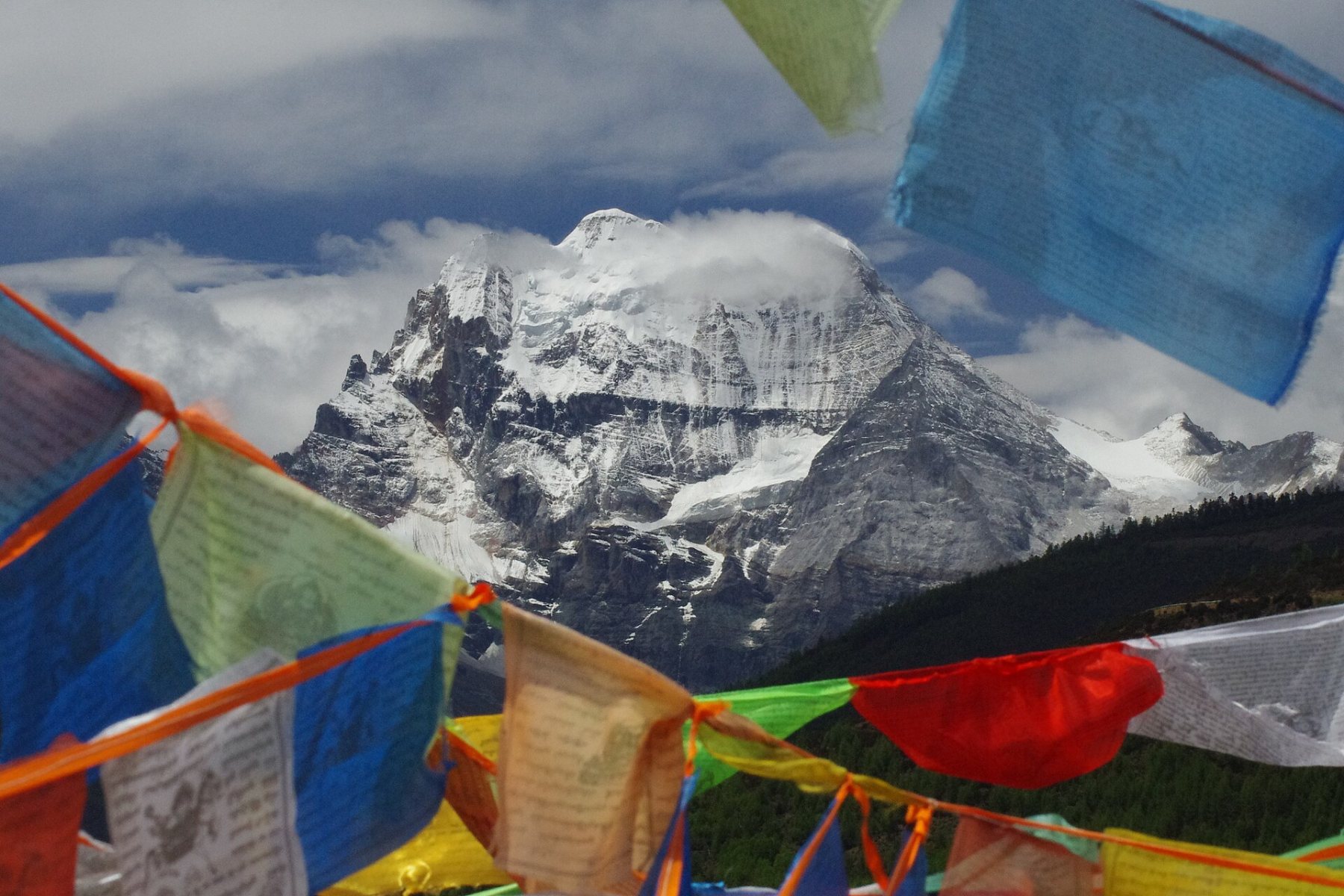
A monastery courtyard in Daocheng county, where the pheasants are fed.Chanadorje over the Chonggu grassland — power’s mountain.Xiannairi, compassion’s mountain, with cloud on the summit.
Rock, 1928, and the invention of Shangri-La.
One photograph taken from a monastery window.
Who he was
Joseph Rock was an Austrian-American botanist, explorer and photographer working for National Geographic, based in Yunnan and travelling the Tibetan borderlands in the 1920s. He reached Yading in 1928 and stayed at Chonggu.
What he wrote
His descriptions of the peaks, the larches and the pasture ran in the magazine with his own photographs. He called the valley a garden of the gods and compared Chanadorje's flanks to the wings of a bat. Yangmaiyong he ranked as the most beautiful mountain he had seen.
The leap to the novel
James Hilton never went to Yading. He read Rock's pieces, and the valley, the lamasery and the blue moon became Shangri-La in Lost Horizon in 1933. The connection is a chain of influence rather than a direct identification, and the tourist industry has flattened it into a claim. It is still the reason the word Shangri-La is attached to a town at 2,900 metres that was called Riwa within living memory.
The honest version
Yading did not inspire the novel in the way the signboards suggest. It inspired the material that inspired the novel. That is a more interesting story and it has the advantage of being true.
The pilgrimage, and where it stands now.
The circuit that made the valley famous, and its current status.
What it is
Tibetan pilgrims walk clockwise around the group, not up and back. The full circuit takes days and crosses ground that is not part of the ticketed route; shorter versions reach the meadow and the lakes.
The closure
The reserve closed its undeveloped areas to visitors from 20 November 2025, and the kora runs through exactly that ground. It is not currently something a visitor can join, whatever a guidebook from 2019 says. The closure page sets out what the notice covers.
How to read the reopening
The reserve said the closure would be reviewed each spring. A reopening would be announced by the reserve itself, not by a tour operator, and it would come with conditions. Check before you plan around it.
What is still open
The clockwise walk from Chonggu to Pearl Lake and back, and the long route to the lakes, are both inside the permitted area. They are walks, not pilgrimages, but the direction of travel around the monastery is still clockwise for anyone who cares.
How to be here.
Six things that matter more than the photographs.
Walk clockwise around the monastery and the cairns
It is the local convention and it costs you nothing.
Do not climb on the cairns
They are offering places, not viewpoints.
Ask before photographing people
The village and the monastery are homes and workplaces. A gesture towards the camera and a nod is enough.
Do not burn anything
Open fire is prohibited in the reserve, including incense brought from outside.
Keep the noise down inside the courtyard
The offices are being said whether or not there is an audience.
Buy from the village
The households inside the gate carry the cost of the crowds. Tea, a bed, a bowl of noodles — it is the most direct contribution a visitor makes.