
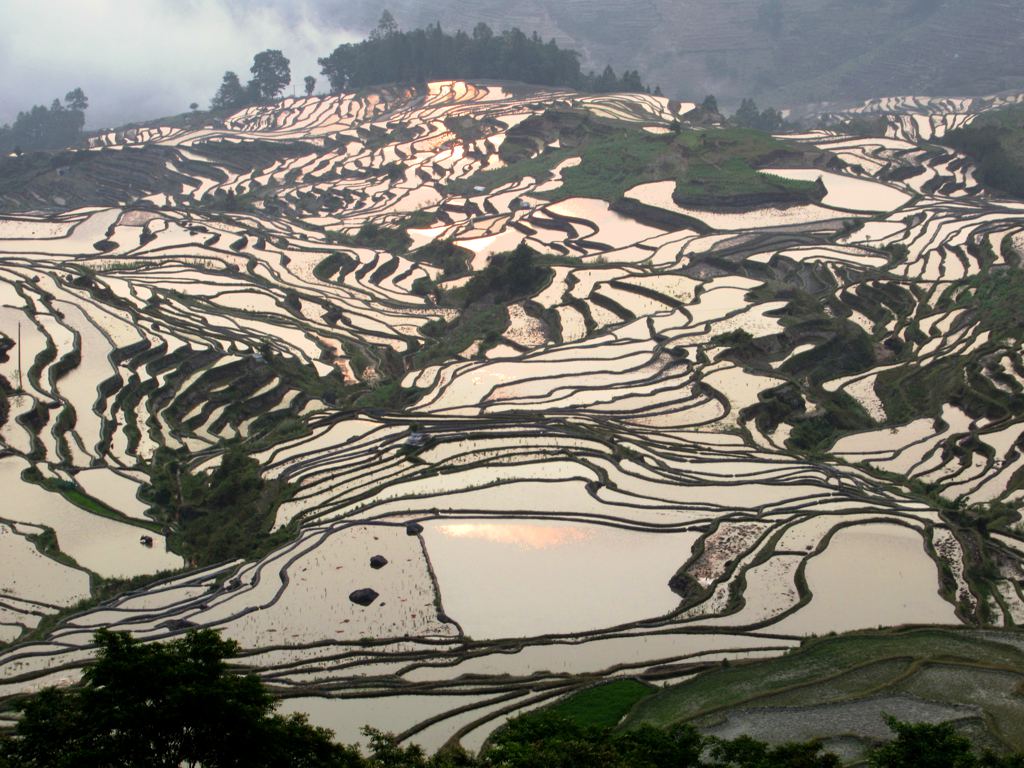
The system.
The terraces look like sculpture and run like a machine, and the machine has four gears: forest on the ridgelines (the headwaters, protected by village law older than any printed regulation), villages below the forest, terraces below the villages, and the valley rivers at the bottom. Water falls on the forest, seeps through it, emerges in springs that feed the channels, and is stepped down through thousands of fields — each one draining into the next — until it reaches the river and starts again as cloud.
The genius is that nothing is pumped. Every metre of rise is paid for at the top, by the forest, which is why the ridgeline trees are not scenery: they are the pump, and the villages have always defended them accordingly.
The rotation.
The channels are managed by the villages, and the villages manage them by rotation — a schedule of who opens which sluice, on which day, for which field, negotiated in village meetings and enforced by the simple mechanism of everyone knowing everyone. The flood that turns the terraces into mirrors each November is not a festival: it is the autumn maintenance schedule, executed terrace by terrace by the families who farm them.
Walking the channels.
Walk the system with one of its keepers and the photographs become legible: you learn which village owns which water, why that field is flooded and its neighbour is not, and what the cloud sea has to do with the forest you are standing under. The dawns at Duoyishu are the postcard. The channels are the story. Walk both — that is what the journeys are for.
Keep reading
The water season
The terraces on foot
The canola weeks