Jiaohe ruins
A caravan city carved from a plateau between two dry rivers — walk its silent streets at opening light and you understand the silk road physically.
 Start your enquiry
Destinations / Xinjiang /
The second-lowest land on earth and one of the silk road's great stations: a depression of ruined caravan cities, underground rivers and vineyard villages, pressed against a wall of red mountains.
Explore the guide ↓Eastern Xinjiang · −154 m · the depression
Turpan's story is an engineering story: no river runs through the depression, so the oasis dug its rivers underground — the karez, vertical wells linked by kilometres of sloping tunnel that carry snowmelt from the Tianshan without losing a drop to the sun. The water made orchards; the orchards made the caravan cities; the caravan cities made the silk road's southern arc real.
The reward today is density: Jiaohe's silent raw-earth streets, Gaochang's walls, the painted caves at Bezeklik, the village of Tuyoq where mud-brick houses sit under grape trellises — all within an hour of each other, all best before ten in the morning. The heat is the region's rule: we schedule Turpan around it rather than through it, and the seasons guide below is honest about July.
Six stops across the depression.
A caravan city carved from a plateau between two dry rivers — walk its silent streets at opening light and you understand the silk road physically.
The underground rivers explained, then seen still watering the orchards — the engineering that makes every other sight here possible.
Mud-brick houses under grape trellises, the valley's oldest mosque, and the sadness-free version of an oasis village afternoon.
The southern arc's second great city, and a cliff of Buddhist cave temples painted while Gaochang still traded.
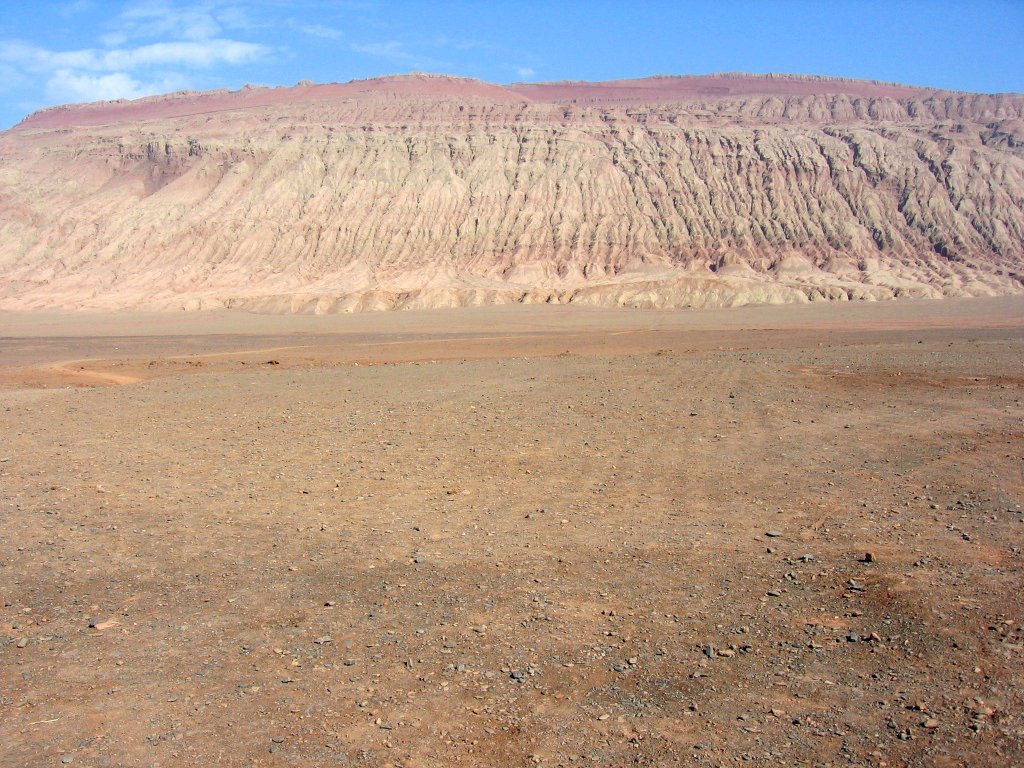
The famous red wall — genuinely spectacular at sunrise and genuinely an oven by noon; we schedule it accordingly.
In August the valley eats grapes from the vine; the brick drying houses with their slatted walls stand over every village like architecture from a fable.
Heat, timing and the winter option.
Sights open early and close at midday; our Turpan days start at dawn, rest after lunch and resume at dusk. July is the one month we decline to schedule — ask us and we will say so.
Two days covers the depression well; the three-day Kumtag short break adds the desert camp for the full arc.
The sites empty, the light is low and gold, and the depression's winters are mild by Xinjiang standards — the short break runs year-round.
High-speed rail from Urumqi under an hour, with more trains to Korla and Kuqa eastbound — Turpan slots into every route across the plate.
If August travel is possible, the harvest is a genuine event; otherwise buy the year's raisins at the dried-fruit market and take them home.
Tell us your season — the depression has a correct schedule for each one, and we know what it is.
Start my journey brief ↗