Watch from across, not below
The reserve asks visitors to keep to the opposite slope and the marked paths. Ledges are sleeping and nursing sites, and a group pushed off an exposed one loses its day.
 Start your enquiry
Wildlife / Field guide
One thousand four hundred and eighty-one of them, on the limestone towers west of Nanning, in a reserve of forty square kilometres. China’s rarest monkey is also its most reliably watchable.
Start this journey briefChongzuo, Guangxi · Richard Fuller · CC0
the limestone towers west of Nanning, on the road toward the Vietnamese border
1,481 animals in the 2025 provincial wildlife survey
growth since 2011, and fifteen consecutive years of increase
karst forest that also holds 381 vertebrate species
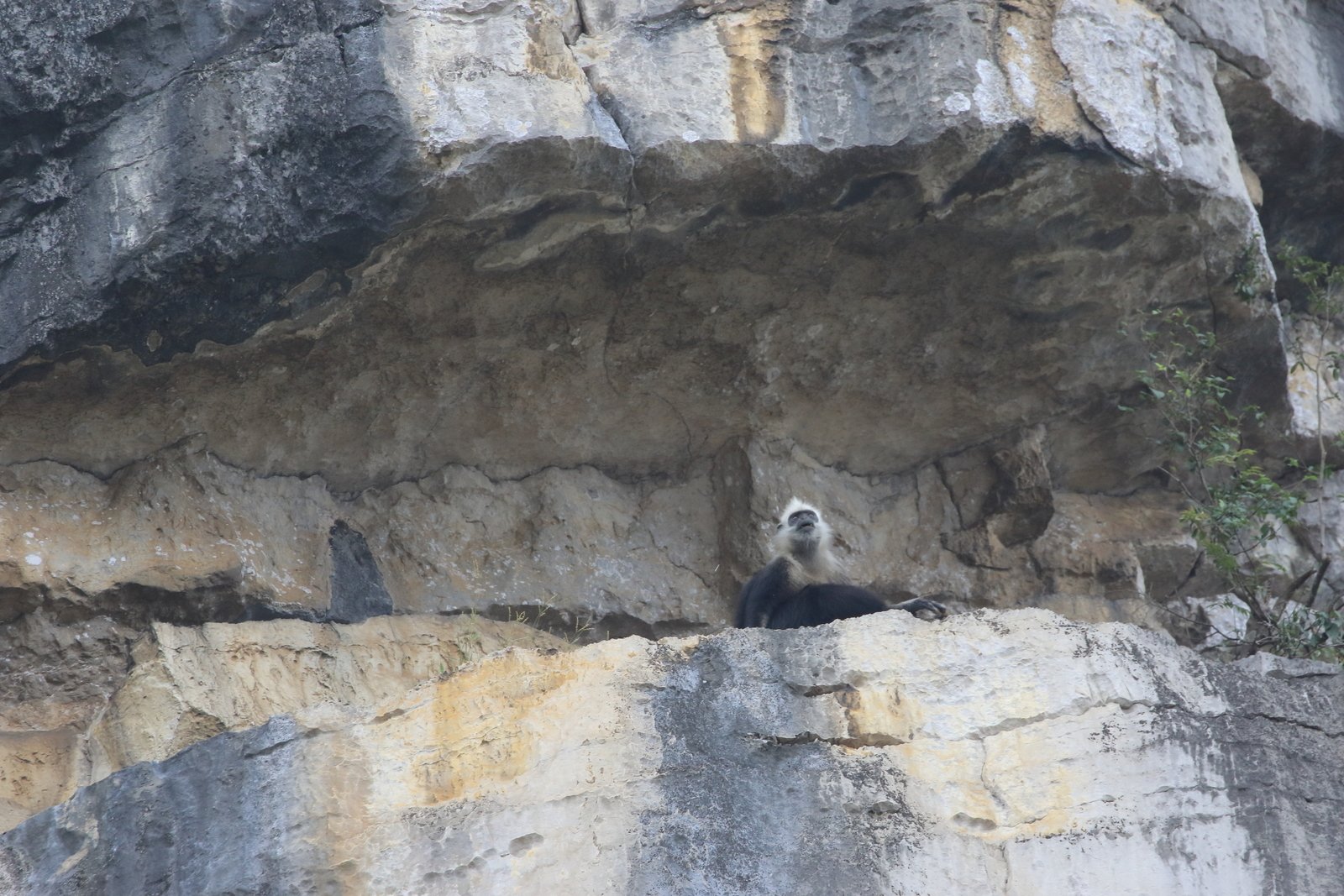
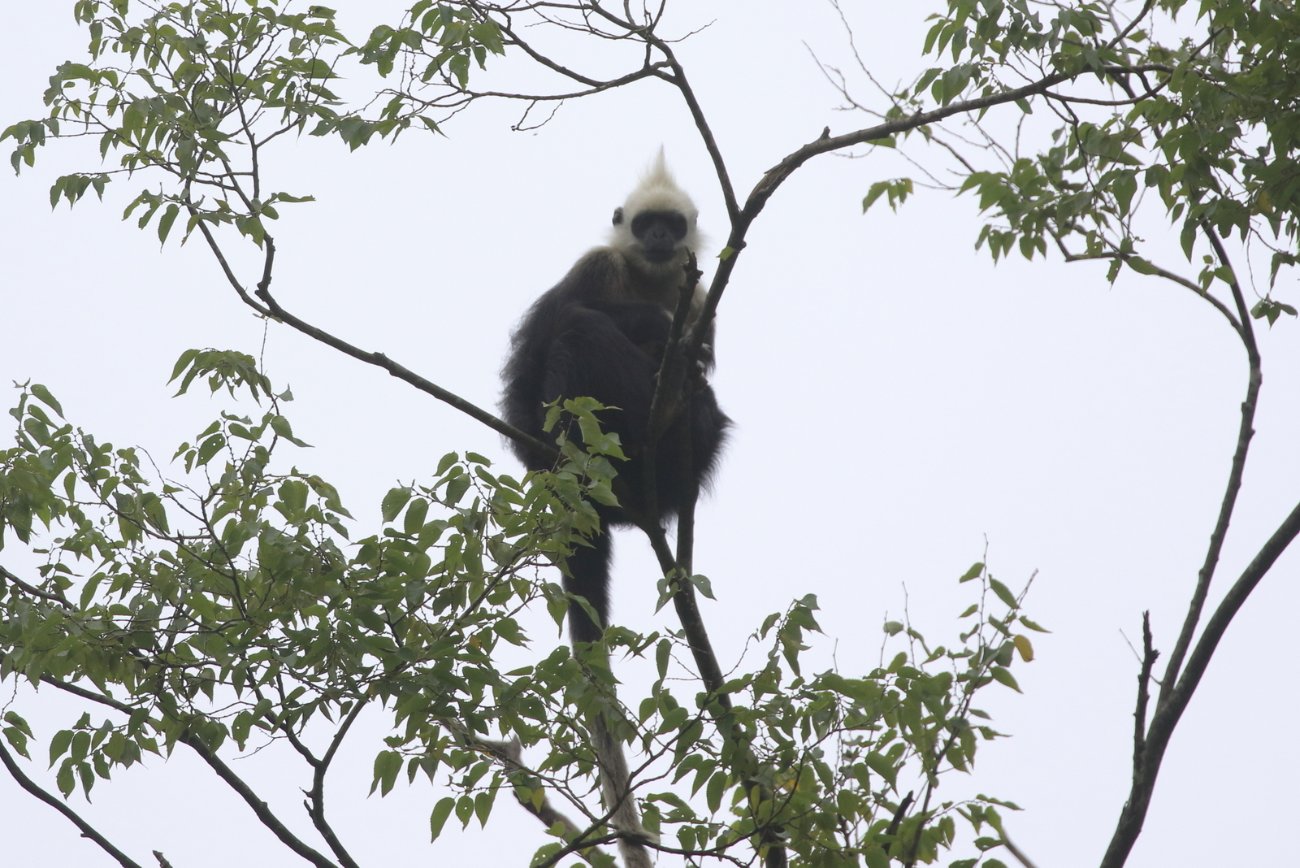
The white-headed langur is endemic to a small knot of limestone hills in Guangxi, and it lives in a way few primates do: on cliffs. Groups sleep on ledges under overhangs, travel along rock faces and feed in the scrub rooted in the karst. In the 1980s just over three hundred animals remained. The 2025 provincial survey counted 162 groups and 1,481 animals — up 55.67% on 2011 and the fifteenth consecutive year of growth.
Chongzuo’s reserve covers only forty square kilometres but holds 381 vertebrate species, and the protection has been unusually specific: China’s first habitat-protection regulation written around a single species, 77.6 hectares of habitat restored, two water sources and eighteen drinking points built for the langurs, and two corridors reconnecting patches that roads had cut apart. AI video monitoring along the cliffs has logged more than 37,200 langur detections — a census that used to depend on climbing up to look.
The animal’s habit is a gift to anyone watching. Because groups sit out on open rock in the morning and evening, this is one of the few rare primates in China you can observe for an hour without following it. The viewing is from below and across, on the opposite slope — which is also what the reserve asks for.
A small prefectural city with hotels, west of Nanning. The karst begins at the edge of town; the reserve’s patches sit among the towers.
Groups come out onto ledges to warm up, which is when you find them: a white head and shoulders against grey limestone, thirty or forty metres up.
The kapok trees flower and the langurs work the blossoms for stamens — the one month when they come down into the trees beside the road and the photographs get easy.
Detian falls, the largest on the Vietnamese border, lie in the same prefecture; the Li river country is a long half-day east. This is a landscape worth two centres, not one.
The reserve asks visitors to keep to the opposite slope and the marked paths. Ledges are sleeping and nursing sites, and a group pushed off an exposed one loses its day.
Langurs on cliff edges quickly become bold langurs, and a bold langur on a road is a dead one. The reserve’s rules are the reason these groups stay watchable.
October to April is clear and cool; September, at the end of the monsoon, is the greenest the karst gets. Mid-summer is hot, wet and hazy.
The animals rest through the middle of the day. Plan the karst scenery, the falls and the villages for the hours when the monkeys are flat on a ledge asleep.
Guangxi is usually sold as a river and a waterfall. The langur gives the province a wildlife centre — a morning on a limestone tower, an afternoon at Detian, and a route that does not repeat the Li river postcard everybody else sells.
Start a journey briefGuangxi: karst, waterfalls and the border · Watching without disturbing · All wildlife field guides