It is high and cool
The valley floor sits near 2,600 m and the reserve averages around 3,250 m. Take the first day slowly — the forest rewards walking pace anyway.
 Start your enquiry
Wildlife / Wanglang reserve
Beside Jiuzhaigou and Huanglong, Wanglang keeps some of China's oldest panda forest — and links eleven reserves across the northern Minshan into one living corridor.
Start this journey briefSichuan · Pingwu County, northern Minshan
Pingwu County, Mianyang — a valley over from Jiuzhaigou, home ground of the Baima Tibetan townships
2,400 m to 4,980 m, most of it dark conifer forest on glacial valley floors
one of the first reserves in China established to protect the giant panda
the hinge that joins eleven reserves — Jiuzhaigou, Baihe, Baishuijiang, Tangjiahe among them
Wanglang was set up in 1965, in the first generation of Chinese panda reserves, to protect the core of the Minshan's giant panda A population — the largest remaining wild panda lineage. Its 32,297 hectares of old conifer forest sit at the top of glacial valleys between Jiuzhaigou and Huanglong, and its real job is connection: the reserve is the hinge that keeps eleven protected areas across the northern Minshan joined into one corridor of habitat.
The forest itself is the spectacle. Chinese National Geographic counted its subalpine dark conifer stands among the country's finest, and in 2016 researchers placed a permanent forest-monitoring plot here — the only one of its kind inside panda habitat anywhere. Around the reserve live the Baima Tibetans, a distinct community whose masked dance, listed as national intangible heritage, gives the valley a cultural signature no other panda reserve has.
The corridor keeps growing, too. Next door runs Laohegou, a former logging valley turned community-managed conservation area — the first of its kind in China — where patrol teams drawn from the surrounding townships walk the same ridgelines for panda, takin and red panda. It is the corridor idea working in practice: protection spreading beyond the reserve boundary into the valleys people actually live in.
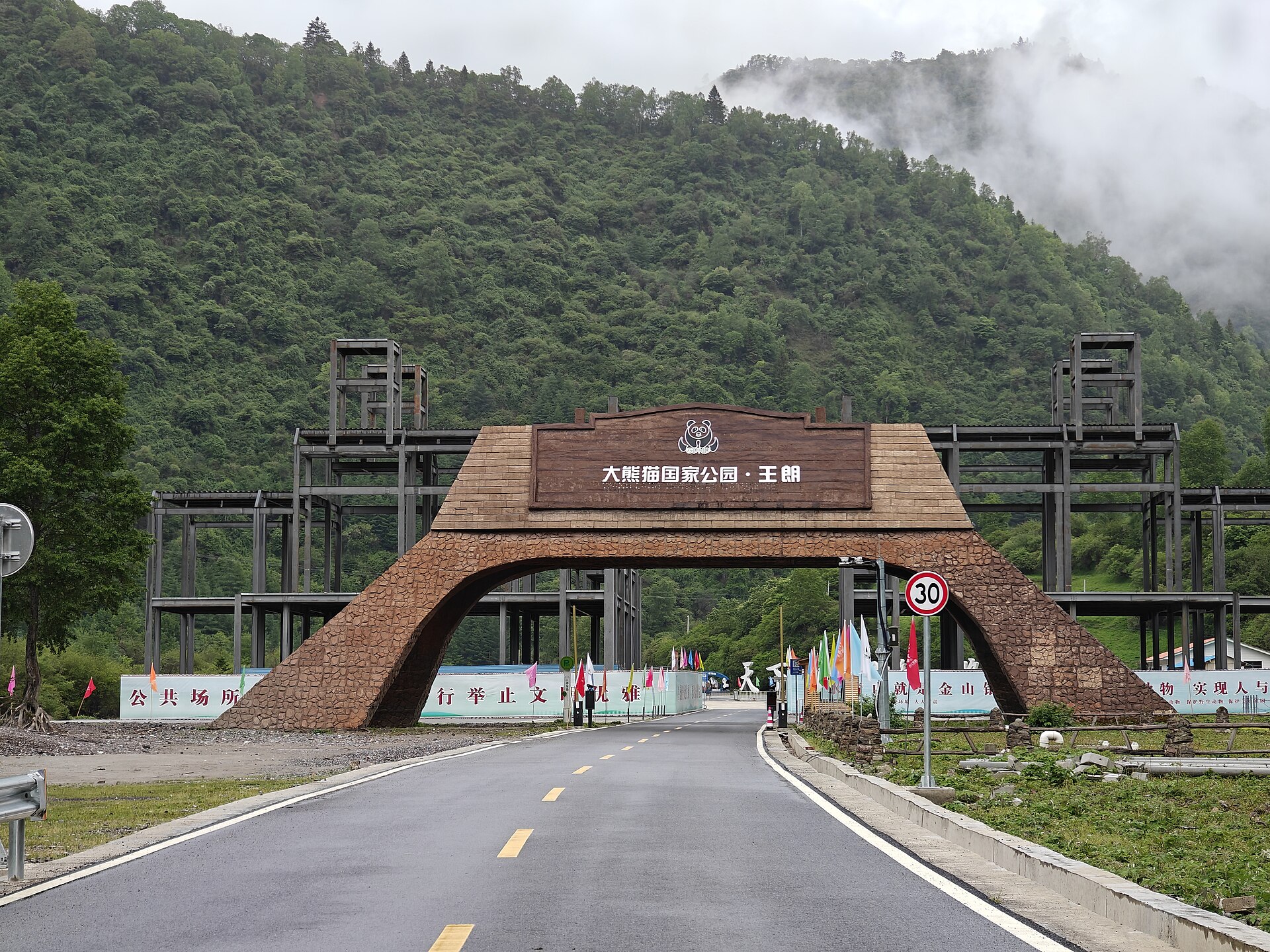
The Jiuzhaigou expressway's full opening in 2025 put Wanglang roughly four hours from Chengdu — the first time the reserve has been an easy add-on rather than an expedition.
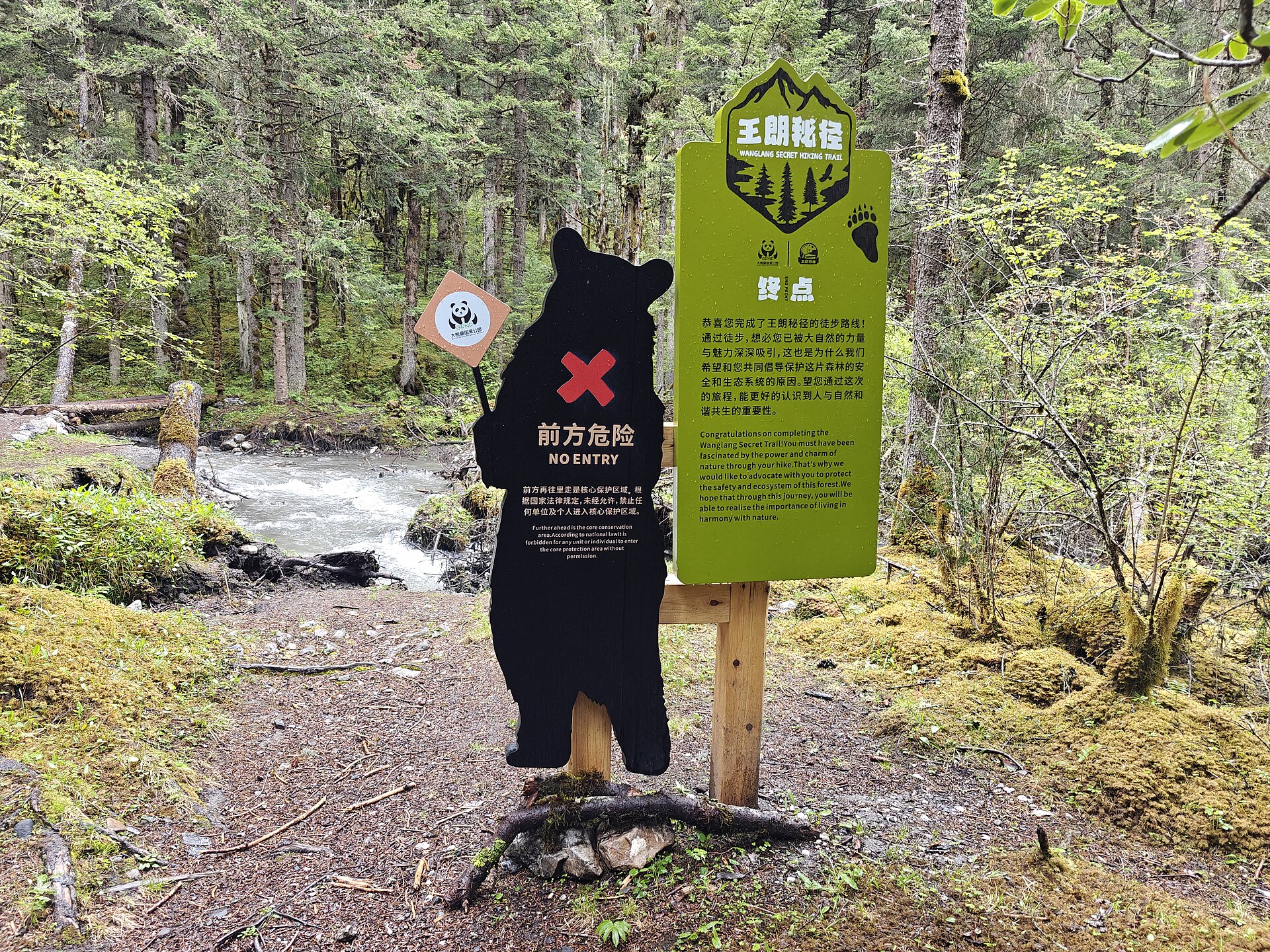
The reserve's day trail follows the glacial stream through the old-growth stands — moss, lichen and deadwood left standing, which is exactly what a healthy panda forest looks like.
The village gates, white-roofed prayer towers and the winter dance season around Baima township turn the reserve visit into a cultural one as well.
We have no fixed departure running through Wanglang yet. As a custom leg it chains with Pingwu's valleys, the Jiuzhaigou side or a northern Minshan crossing into Tangjiahe.
The valley floor sits near 2,600 m and the reserve averages around 3,250 m. Take the first day slowly — the forest rewards walking pace anyway.
Camera traps in the reserve's high ground have recorded snow leopard — at the south-eastern edge of the species' entire range. The high ridges are real cat country.
Wanglang holds one of China's densest wild panda populations, and you will almost certainly not see one. What you get is the forest that density depends on.
The valley holds snow well into spring; access and trails shift with it. Late spring to late autumn is the working window.
Wanglang has no fixed departure in our calendar — tell us your dates and we will fold it into a northern Minshan line.
Start a journey briefThe Sichuan mammal tour · Ungulates beyond pandas: the field guide