Winter is the animal season
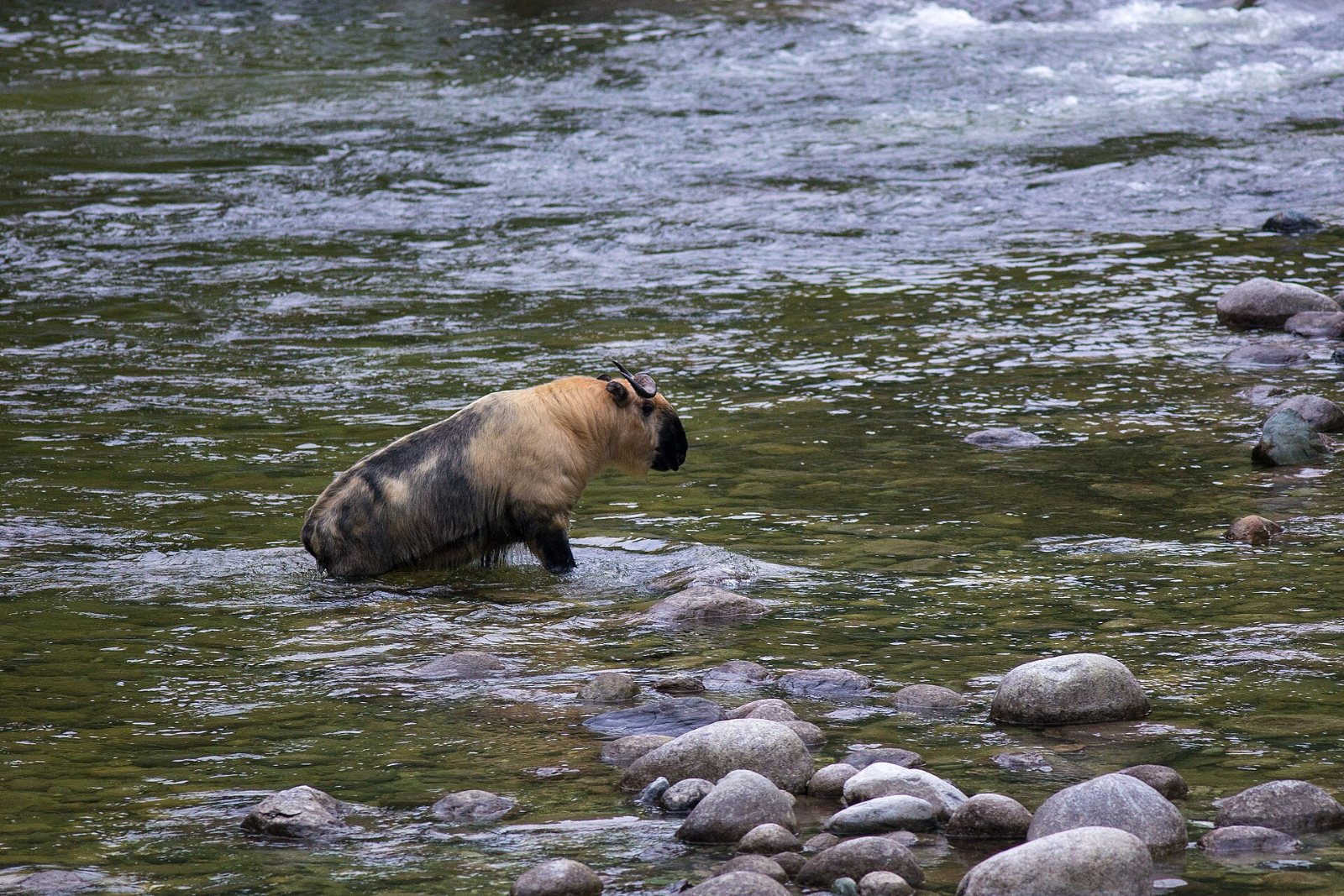
From November to April the takin herds feed on the low valley floors in daylight. Summer is green, cool and birdy — but the big herds climb with the warmth.
 Start your enquiry
Wildlife / Tangjiahe reserve
Forty thousand hectares of the northern Minshan where takin wade rivers in daylight — the one Chinese reserve built for watching, not hoping.
Start this journey briefSichuan · Qingchuan County, northern Minshan
Qingchuan County, Guangyuan — the north-eastern edge of the Giant Panda National Park
from ~1,150 m river valleys to 3,837 m on the Dacaoping crest
takin, Tibetan macaque and muntjac are the animals you plan a day around; 96% of the ground is forested
cold months pull takin herds down to the low valley floors, in daylight
Tangjiahe became a provincial reserve in 1978 and a national one in 1986, protecting panda, golden snub-nosed monkey and takin habitat at the meeting point of the Minshan and Motianling ranges. In 2015 it was in the first group of Chinese reserves admitted to the IUCN Green List — and the reason is geography, not luck.
The valleys here are narrow, steep and folded, which squeezes the animals onto the valley floors and walls — exactly where the trails and the river go. Add a chronic cold-weather habit of takin herds dropping to the low ground, and you get the claim every guide repeats: this is the most reliable low-elevation wildlife watching in China. The wild panda is here too — camera traps film mothers with cubs most years — but the honest order of the day puts takin and macaques first.
Roughly four to five hours by road into Qingchuan County, most of it on expressway. Leave early and you are at the reserve gate by mid-afternoon with the evening light still yours.
There is one hotel inside the reserve and a cluster of options around Qingxi old town outside. Sleeping in keeps you in position for first light instead of commuting into it.
River fords, open banks, the grassy edges the takin herds use — a day of stopping rather than covering ground. Tibetan macaques near the gate in the morning are nearly a guarantee.
The in-valley hotel runs a night drive when weather and park permission allow: leopard cat, civet and their neighbours only clock in after dark.
From November to April the takin herds feed on the low valley floors in daylight. Summer is green, cool and birdy — but the big herds climb with the warmth.
Watching happens on the visitor valleys and the G109-style edges the park manages. The panda's core habitat is off-limits, and that is the point of the place.
The Ming-dynasty streets of Qingxi sit half an hour from the gate — a culture stop that turns two wildlife days into a proper journey.
The Minshan is wet underfoot even in good months. Waterproof shoes, a warm layer, and patience with fog — the takin do not mind it at all.
Tangjiahe is the opening movement of our mammal tour and works on its own as a two-day window from Chengdu.
Start a journey briefThe Sichuan mammal tour: eight days, three reserves · The takin field guide: the valley's bellwether