The Potala Palace
Thirteen storeys, the tombs of eight Dalai Lamas, and a stairway that is the only way up. Tickets are timed and limited; book with the permit, not after it.
 Start your enquiry
Destinations / Tibet / Lhasa
A capital at 3,650 metres with a palace on a rock, a seventh-century temple at the centre of a pilgrim circuit, and three of the great monasteries within an hour of the city.
Explore the guide ↓Central Tibet · Lhasa & the Yarlung valley
Lhasa sits in a valley at 3,650 metres, on the Kyi river, with the Himalaya far to the south and the Nyainqentanglha range to the north. It is the highest capital in Asia and the only place on the plateau that behaves like a city: traffic, coffee, a university, a railway station, and a pilgrim population that outnumbers the tourists in every month of the year.
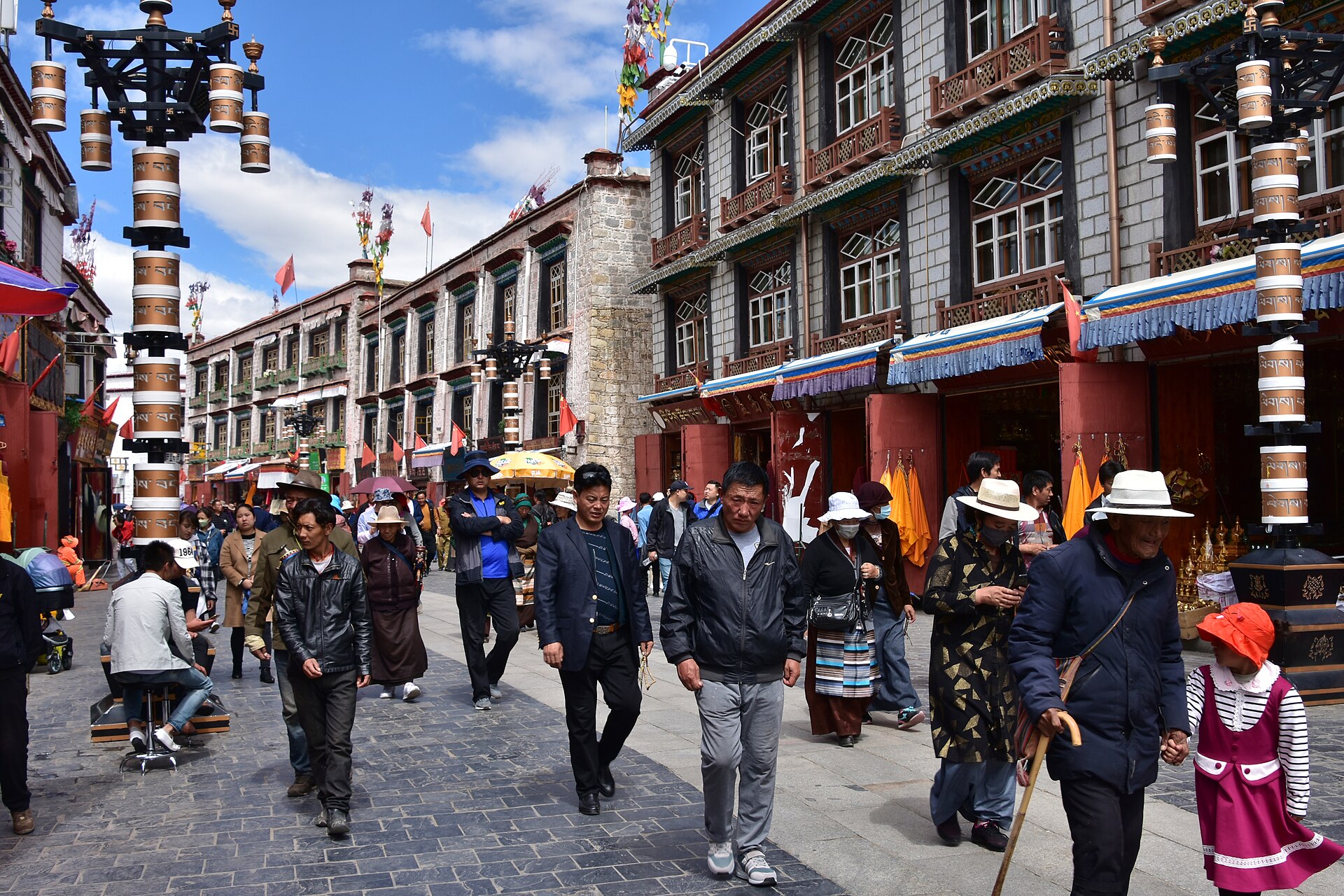
The centre is the Jokhang, a temple founded in the seventh century and expanded by every dynasty since, and the Barkhor, the circuit around it. The circuit is about a kilometre and it is walked clockwise from before dawn: prayer wheels, prostration boards worn smooth, butter lamps, and a crowd that is entirely local until about ten in the morning. The Potala stands a kilometre to the west on Marpo Ri, thirteen storeys and a thousand rooms, built in the seventeenth century on the site of a palace a thousand years older.
The city is also the acclimatisation stop, and that is not a small part of its function. Everyone arrives at 3,650 metres off a flight or a twenty-one-hour train. The first day is a rest day whatever the itinerary says, and the second is a short walk. By the third, the monasteries at Drepung and Sera are a reasonable morning, and the plateau has stopped being a physical problem.
Two days of city, one of monasteries, one of the valley.
Thirteen storeys, the tombs of eight Dalai Lamas, and a stairway that is the only way up. Tickets are timed and limited; book with the permit, not after it.
The holiest temple in Tibet and the circuit around it. Walk it at dawn, before the shutter noise starts, and keep to the clockwise flow.
Two of the great Gelug monasteries, both a short drive from the centre. Sera’s debate courtyard in the afternoon is the liveliest hour in the city.
Two hours southeast: the first Buddhist monastery in Tibet, founded in the eighth century, and the valley that holds the origin stories of the culture.
A city that works all year, at different temperatures.
Mild days, cold nights, few visitors and clear light. The best combination for the city and the monasteries.
Warm and green, with afternoon cloud and rain. The busiest months, and the period when permits are most tightly allocated.
Dry, clear and cool: the best month of the year in Lhasa, with the mountains visible from the valley rim.
Cold, brilliantly sunny and almost empty. The Potala in winter light is superb; the nights are hard and some guesthouses close.
Fly in, or take the train slowly.
Gonggar airport is 3,570 metres and an hour from the city. Flying in is the fastest and the hardest way up: the first night is the one that decides the trip.
The Qinghai–Tibet line runs 1,956 km from Xining in about 21 hours, crossing the Tanggula pass at 5,072 metres. It is slower, gentler and a landscape in itself.
Day one: nothing. Day two: the Barkhor and the Jokhang. Day three: the Potala and one monastery. Everything after that is the plateau proper.
A city organised around a walk.
The Barkhor, the kora paths and the prayer wheels all run clockwise. Walking against the flow is the one mistake visitors make every day.
Pilgrims prostrate on boards at the Jokhang from before dawn. Do not step in front of them, and do not photograph from a metre away.
Drepung and Sera are working institutions with schools and kitchens. Photography is restricted in the assembly halls; the rule is enforced and the reason is the paintings.
Altitude, sun and a city that starts early.
No walking tours, no big dinner, no alcohol. Hydrate, sleep, and accept that the first night at 3,650 metres is uncomfortable for most people.
UV at this height is severe, and the air pulls moisture out of you. Hat, high factor, lip balm, and a litre and a half of water a day.
Your Tibet Travel Permit is checked on arrival and at the Potala. It is arranged before you travel, and it is tied to your itinerary, guide and vehicle — see the permits page.
Tell us how you are arriving and how many nights you can give the city before going higher. The answer sets the whole route.
Start my journey brief ↗