There are three doors into this valley and they are not variations on a theme. One puts you at 4,411 metres before lunch; one takes two days and climbs slowly; one takes twenty hours and costs the least. The choice decides how the first two nights feel.
The approach is part of the trip, whether you want it to be or not.
Yading sits in the Shaluli range in the south-west corner of Sichuan, four hours of hard road from the nearest city of any size and one hour of very strange flying from Chengdu. Everything about the place — the three peaks, the two high lakes, the village inside the gate — is reached through a single road that climbs from 2,900 metres at the gate town to 4,700 at the top of the long route.
That geography makes transport unusually decisive. A flight lands you at 4,411 metres with no acclimatisation at all. A drive gives you two days of gradual climbing and the best road scenery in China, but eats two days. The bus is cheap and grim and still arrives too high, too fast.
The three doors, side by side.
Time, altitude profile and the honest cost of each.
Route
Time
How you climb
What it costs you
Fly to Daocheng Yading (DCY)
1 hour, then 2 hours by road
500 m to 4,411 m in an hour
The steepest ascent of any civil route in the country; the first night is a gamble
Drive the 318 and 217
Two days from Chengdu
500 m to 3,750 m over 775 km and two passes
Two extra days, a driver who knows mountain roads, and weather that can close a pass
Overnight bus from Chengdu
18–20 hours
The same road, in the dark, with strangers
One lost night, minimal acclimatisation benefit, the least comfort of the three
By air: one hour, four thousand metres.
The fastest door, and the one that punishes you for using it.
The airport
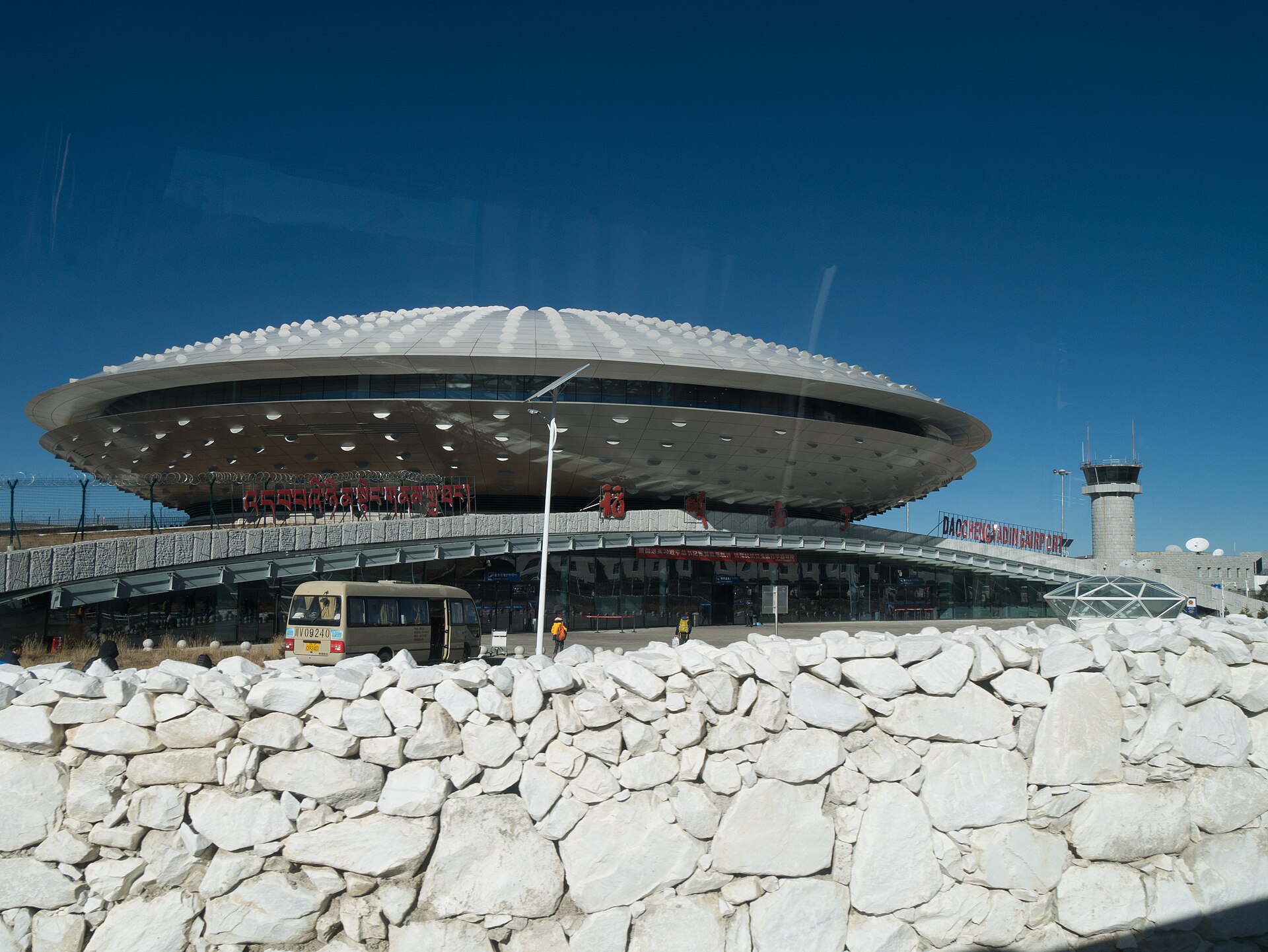
Daocheng Yading airport sits on the Haizi Shan plateau at 4,411 metres, which makes it the highest civilian airport in the world. The terminal is a low saucer of white stone; the wind outside it is the reason every flight is scheduled for the morning. Chengdu operates three departures a day across its two airports, Shuangliu and Tianfu, with flight times between fifty and sixty-five minutes. Chongqing and Xi'an also have direct services.
Why the early flights
Plateau air is calm at dawn and restless by two in the afternoon. The 07:25 departure is not a scheduling accident; it is the one most likely to land. If you have a choice between a cheap afternoon connection and a full-fare morning one, take the morning.
What landing does to you
You step out at 4,411 metres. The terminal is warm, the car park is not, and the drive to the gate town drops a thousand five hundred metres in two hours — which is the only acclimatisation this route offers. People who feel fine at the airport often feel wretched by dinner. Treat the first night as a write-off and book a bed at 2,900.
The bags
Checked luggage on these routes is limited and the aircraft are narrow-body. More to the point, nothing you packed for Chengdu is adequate at the pass. Have the warm layer in the cabin bag.
By road: two days and the best of the 318.
Slower, lower, and the only approach that lets you arrive acclimatised.
The line
Chengdu to Xinduqiao is about 415 km by way of Ya'an, Luding and Kangding, over the Zheduo pass. Xinduqiao to Daocheng is another 360 km, by way of Yajiang, Litang and the Sangdui valley, over the Kazila pass at 4,718 metres. Two days is the sane version; three is the comfortable one.
Why it works
You sleep at 3,300 in Xinduqiao and at 3,750 in Daocheng, and the climb is spread over two days of sitting down. Cyclists and drivers who come this way usually walk the long route better than people who flew. That is not folklore; it is just arithmetic.
What it asks
A vehicle with ground clearance, a driver who has done mountain passes in weather, and slack in the schedule. The Zheduo and Kazila passes close in snow, and landslide delays on the Yajiang stretch are routine in summer. Do not book a same-day flight home on the far side of this drive.
Private car or self-drive
Self-drive is possible and popular with Chinese visitors; for a first visit in a foreign licence the arithmetic rarely works. A car and driver for the two days, dropping you at the gate town, is the version most of our travellers take.
By bus: the cheap door.
One long night, and a station you need to find the day before.
The service
Chengdu's Xinnanmen station runs long-distance coaches to Daocheng, roughly eighteen to twenty hours including an overnight stretch and meal stops. Sleeper or reclining seats depending on the departure. It is the cheapest way in and the least comfortable by a wide margin.
Who it suits
Travellers with more time than money, and people who genuinely enjoy Chinese long-distance coaches. It does not acclimatise you better than flying — you sleep through most of the climb — and you arrive at Daocheng at dawn with nowhere to go until the gate opens.
The alternative
If the budget is the issue, the train to Kangding plus a shared car onward costs more than the coach and less than a flight, and breaks the journey at a sensible altitude. Our Sichuan pages cover the Kangding stretch.
The last leg, which nobody explains.
From the airport, from the county town, and from the gate to the village.
Airport to the gate town
About 115 km and one and a half to two hours by road, descending from 4,411 to 2,900. The airport coach runs on the flights, not on a timetable: it leaves when a flight lands and fills. The published fare to Shangri-La town was 85 yuan in 2026; to the county town, 35. Shared cars wait outside and are faster and slightly dearer.
Airport to Daocheng town
About 50 km and an hour. If you are sleeping at 3,750 on the first night rather than 2,900, this is the transfer — and you will feel the difference by midnight.
County town to the gate
80 km and roughly ninety minutes. This is why sleeping in Daocheng town means leaving before seven if you want the first shuttle; the town is a base for the plateau, not for the valley.
The gate to the village
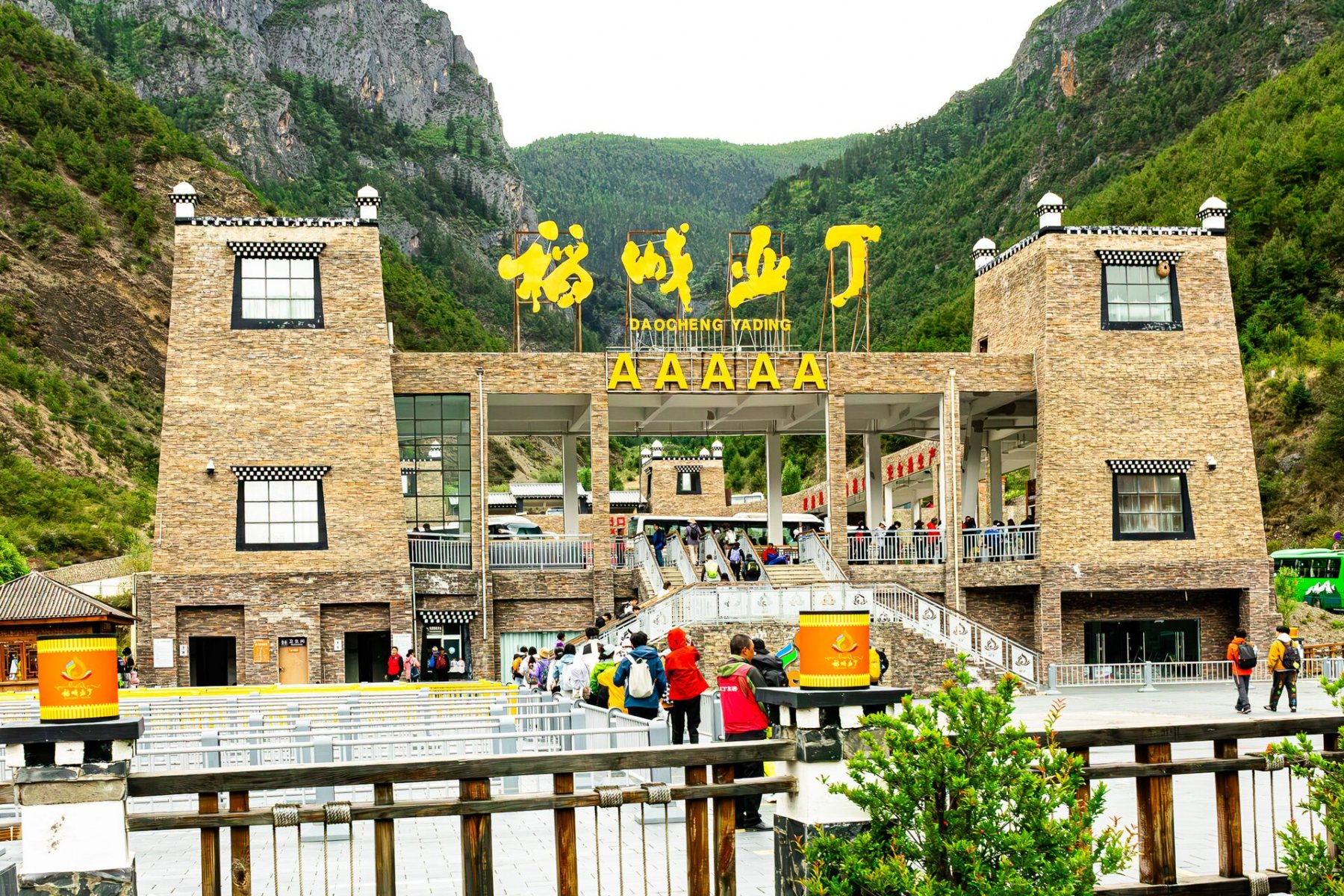
The ticket includes the shuttle from the visitor centre to Zhalagang, forty minutes over a 4,760-metre pass. If you are staying in Yading village the bus stops twice inside it. If you are walking the long route, you get off at Zhalagang and take the cart or your legs from there.
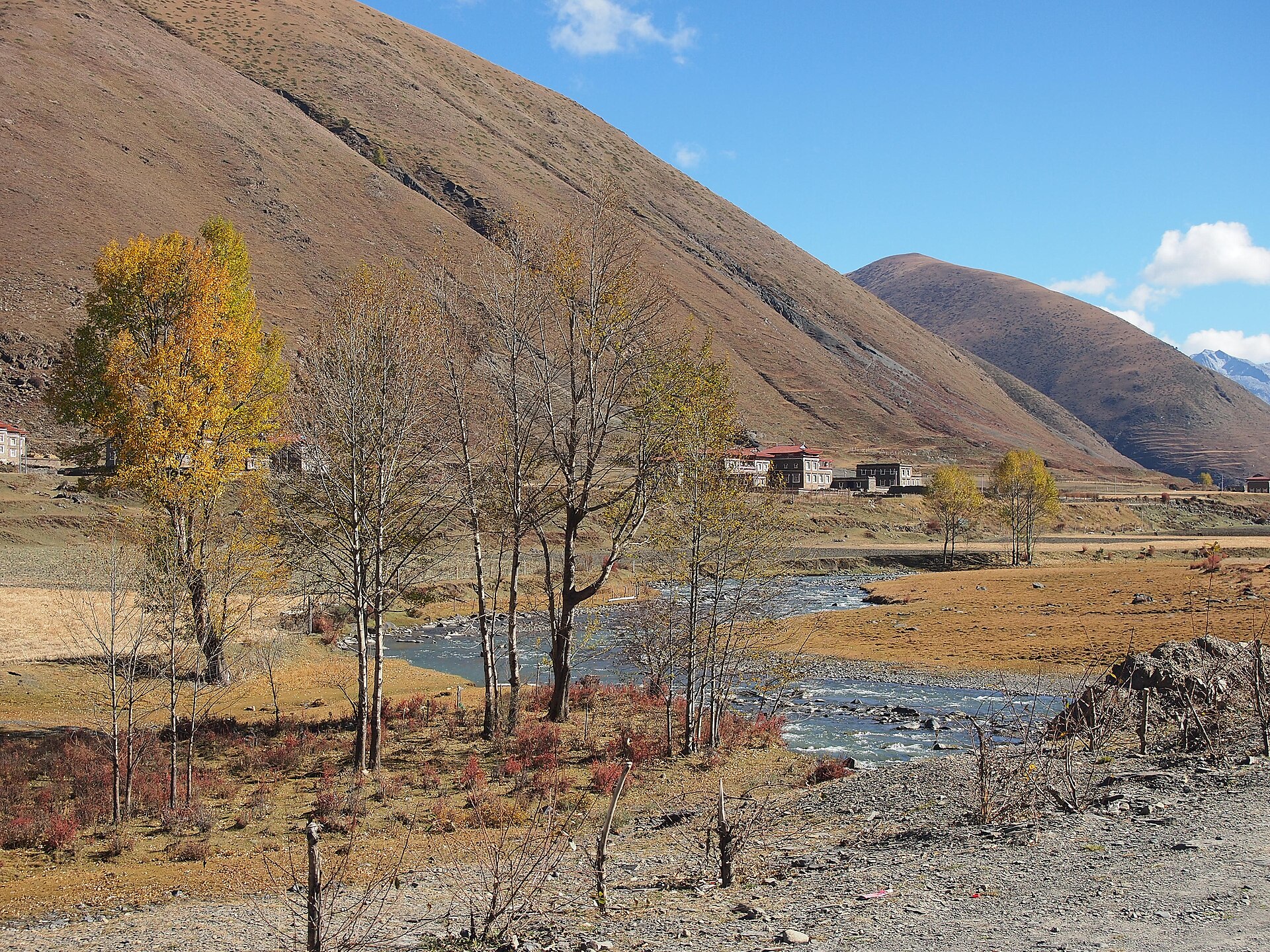
Xinduqiao, the first night on the overland route from Chengdu.The visitor centre — one gate, one shuttle, one timetable.
The fourth door, from Yunnan.
For anyone coming from Shangri-La or Deqin rather than Chengdu.
The line
Shangri-La (Yunnan) to Xiangcheng, then Xiangcheng to Daocheng — about 110 km and three hours on the last stretch. A newer road, the Yachi link, cuts across the middle of the loop and reaches the Yading side directly, saving most of a day.
Why bother
It stitches Yading onto a Yunnan trip instead of forcing a return to Chengdu. The trade is altitude: you cross the Xiangcheng county at over 3,000 metres and the link road tops 4,690, so the approach is high but gradual.
The state of the road
Secondary-road quality, with sections under repair after the summer rains. Do not attempt it in a low car, and do not attempt it after snow without asking locally first.
Which door is yours.
Three traveller profiles, three answers.
Time-poor, altitude-naive
Fly, but fly in the morning and sleep the first night at 2,900 in the gate town. Do not go straight up to the village. Our altitude page has the ladder and the airport trap in full.
Two spare days, no wish to gamble
Drive the 318. You arrive able to walk, you see the Zheduo and Kazila passes, and you spend the money on a car instead of a hospital visit.
Coming from Yunnan
Come overland from Shangri-La through Xiangcheng, and give the link road a full day. It is the prettiest approach and the least documented.
We build the approach around your flight, not the other way round — including the first night at the right altitude and a car that meets you at the gate.