Food on the clock
Eat hourly regardless of appetite — altitude kills hunger before it kills performance.
 Start your enquiry
Mountaineering / Knowledge
Every guided summit day on this site runs on the same skeleton: an alpine start, a pace you cannot argue with, a turnaround set before you leave, and a descent run as seriously as the climb.
Start this journey briefFirst light on the ridge — the morning's halfway point
alpine starts exist to put the summit behind you before the afternoon weather window closes
the guide sets it on the first slope and it never changes; argument with the pace is the first sign of trouble
time or hour, agreed at dinner — and it is the guide's call, made without negotiation on the mountain
most mountain accidents happen going down: tired legs, softened snow, spent attention
Summit days look cinematic from the valley and bureaucratic up close: a wake-up in the dark, tea, layering inside a tent, and then hours of one-step rhythm on ground you trained for. The drama of the day is mostly invisible — it lives in small decisions made early. Whether the first hour's pace is honest. Whether the turnaround holds when the summit is forty minutes further than promised. Whether the descent gets the same attention as the climb.
This page is what those hours look like on our mountains, and why the discipline is what it is.
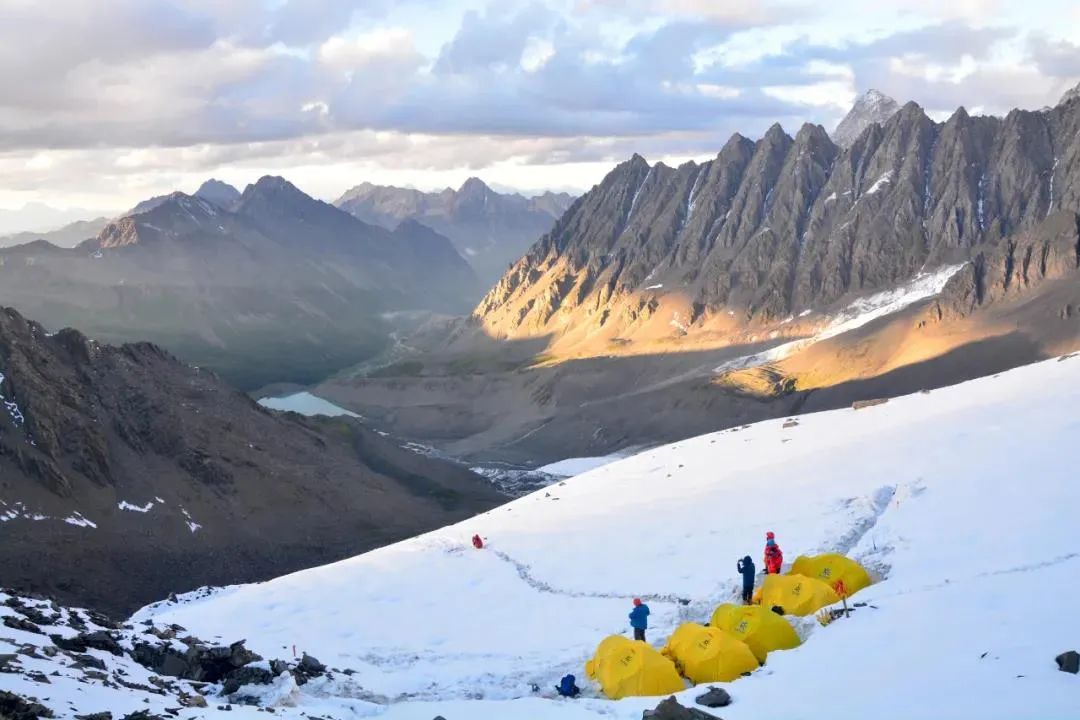
The wake-up is gentle, the tea is not optional, and layering happens inside the tent — cold hands at 5,000 m are a hazard, not a mood.
Rope teams close up at the camp edge; the guide checks harnesses, crampons and the day's plan aloud. Nobody leaves unspoken-to.
The first hour sets the metabolism: slow, rhythmic, conversational if you can speak. If you cannot speak at this pace by dawn, the day's plan changes now, not later.
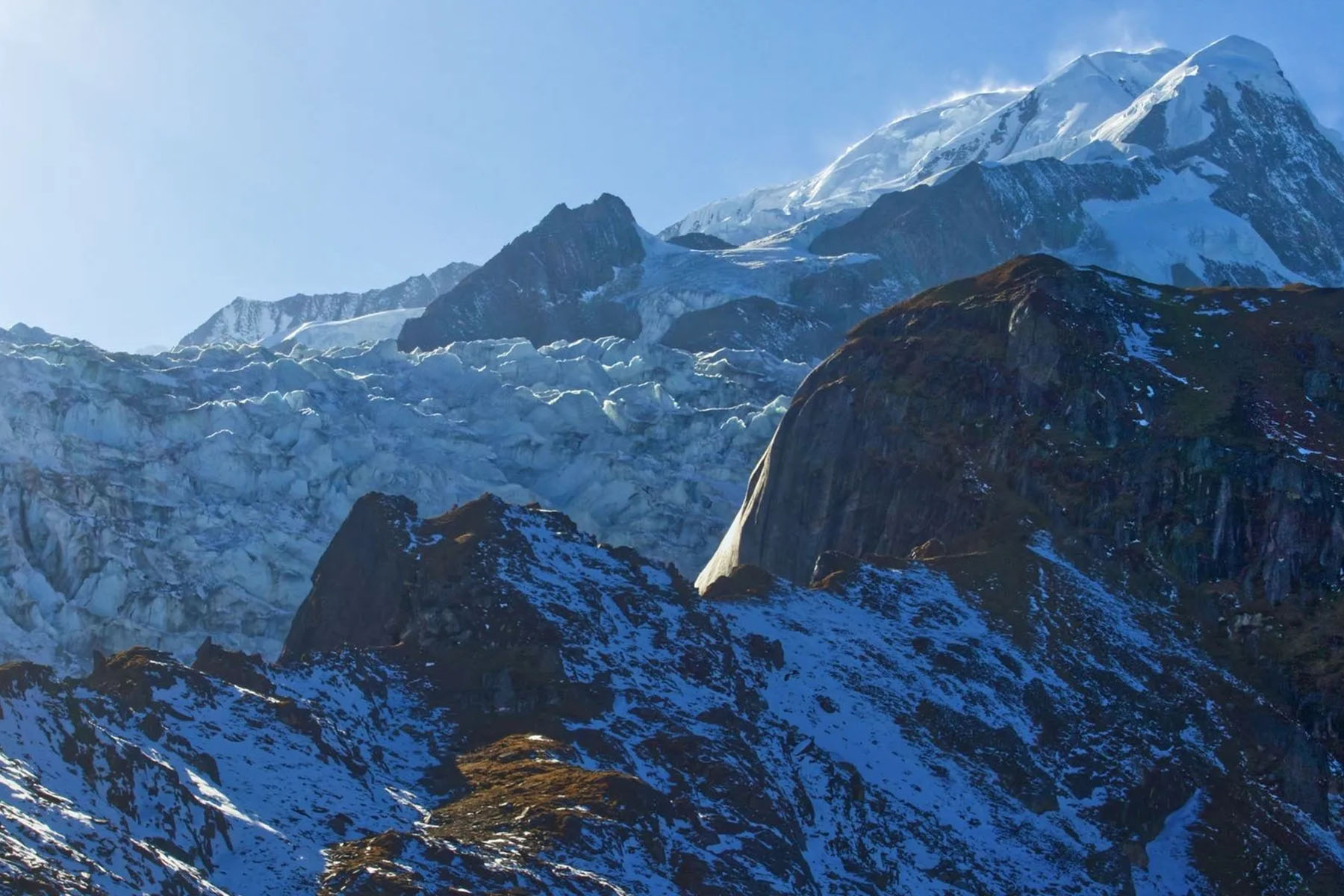
The ground between sunrise and the summit ridge is where climbs are won — one step, one breath, food every hour on the clock.
Time or hour, set at dinner the night before. Reaching the summit is optional; being able to walk down is not.
Rappels and down-climbing on fresh legs of attention if not of muscle; the guides run the down as tightly as the up, and so should you.
Eat hourly regardless of appetite — altitude kills hunger before it kills performance.
Say things early: a headache, a cold toe, a doubt. Small problems said at 4 a.m. are logistics; said at noon they are incidents.
Camera out at the ridge, not before — the summit photo set costs ten minutes and the day has exactly ten spare.
Down, food, sleep. Summit days end at base camp, not on the summit.
Every expedition page here describes its summit day honestly — hours, angles, turnarounds. Ask us which morning fits your legs and we will answer straight.
Start a journey briefThe mountain progression · Altitude medicine · Training for passes