How long between rungs
One season minimum between rung two and three; most climbers take a year between their first 6,000er and a 6,800er.
 Start your enquiry
Mountaineering / Planning
Altitude climbing rewards order: each mountain on this site exists to teach what the next one will demand. Here is the whole ladder, and what every rung is for.
Start this journey briefThe higher rungs of the ladder · the Minya Konka massif
Dafeng and Erfeng at Siguniang, Yamu, Haba — snow summits that teach crampons and pace
Wukuchu and Nama — real approach treks, glacier skills introduced, overnight camps
Reddomain, Que'er, Yuzhu, Jinyin — glacier travel, high camps, genuine expedition rhythm
Zhongshan — the site's highest commercial summit, for teams with a 6,000er behind them
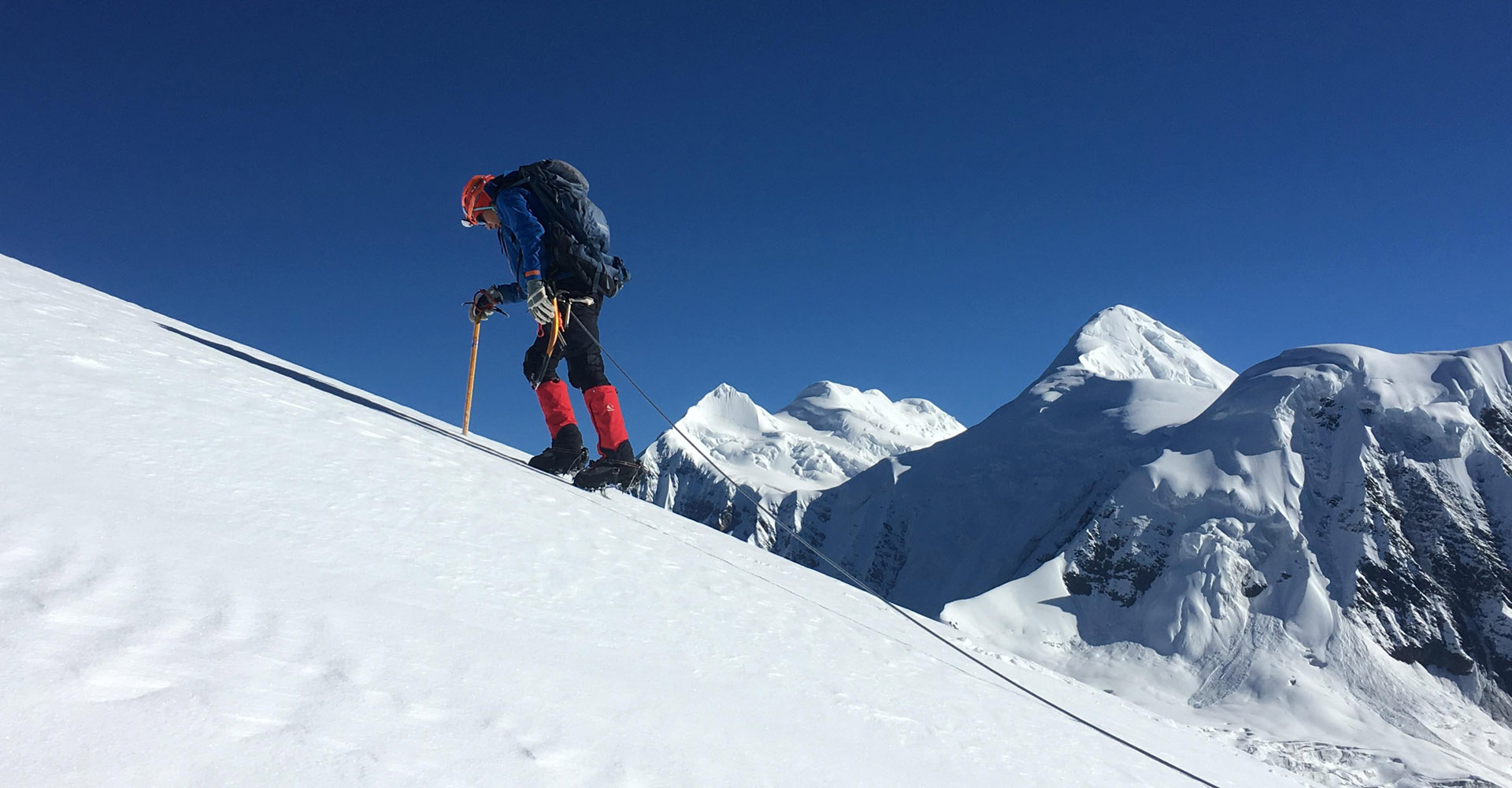
Every mountain on this site is commercial in the good sense: run by guides, with fixed routes, camp logistics and safety cover. That does not make them interchangeable. A first snow summit teaches crampons, pacing and how your body behaves above 5,000 metres; a 5,500er teaches expedition rhythm — camps, carries, weather patience; a 6,000er teaches rope-team discipline on real ground; and only after that does a 6,900-metre glacier climb become a good idea rather than a gamble.
The progression below is how our seven peaks — plus Haba, Que'er and Yuzhu in Yunnan, Sichuan and Qinghai — fit together. Take it in order and each summit arrives on merit. Skip rungs and the mountain, not the brochure, sets the price.
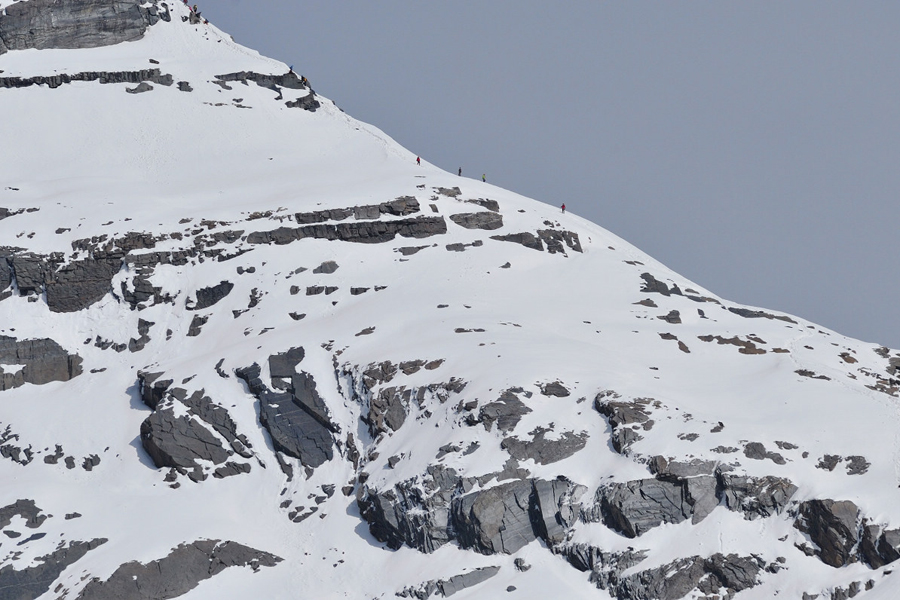
Dafeng (5,025 m) or Haba (5,396 m): a walking summit with crampons on snow. Teaches: pace, layering, how altitude actually feels.
Erfeng (5,276 m), Yamu (5,374 m), Wukuchu (5,518 m): steeper ground, fixed lines, the first rope-team habits.
Nama (5,588 m) with its three-day walk-in: camps, carries, turnaround discipline. Teaches: how a mountain is run, not just climbed.
Yuzhu (6,178 m), Reddomain (6,112 m), Que'er (6,168 m), Jinyin (6,410 m): glacier travel, high camps, real altitude. Teaches: whether the next rung is where you want to be.
Zhongshan (6,886 m): the site's highest commercial summit — a genuine expedition for teams with a 6,000er honestly behind them.
One season minimum between rung two and three; most climbers take a year between their first 6,000er and a 6,800er.
Both, differently: the lower rungs are walked fit; the upper rungs are climbed experienced. We will tell you honestly which you lack.
Every peak above 5,000 m requires provincial registration through a licensed operator — that is built into every expedition here.
The best next mountain is the one you will train for. We would rather move you down a rung than up one.
Tell us where you are — summits climbed, seasons available — and we will place you on the ladder with a two or three-year plan, not just a brochure.
Start a journey briefDafeng, the first summit · Nama, the rhythm teacher · Que'er, the graduate mountain