
Journey / The tea & Mekong journey
Private journey
The Tea & Mekong Journey: 8 Days
The caravans started here. On the Jingmai mountains, Blang and Dai villages tend tea gardens shaded under thousand-year forest canopy — a living system inscribed by UNESCO in 2023 — and pressed the leaf into bricks that walked four vertical kilometres to Lhasa. This journey starts where the tea does: two village nights in the forests, a pressing session with a tea family, the first caravan kilometres on foot — then the road south to the Lancang, Jinghong's temple towns and the elephant forests of Xishuangbanna.
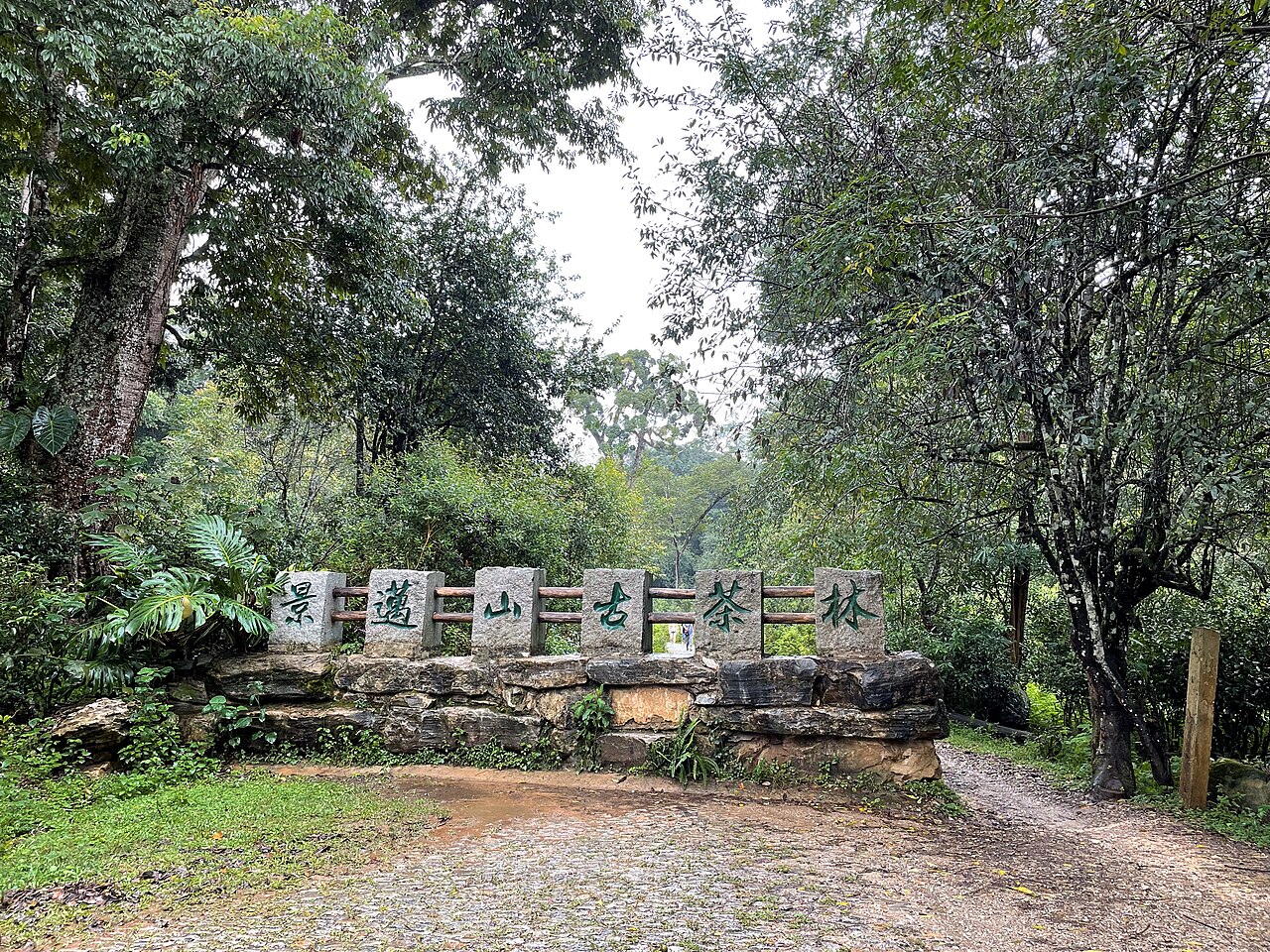
Ask about this itineraryKilometre zero of the tea-horse road — the ancient tea forests of Jingmai
The Jingmai ancient tea forest landscape — canopy-shaded gardens a thousand years in the making, still farmed
Weigh, steam, wrap and press with a tea family — the souvenir that teaches the leaf
The journey ends on the Lancang river in Jinghong — temple spires, river evenings and the elephant valley
Per person, private, with all accommodation, transport, guiding and listed entries — written quote before any commitment
Why this journey
The leaf, the road, the river.
Tea tourism tends toward theatrics — gongfu performances and fake ancient trees. This journey goes to the real gardens: the Jingmai forests where the Blang and Dai villages farm as their great-grandparents did, with village nights instead of day tours and a pressing session instead of a shopping stop. The first caravan kilometres north from the gardens are walking country — stone stairs and way-station ruins on the muleteers' own path.
Then the road falls south, and the province changes: palm avenues, Theravada temple spires and the Lancang river — the Mekong, just past its first hundred kilometres. Jinghong's evenings are the warmest in China; the elephant valley holds its own schedule; and the journey ends where the tropics begin, with the option to continue to the water festival in April.
Route Briefing
Kunming south to the tea mountains, two village nights on Jingmai, the caravan path on foot, then the falling road to the Lancang and the Mekong's first Chinese city.
- undefinedundefinedundefined
- undefinedundefinedundefined
- undefinedundefinedundefined
- undefinedundefinedundefined
- undefinedundefinedundefined
- undefinedundefinedundefined
- undefinedundefinedundefined
- undefinedundefinedundefined
The Journey
Eight days down the staircase.
The altitude falls all journey — from the spring city to the tropics — and the rhythm is village-paced, not itinerary-paced.
-
Day 01
The spring city
Kunming
Arrive in Kunming (1,890 m — a gentle first step) and settle in. The day is for the provincial museum's Dian bronzes, a Green Lake morning and the flower market; the evening for the first crossing-the-bridge noodles in their home province.
-
Day 02
The falling road
Kunming → Pu'er
South by expressway and rail as the plateau softens into hill tea country. Pu'er city is the waypoint — a good tea market, a good dinner, and the briefing that matters: how to read a tea cake before you meet the people who make them.
-
Day 03
Into the forests
Pu'er → Jingmai
The road south into the Jingmai mountains and the UNESCO landscape — canopy-shaded tea gardens strung between Blang and Dai villages. Settle into the village guesthouse; the evening mist over the gardens is the reason the beds are worth it.
-
Day 04
The gardens & the pressing
Jingmai
A full tea day with a village family: walk the forest gardens and learn to read the leaf, then the pressing session — weigh, steam, wrap and press your own cake. The afternoon is for the village lanes, the temple and the tasting table. Guests taste before they buy, always.
-
Day 05
The road's first kilometres
The caravan path → Pu'er
The walk of the journey: half a day north from the gardens on the muleteers' own stone stairs — way-station ruins, forest paths, and the gradient that explains why they pressed the tea into bricks. Then the road back to Pu'er for a soft bed.
-
Day 06
The Mekong
Pu'er → Jinghong
South as Yunnan turns tropical: palm avenues, banyan shade and the first sight of the Lancang — the Mekong beginning its run to the sea. Jinghong's evening is the country's warmest: riverfront walks and the night market's Dai grill.
-
Day 07
Temples and the river
Jinghong
The Dai capital at its own pace: Manting park's temple spires, the peacock carvings of the Dai villages, the botanic garden's green ark at Menglun, and the river evenings. The tropics adopt you rather than the reverse.
-
Day 08
The elephants & depart
Wild Elephant Valley
The finale is the forest's own: a ranger-led morning in the elephant valley, on the animals' schedule and at their distances. Afternoon transfer to Jinghong airport for onward flights — or continue south; the tropics have that effect.
What's included
What is included, and what is not.
A tea journey lives on its village welcomes and its timing; both are arranged up front.
Included
Arranged and paid in your price.
-
A
l
-
P
r
-
E
n
-
T
h
-
E
l
-
A
l
-
T
e
Not included
Either yours to arrange, or a question we will gladly answer.
-
F
l
-
M
e
-
T
r
-
T
e
Season: the dry months (November–April) give the best travelling; March–April adds the first-flush picking and villages at their busiest. April departures can re-time to finish in Jinghong for the water festival — hotels book out months ahead. To be confirmed each departure: border-zone conditions, as routine for the prefecture.
Enquiry
Ask about the tea line.
Tell us your dates. We will come back with the village options, the season note and a written outline with a price.
- Difficulty
- Easy
- Best window
- Nov – Apr
- Group size
- 2 – 8, private
- Cost guide
- From ¥12,800 per person
Enquiry sent
Thank you — your enquiry is with us.
We reply within one business day. A copy of what you sent has gone to your inbox.
Need to add something? Write to inquiry@chinadventure.com.
Back to the itineraryRead next