January
Cool, damp and quiet, 8–15 °C. Bare terraces, low water, mist on the karst. The best month for empty viewpoints and cheap hotels.
 Start your enquiry
Destinations / Guangxi / Calendar
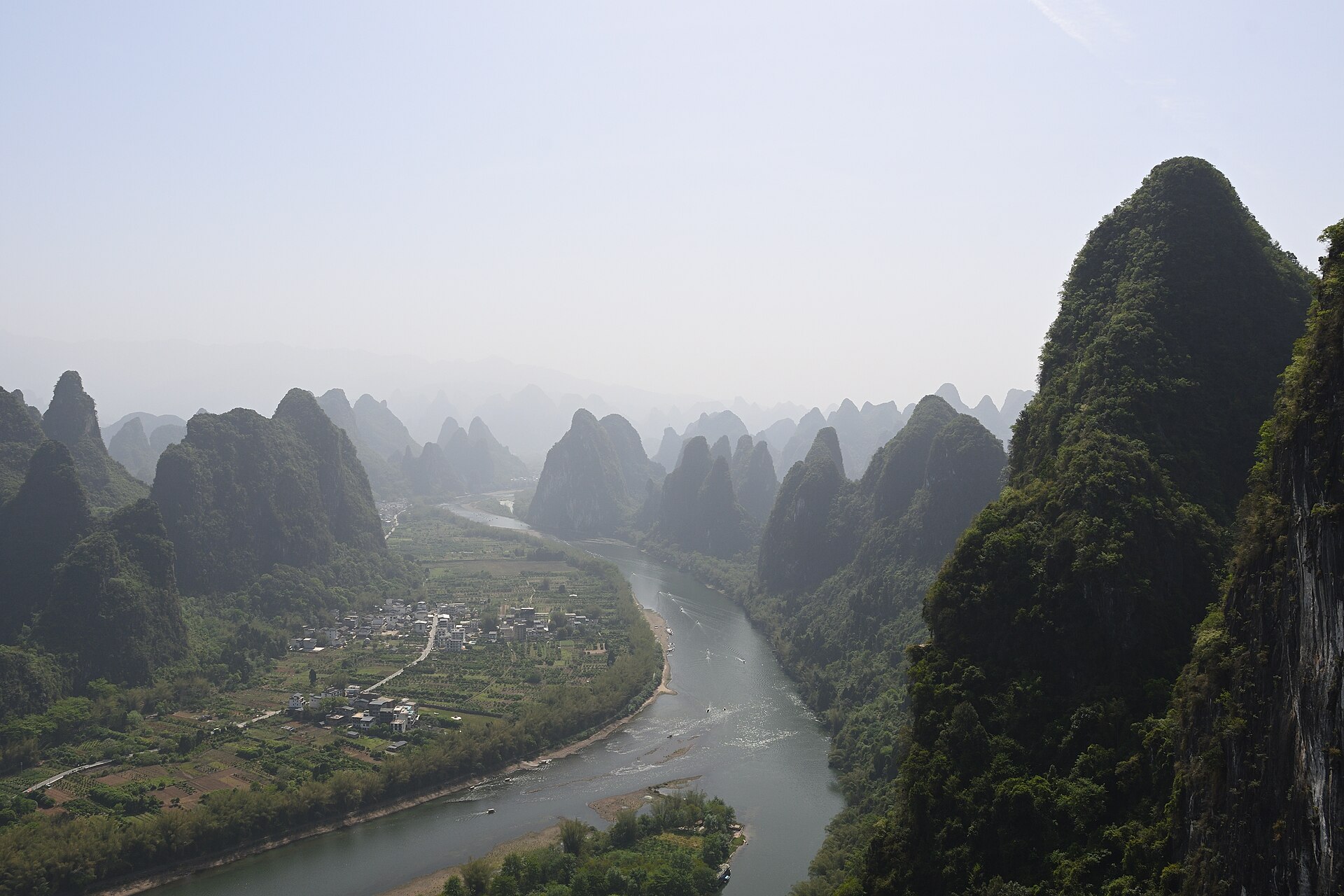
One province, three seasons running at once: the river karst, the terraced ridge at 1,000 metres, and the tropical coast. Which month you choose decides which of them you get.
Explore the guide ↓Guangxi · month by month
Guangxi lies in the subtropical monsoon belt, but the province is not one climate. The north-east around Guilin is a river basin with four seasons and a cool, damp winter; the north-west plateau around Longji and Leye sits 700 metres higher, with cooler nights and cloud; the south coast is tropical, with a sea that stays above 20 °C for most of the year.
The monsoon arrives in May and leaves in September, and it decides most things: river levels, rice stages, road conditions and whether the towers are visible at all. The two dry windows — March to April and October to November — are when the province is at its most legible.
The October holiday and the Spring Festival are the two weeks to avoid if you can. The flooded-terrace fortnight in May is the third, and it is the one people plan around rather than avoid.
What each month actually gives you.
Cool, damp and quiet, 8–15 °C. Bare terraces, low water, mist on the karst. The best month for empty viewpoints and cheap hotels.
Spring Festival crowds in the first week, then the quietest fortnight of the winter. Plum blossom, and the first green on the paddies.
The dry window opens. 15–22 °C, mist, and the karst at its most painterly. Rock can stay damp after rain, which matters if you are climbing.
The best spring month: warm, green, the paddies flooded, and the rivers clear before the monsoon. Longji begins filling its upper terraces.
Hot and wet, and the flooded-terrace mirror season from mid-month. The Li runs high; the light is flat but the reflections are extraordinary.
The monsoon at full strength. 30–34 °C, daily rain, brown rivers. The falls at Detian are at their widest; the caves are at their wettest.
Hot, humid, and the start of the typhoon season on the coast. Climb before eleven or not at all. The terraces are green and the cloud sits low on the ridge.
The worst month for heat and the peak of the typhoon risk. Ferry cancellations at Weizhou are common. Good for caves, bad for everything above ground.
The monsoon breaks. Still hot, but the light improves through the month, and the rice at Longji begins to turn.
The best month of the year. Dry, 20–28 °C, clear water, gold terraces and the highest chance of a clean reflection. Also the busiest week of the autumn.
Almost as good and much quieter. The harvest finishes, the rivers are low and green, and the climbing conditions are at their best.
Cool and grey, 8–16 °C, with occasional cold snaps. Clear light on the few dry days, and the coast is empty.
The weeks that change the price and the crowds.
Late January or February, and the biggest domestic travel event of the year. Transport and hotels sell out a month ahead; the terraces and Guilin are heaving for a week.
Early April and the first days of May, each a short national holiday. Three-day crowds, then quiet again.
The first week of October, the busiest week in the province. Avoid Guilin, Yangshuo and Weizhou, or book everything in advance.
Yangshuo’s annual climbing festival has run since 2008, usually in the autumn or early winter. It fills the town and the crags for a long weekend.
Tell us the month you can travel and what you want to do in it. If the two do not match, we will say so rather than sell you the wrong week.
Start my journey brief ↗