14:30 on the upper trail
The reserve starts controlling passage on the long route from about 14:30. Anyone still climbing at that point is turned around, which is why the walk is a morning rather than an afternoon.
 Start your enquiry
Destinations / Sichuan / Yading
Two lakes in one basin, roughly five hundred metres above the pasture and ten kilometres there and back. The reserve calls the walk the Diamond Challenge line, and it is the one day in Yading where a clock decides the outcome.
Explore the guide ↓Yading Nature Reserve · 4,600–4,700 m
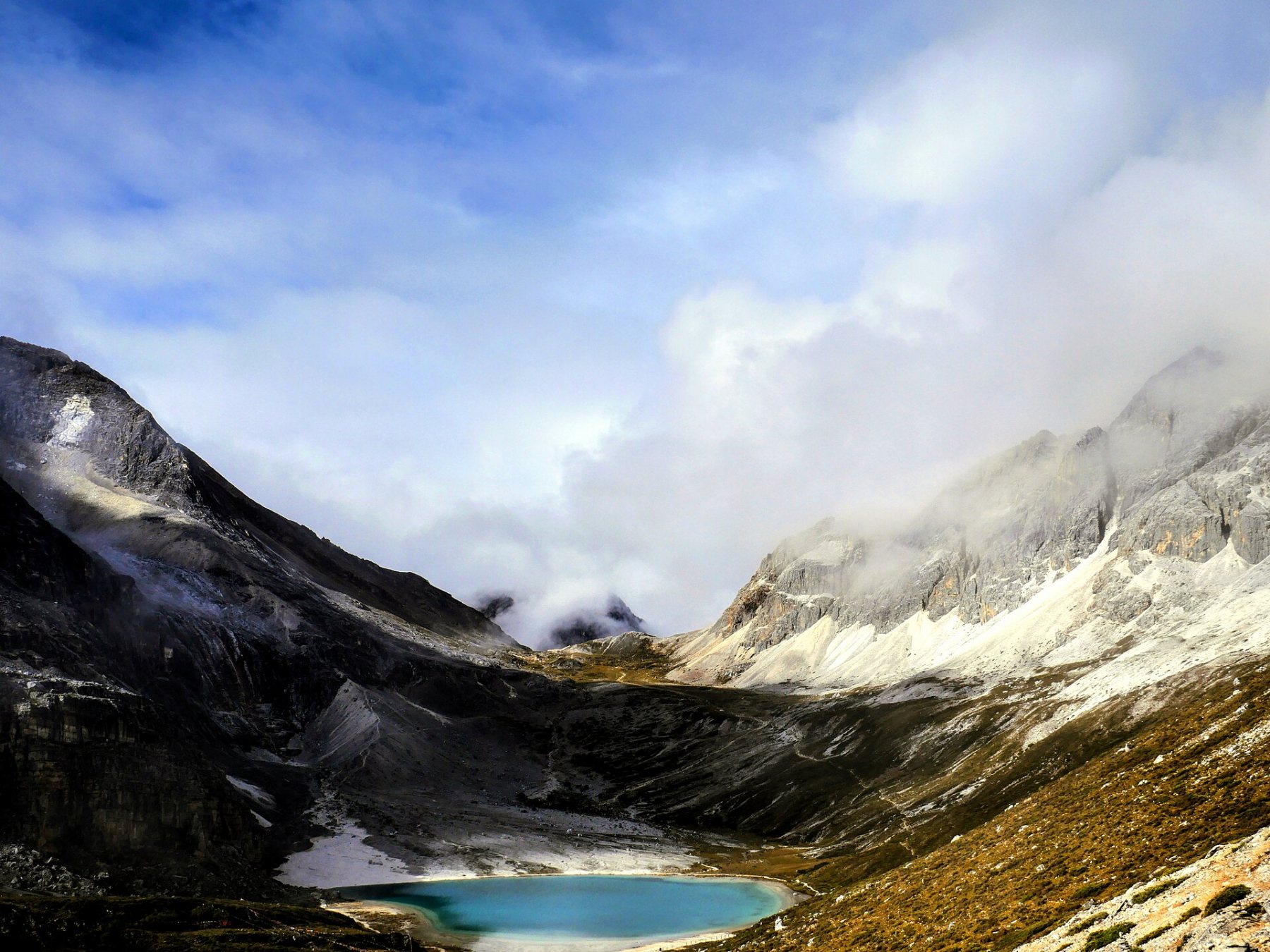
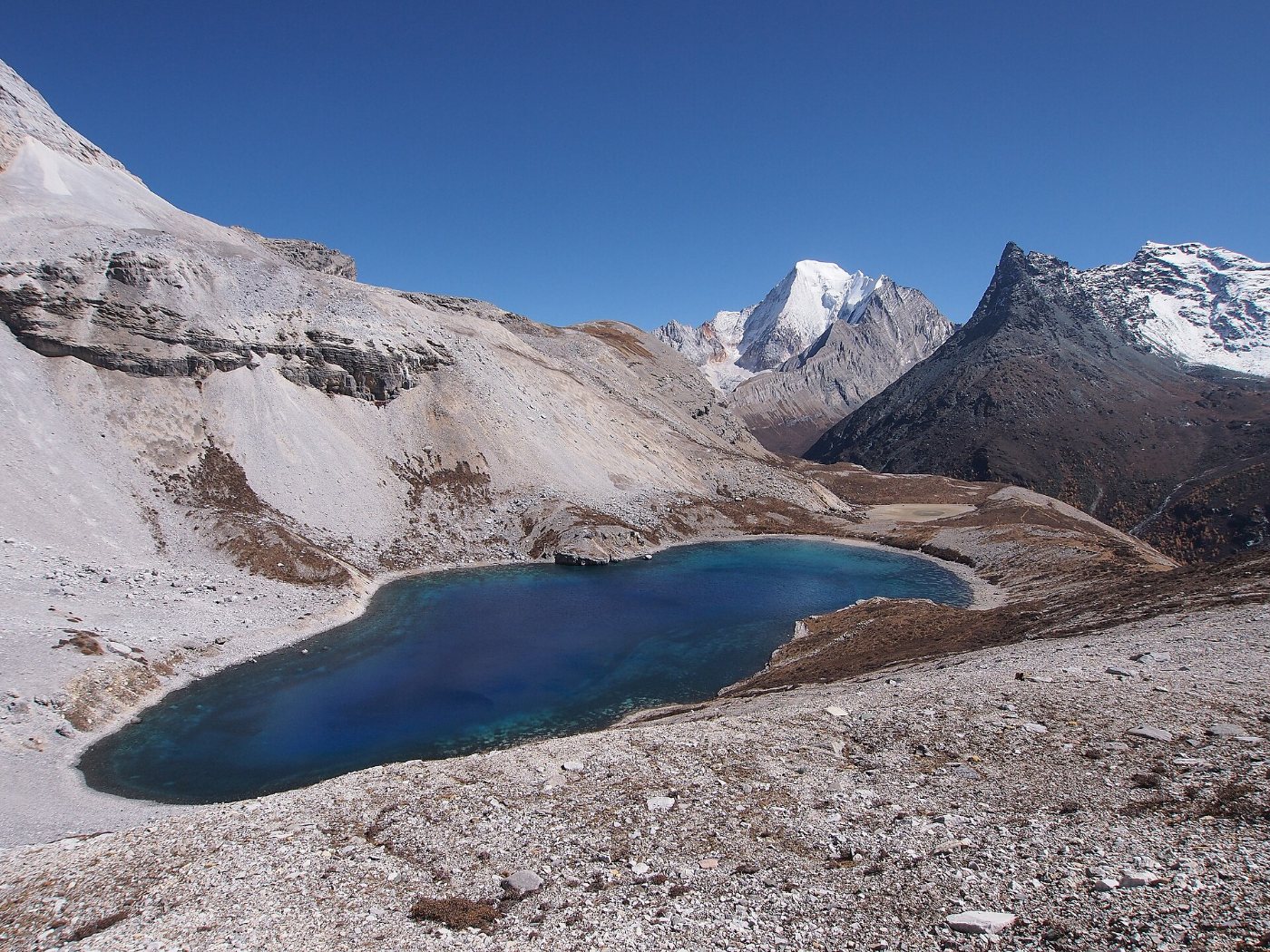
Milk Lake and Five-Colour Lake sit in the same cirque below Yangmaiyong, about 400 metres above the Luorong pasture. They are close together — three to five hundred metres apart — but they are not the same lake twice: one is milky and the other is not, and the difference is the reason both have names.
The walk from the pasture is the reserve's long route, signed as the Diamond Challenge line. It is the only route in Yading that leaves the cart track and stays out, and the only one where the reserve controls how late you may start.
Figures are the reserve's own published distances and the timings walkers actually report at altitude.
| Leg | Distance | Time | Altitude |
|---|---|---|---|
| Luorong pasture → Milk Lake | about 5 km | 2–3 h up | 4,180 → 4,600 m |
| Milk Lake → Five-Colour Lake | 300–500 m | 20–30 min | 4,600 → 4,700 m |
| Five-Colour Lake → Luorong | about 5 km | 2–2.5 h down | 4,700 → 4,180 m |
| The whole long route | about 10 km | 6–8 h | about 500 m of ascent |
The reserve runs this route on a timetable, and the timetable is not negotiable.
The reserve starts controlling passage on the long route from about 14:30. Anyone still climbing at that point is turned around, which is why the walk is a morning rather than an afternoon.
The cart from Luorong back to Chonggu runs until 16:30 in peak season. Miss it and the seven kilometres back to Chonggu are on foot, on top of the ten you have just walked.
The last shuttle from Zhalagang to the visitor centre leaves at 17:00. The arithmetic is unforgiving: a 7:00 start gives you a comfortable day; a 9:00 start gives you a race.
Horses run from Luorong towards the upper valley in peak season, roughly 200–300 yuan an animal and limited daily. They shorten the approach, not the climb.
Neither lake is coloured by depth or by minerals in the water. Both are lit from below by rock flour.
The name is literal: suspended glacial silt scatters light and turns the water an opaque turquoise that looks painted on. On a still morning the surface reads as enamel; with wind on it, the colour drains towards grey.
Deeper and clearer, with a bottom of dark scree. The colour shifts between blue, green and near-black as cloud crosses the sun, which is where the name comes from — not from five separate colours at once.
Photographs of these lakes are usually taken in the ten minutes when the light is doing the work. Arrive at noon under flat cloud and you will see two grey pools and wonder what the fuss was about.
Offerings are left at the edges and swimming is not appropriate. Neither lake has a shop, a railing or a bench; there is nothing to buy above Luorong.
The long route is an administrative season, not a weather call.
The reserve reopened the Diamond Challenge line on 15 April 2026 and closes it on 25 November. The dates are announced each year and move by a few days.
From 26 November to 14 April the upper route is closed and the carts to Luorong run reduced winter hours. The valley and Pearl Lake stay open all winter.
Clear mornings and larches turning gold. It is also the busiest fortnight of the year and the one to book furthest ahead.
Open, green and usually clouded. The walk is muddier and the peaks are often hidden; the lakes still work on the days the cloud lifts.
Five hundred metres of ascent above 4,100 is not a fitness test. It is an altitude test.
A dull headache that recedes when you rest is manageable. One that tightens, with nausea or unsteadiness, is the signal to go down — not to sit it out at the lake.
The step between Milk Lake and Five-Colour Lake is short and steep, and it is where most people stop. Turning around there is a normal outcome, not a failure.
Cloud and sleet arrive without much warning in the afternoon. Carry a shell and a warm layer even on a blue morning.
The realistic pace above 4,500 m is roughly half of what it is at sea level. Two hours up is a good day; ninety minutes is a fast one.
There is nothing above Luorong but rock, water and weather.
Two litres a person is the working figure at this altitude, and there is no shop after Chonggu. A flask of hot tea is worth more than a third bottle of cold water.
A packed lunch from the village or the gate town. The pasture has no kitchen, and the last food inside the gate is at Chonggu.
A shell, a warm mid-layer and gloves, even in September. The basin is 4,600 m and exposed to the wind from three directions.
The trail is eroded scree and slick mud depending on the week. Boots with an edge beat trainers on the descent, which is where most injuries happen.
Tell us your dates and whether the high lakes are the point of the trip or a bonus. We will build the day around the 14:30 cut-off rather than against it.
Start my journey brief ↗