
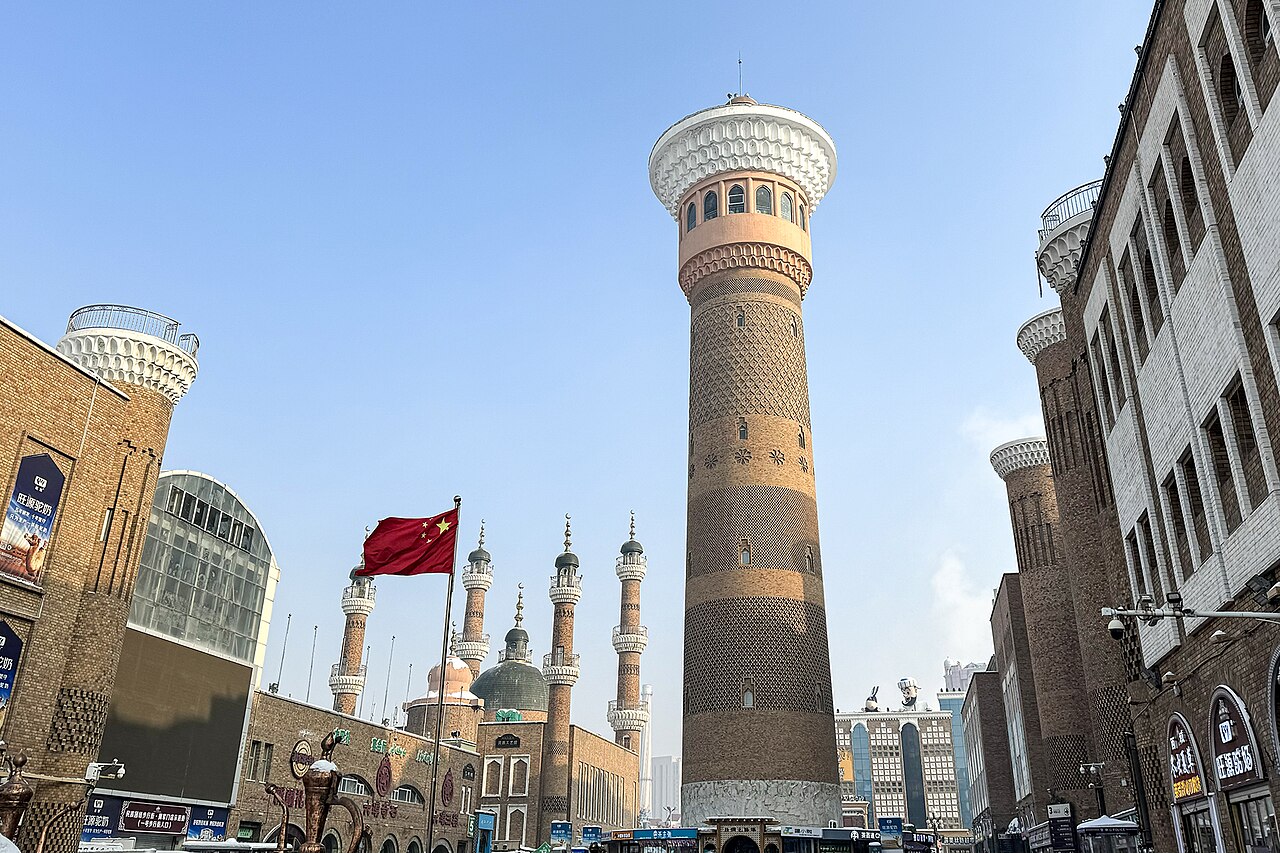
Every long journey on the plate passes through Urumqi, and almost every traveller treats it as an airport with a bazaar attached. The city deserves better than a transit night for one reason, and the reason is in the regional museum: the Tarim mummies, the most startling human collection on the old silk road.
The room, and the face in it.
The gallery is dark by design — the dead are displayed in low light, behind glass, at walking pace. The famous face belongs to the Cherchen man: tall, buried in woollens of twill and felt, his reddish-brown hair and beard intact after nearly three millennia, his face composed in sleep rather than death. Visitors go quiet in that room. The effect is not horror; it is recognition — he looks like someone you might have argued with on the road yesterday.
How the desert did it.
No embalming was involved. The basin burials were shallow, in salt-laced sand, in the driest climate in China; the winter cold fixed the bodies and the summer drought desiccated them before decay could start. The same climate preserved everything organic in the tombs — wool textiles of astonishing colour, felt, leather, wooden bowls, wheat, even slices of bread — which is why the mummies arrive with their entire wardrobe intact. Egyptian mummification was a technology; the Tarim preservation is a stroke of geography.
Who they were.
The dead of the Tarim oases were oasis farmers and herders, and their appearance — and the twill weaving, an imported technique — made them famous in scholarship for a generation of arguments about origins. The cautious reading the museum itself now presents is the honest one: a mix of populations over millennia, moving along the corridors the geography allowed, burying their dead with their loom-work and their cheese. The oldest among them predate the silk road by two thousand years; they are the proof that the oases were lived in long before the caravans crossed them.
Visiting, practically.
The museum sits in the city's northwest, runs free, and closes Mondays; the mummy gallery is on the upper floor and the signage is bilingual. Two hours covers it properly, and the building is air-conditioned to a degree that makes it the correct noon activity in any season. Photographs are not permitted in the mummy room — a rule worth respecting in a gallery where other visitors are visibly moved.
Building the morning in.
We schedule the museum on the morning after arrival in Urumqi on our flagship route — jet-lagged walking, dark rooms, and the deep background for everything the journey will show later: the Kizil caves, the ruined cities, the tombs of Astana. Guests who see the dead before the ruins read the ruins differently. The basin stops being scenery and becomes a continuously inhabited story four thousand years long — which is exactly what it is.
Where this leads
The Tarim mummies: a fuller reading
Guide: Urumqi
Way stations of the silk road