
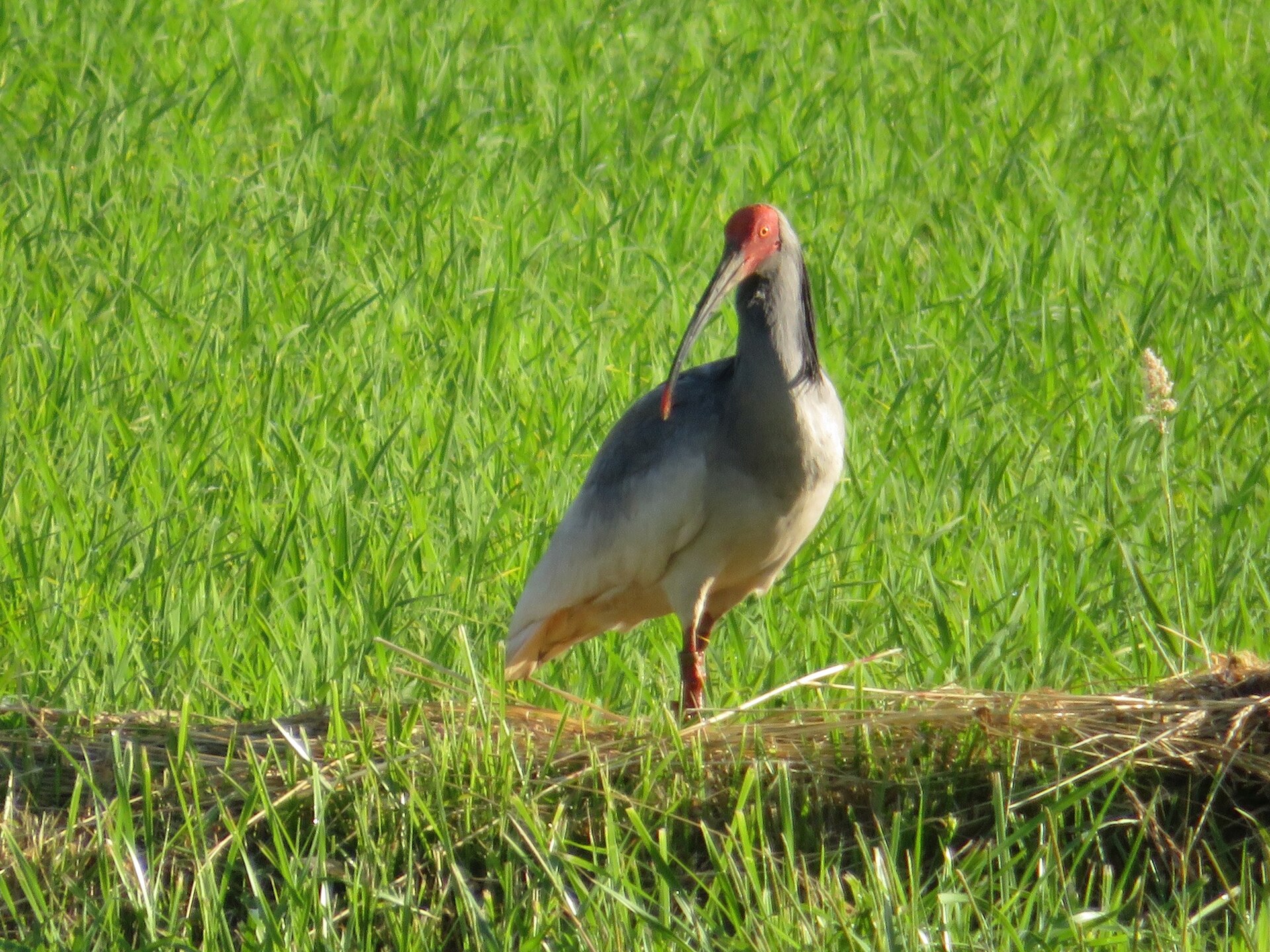
Every conservation movement has a founding story. China’s is a bird: the crested ibis, a pink-flushed, powder-soft crane-sized wader that once bred across Japan, Korea, the Russian far east and most of eastern China, and by the late 1970s was presumed extinct in the wild everywhere on earth. The search for the last survivors, and what happened after they were found, is the best comeback story in Asian conservation — and unlike most, you can go and stand in it.
The finding
On 23 May 1981, a survey team led by the Institute of Zoology’s Liu Yinzeng located a wild crested ibis nest in a tall pine above Yaojiagou village, deep in the Qinling foothills of Yangxian county, Shaanxi. Seven birds: two adult pairs and three fledglings, the world’s entire known wild population, in one valley. The earlier searches had covered fourteen provinces and five years. The discovery made global news, and it handed Yangxian an obligation no county had ever held before.
The choice that saved it
The first protections were conventional — no hunting, no logging, round-the-clock watches at the nest trees through the breeding season, guards living under the pines in shifts. The ibis population stayed around twenty birds for a decade. The decisive move was ecological: crested ibis feed in rice paddies, and paddies are poisoned places in modern agriculture. Yangxian banned agricultural pesticides and chemical fertilisers county-wide, and rebuilt its farm economy around organic rice. The birds’ food web and the county’s cash crop became the same thing. That trade — prosperity rewired around a bird — is why the population moved at all.
Seven to twelve thousand
From seven: a hundred by 2000, a thousand by 2010, and by the end of 2025 a global population above twelve thousand. Captive rearing at the Yangxian centre supplied reintroductions across fifteen Chinese provinces and, through two state gifts and their offspring, the rebuilding of wild populations in Japan and Korea. The IUCN moved the species from Critically Endangered to Endangered — the rarest thing in conservation writing, a down-listing earned.
Seeing them now
The best part of the story for a traveller: the wild bird is an ordinary neighbour now. Ibis feed in working paddies along the county roads at dawn and dusk, tolerated by farmers who grew up with the protection rules, grey in winter and pinker as the nesting season builds from February. The reserve’s centre offers the ringing and aviary work for close views — context, not substitute. And the valley sits almost exactly on the Xi–an–Chengdu high-speed line, which makes an ibis morning one of the easiest great wildlife experiences in China to add to any western-China route.
Where this leads
The Yangxian ibis guide
Seeing pandas in China
The Foping reserve guide