
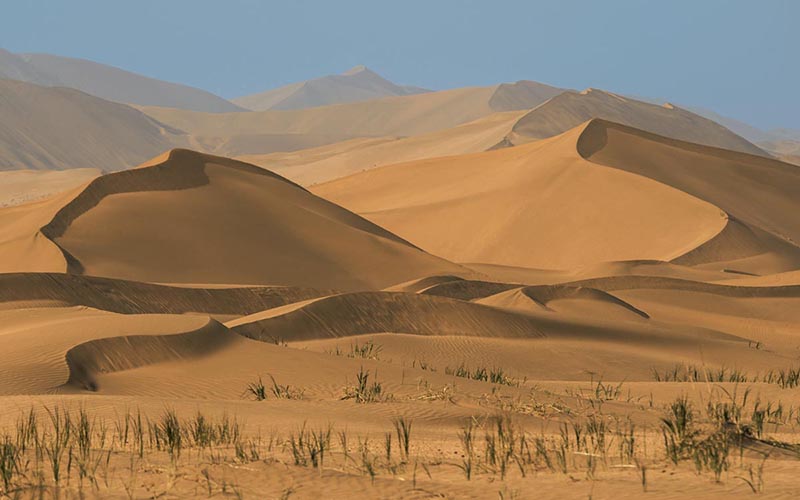
Leave no trace translates cleanly into Chinese — and then needs a local appendix. The environments our journeys cross are fragile in different ways from the US backcountry: steppe that recovers from a tire track in a decade, desert where a fire scar lasts a century, pilgrimage routes where the traces are cultural, not just physical.
Why the rules differ here
Two facts rewrite the manual. First, decomposition is slower in cold, arid country — an orange peel on the Tibetan plateau is a years-long monument, not a biodegradable afterthought. Second, the country is lived-in: grassland is pasture, desert margins have herding families, and mountains have shrines. ‘Wilderness’ rules written for empty land misread a landscape that is, in the useful sense, inhabited.
Waste, all of it
Everything organic-looking gets carried out too: peels, eggshell, tea leaves. What can be burned safely — paper, and paper only — is burned at the camp’s fire point with the crew; what cannot is packed out, including batteries and the packaging that arrives with provisions. The toilet question has a local answer: a designated spot 60 metres from water, dug in soil deep enough, and fully backfilled — paper either burned or packed, never left to flutter.
Water and fire
Washing happens downstream of any collection point, with no soap — even biodegradable soap — directly in streams or lakes. Fires are the crew’s business, not the guests’: in steppe and desert country the stove wins every time, because a grass fire moves faster than anyone can run and the firewood never belonged to you anyway. Where a fire is traditional and appropriate — a herder family’s hearth, the dried dung that is the local fuel — it is their fire, on their terms.
Paths, herds and holy ground
Stay on the tracks and trails — not only for erosion, but because on the steppe a shortcut across pasture is a trespass through someone’s working land, and the fences have gates for a reason. Treat mani walls, cairns and prayer flags as architecture: walk left, do not add to them without being asked, and never take a stone. On our journeys the crew’s relationships with the herding families do the diplomatic work — your job is to leave the grass as the horses found it. The camp craft note explains how the crew sits a camp to the same standard.
Where this leads
Desert water discipline
The Hulunbuir steppe camp
Badain Jaran, on foot