
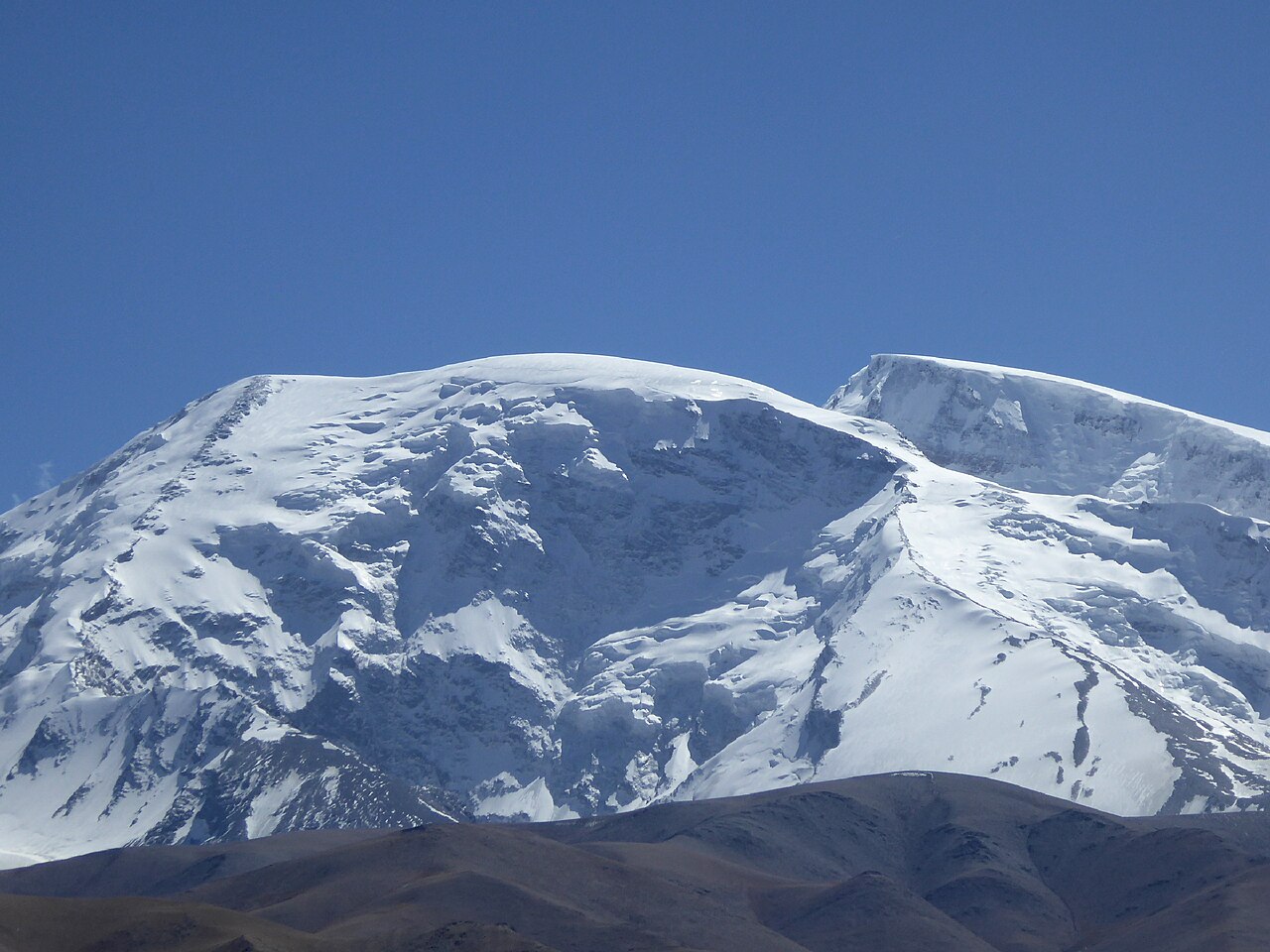
Ask anyone who has driven the Karakoram highway what they remember and they will name the lake — but almost never the lake at the hour it is best. By ten, the shoreline has wind, buses and a row of camels waiting for photographs. At seven, before the sun clears the ridge to the east, the water lies flat enough to hold the whole southern wall of the range upside down, and the only sound is the water ticking against stones.
The hour that belongs to the lake.
Karakul sits at 3,600 metres on the road between Kashgar and Tashkurgan, and the air up there is thin enough that a walk along the shore registers as real exercise. That is exactly why the early hour works: the light is soft, the temperature is near freezing for most of the year, and the body is still deciding how it feels about the altitude. We plan the first lakeside walk for the morning after a night at the lake, not the afternoon of arrival — you sleep at the altitude first, then walk in it.
The dome and its names.
Across the water, Muztagh Ata lifts a white dome to 7,546 metres. Kirghiz herders around the lake call the mountain the father of ice mountains; the name has survived every map administration for a good reason. The dome is deceptive — from the lake it looks almost gentle, a ski slope for giants — which is precisely why mountaineers underestimated it for a century. The route we run, on the west ridge, starts from a camp at 4,400 metres that is a two-hour walk from the lakeshore.
For most of our travellers the mountain is a view, not an objective, and the lake gives it in full. On still mornings the reflection runs the whole height of the peak; on windy ones the water throws whitecaps and the mountain keeps its own counsel. Both versions are honest ones.
Wind, and planning around it.
The lake is windy by nature — the valley drafts pull down the glaciers on either side and funnel across the water in the afternoon. Morning is the calm window, and it narrows in summer. The practical consequences are simple: sleep by the lake rather than driving up from it, walk early, and keep the middle of the day for the road. The highway between Karakul and Tashkurgan is worth the afternoon anyway; the valley widens into grassland, and the stone city at Tashkurgan sits in light that lasts until eight.
Why the first night is high.
Our Pamir road journey spends the first night at the lake — 3,600 metres, in yurt-stay accommodation that is basic by design. The point is not romance; it is acclimatisation. A night at the lake makes the second day, at Tashkurgan and up the valley toward the Khunjerab border, comfortable instead of grim. Guests who have flown straight from sea level feel the difference by breakfast.
The yurts are warm enough, the food is noodles and tea, and the stars — this is the real reason — are the best on any journey we run in China. At that latitude, at that altitude, with no town within a hundred kilometres, the Milky Way is not a photograph. It is weather.
Working it into a journey.
The lake anchors the high half of our nine-day Kashgar and Pamir road journey: three unhurried days in the city first, then the climb west — Karakul for the night, Tashkurgan for the stone city and the Tajik valley, and the return road with the mountains on the correct side of the vehicle. If the dome gets under your skin, the next step is the full expedition page — but the lake, honestly, is where most people want to stop.
Where this leads
Kashgar & the Pamir road
Guide: Karakul & Tashkurgan
The Muztagh Ata expedition