
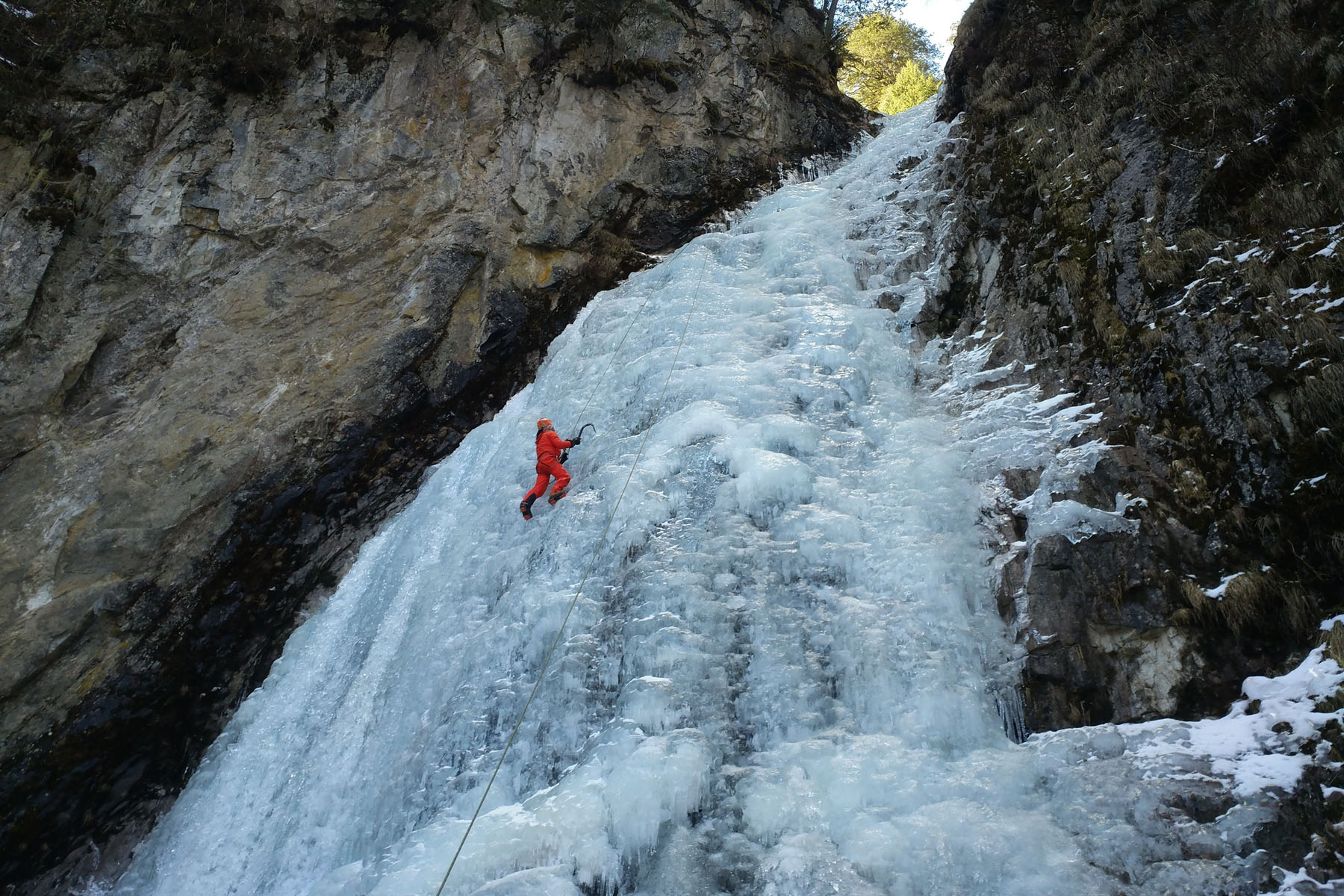
Climbing grades are arguments made numerical, and waterfall ice is no exception. The scale in use across China is the Waterfall Ice (WI) system, which runs from WI1 — a walk up frozen turf — through the teaching grades into the thin, dry-tooling-adjacent territory of WI6 and beyond. For a visiting climber the useful range is narrow and honest: WI2 to WI4 covers almost everything a guided week will touch.
The WI scale
WI2 is low-angled and friendly, fat ice with room for good feet — the teaching grade. WI3 is sustained vertical: the whole pitch at 80 to 90 degrees, rest positions earned rather than found, and the grade where most beginners discover their forearms have opinions. WI4 adds length, commitment and the first red flags — pillars, chandeliers, sections where the ice talks back. WI5 and WI6 are different sports: thin, steep, technical, and mostly the business of specialists with project jaws.
What moves a grade
Here is the part guidebooks understate: the same route can be two grades apart between a cold snap and a thaw. Fat, well-bonded ice at −15 °C climbs to its number. Sun-warmed ice becomes dinner-plate mush, where every tool placement is a negotiation; glassy, water-backed ice turns screws into decoration. A warm afternoon, running water or fresh snow can make a WI3 behave like something harder — which is why venues with professional site teams, who re-read the wall every morning, are worth their fees.
Grades in Chinese venues
Chinese ice venues speak WI plainly. The teaching walls at Shuangqiao Valley run from WI2 school lines to WI3–4 testpieces, all documented by the site's own venue system, and the walls of the wider Sichuan corridor hold the country's best-known harder lines. Beijing's doorstep venues, including the Yudu Mountain area, run friendlier — mostly WI2–3, which is precisely why they work as taster grounds.
Picking lines honestly
The rule that works: climb the grade you can climb repeatedly, not the grade you can fluke once. A week of volume at WI2–3 makes next winter's WI4 real; one red-faced WI4 fight makes next winter's physiotherapist rich. Guides exist to hold that line against your enthusiasm on day four — which is most of what a progression week actually buys, along with the valley knowledge to know which wall is fat and which is lying.
Where this leads
Shuangqiao Valley, in detail
The Bipenggou ice week
First ice: a taster weekend