
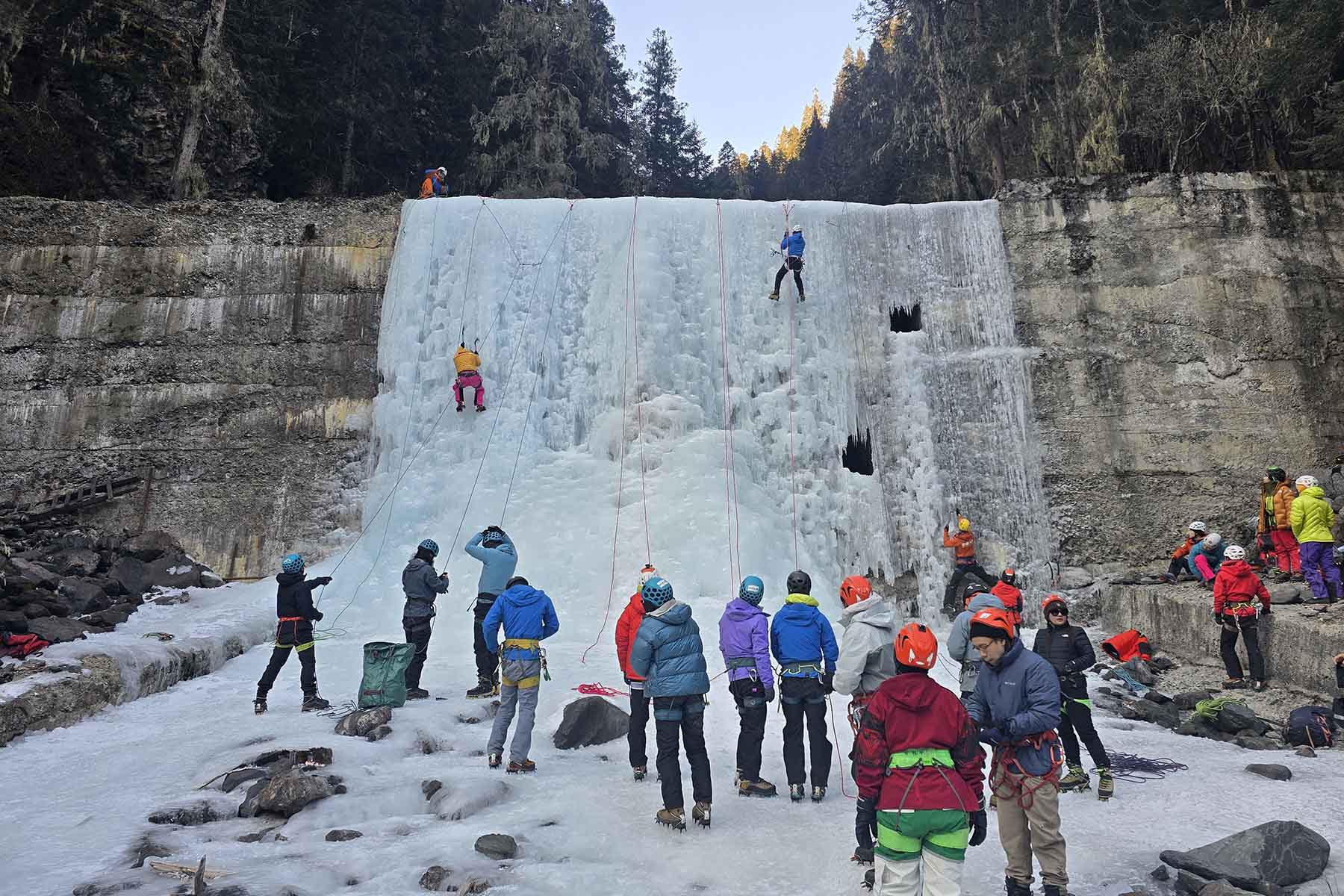
Ice climbing has a reputation for being extreme, and the reputation does real damage, because it stops exactly the people the sport suits best: hill walkers, gym climbers, skiers, anyone comfortable outside in winter who owns a sense of rhythm. The first weekend of ice is not extreme. It is gear school, a few metres of low-angled waterfall on a tight top rope, and the slow discovery that climbing frozen water is mostly footwork.
What the weekend looks like
A taster weekend runs on a simple frame. Day one begins with the kit — boots fitted to crampons, a harness that will spend two days holding nothing worse than your own enthusiasm, and the two tools, which are lighter than most people expect. The first session is deliberately short and low: a few metres of ice, over and over, until the swings land where you aim them and your feet stop searching for holds that do not exist. The evening is for hot food and a debrief. Day two is the full day, ropes moved onto longer lines as the instructors read the ice, and it ends in the early afternoon when the cold window closes.
What you actually learn
Three things, and none of them is strength. First, footwork: crampon front points placed with the eye and the ankle, not kicked hopefully. Second, stance: hips into the ice, arms long and low, weight on the skeleton instead of the forearms — the difference between five minutes on a wall and an hour. Third, trust: on a top rope the fall is a non-event, which frees you to climb with attention instead of fear. That trust is what the fixed anchors are for, and why no responsible first weekend lets you lead.
The cold window
Winter climbing runs on the temperature the way sailing runs on the wind. The ice is safest and best when it is deeply frozen, which sets the day's shape: out early, climbing through the coldest hours, off the hill by mid-afternoon. Beginners find this strange for about half a day and then find they love it — there is something clean about a sport with a hard stop, especially one that ends in a hotpot dinner.
Is it for you?
By Sunday afternoon you will know, and the signs are consistent. If you spent the weekend watching your tools place themselves with something like satisfaction, and the drive home is spent planning which course comes next, the sport has you. The progressions are honest: a taught beginner course at Mt. Siguniang adds three more days on the rope, and the Bipenggou week is where anchors, screws and first leads happen. The doorstep taster is the way in, ninety minutes from Beijing.
Where this leads
The doorstep ice taster
The beginner course at Mt. Siguniang
WI grades, explained