
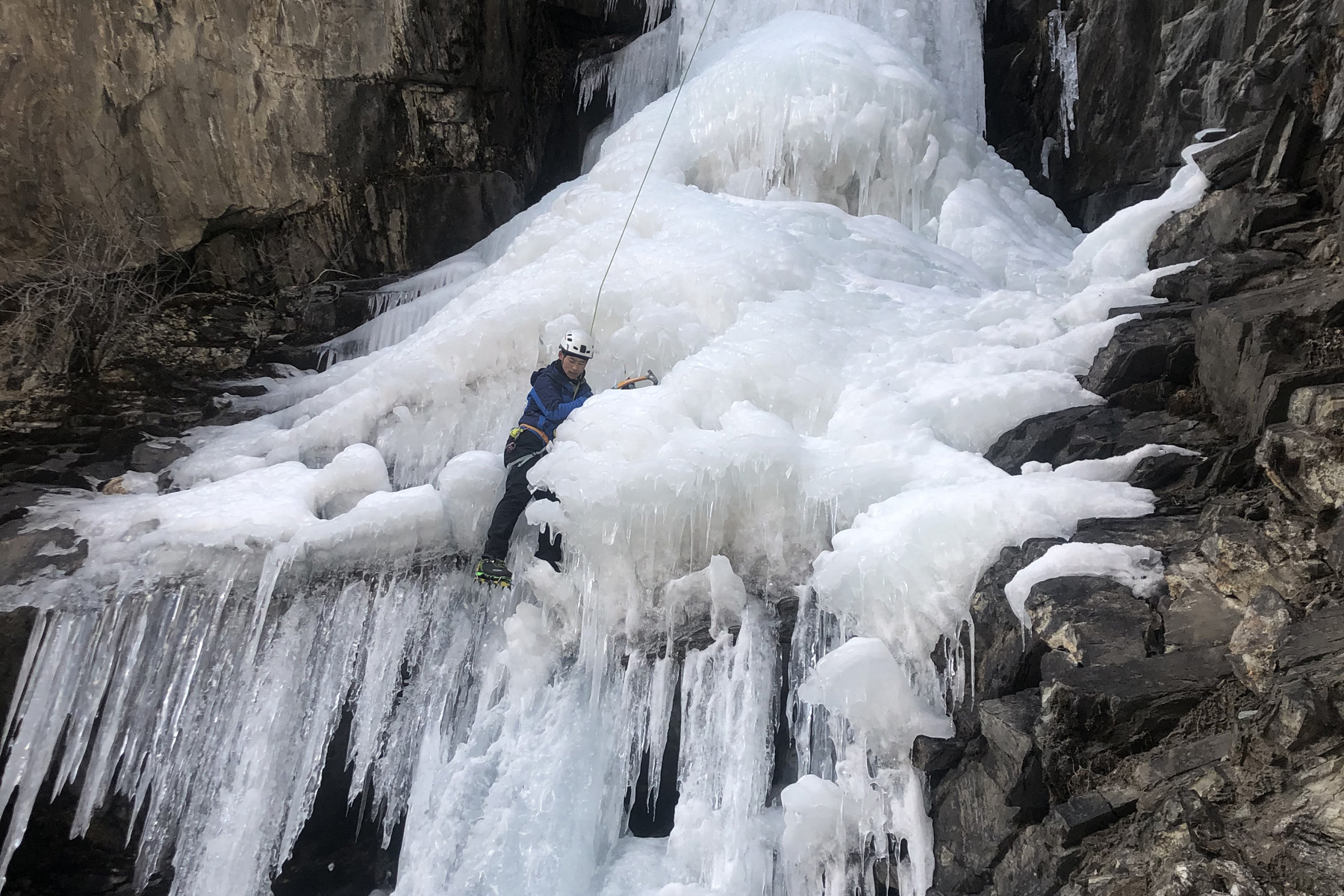
The odd truth about ice climbing clothing is that climbing is the shortest part of the day. You belay, you wait, you watch your partner solve a sequence; then you climb for ten furious minutes and steam like a kettle. The kit has to handle both states, and everything else — glove choices, layer discipline, pack design — follows from that alternation.
The layering logic
Base layer of synthetic or merino, then a stretching mid-layer, then a shell you carry more than wear. The discipline that matters: add warmth the moment you stop, strip it the moment you start. A belay jacket — the big puffy that goes over everything at every stance — is the single most important garment in the system, and the one beginners most often leave behind. Cotton, in any layer, is the classic first-trip mistake; at −15 °C it stops being fabric and starts being a liability.
The glove problem
Gloves are where ice kits get personal. The working answer is two pairs: a thinner pair for climbing, where you need to feel the tool handle, and a heavy insulated pair for belaying and everything else. Swap at every transition, dry the wet pair inside your jacket against your body — yes, really — and bring a third pair because gloves fall off ledges with a sense of purpose. Numb hands are not a toughness issue but a safety one; a climber who cannot feel a tool cannot place one.
Boots and crampons
Ice climbing boots sit between a mountain boot and a ski boot: stiff enough to drive front points, warm enough for standing hours. Fit matters more than brand — a boot that lets your heel lift will punish every kick — and modern strap-and-clip crampons make the old misery obsolete. Renting for a first course is genuinely sensible: good boots cost more than the course, and what fits your friend will not fit you. Venues that supply a full rental kit, like the taster weekend, exist precisely for this.
What goes in the pack
Thirty litres covers a teaching day: spare gloves, the belay jacket until needed, a thermos — the unreasonably powerful morale tool of winter climbing — snacks you can eat with mitts on, sun cream for the glare that will surprise you, and a headlamp that will never come out, carried anyway. The instructor team carries the technical hardware. Your job is to arrive warm, stay warm and finish with enough left to enjoy the drive home.
Where this leads
First ice: a taster weekend
The beginner course at Mt. Siguniang
WI grades, explained