
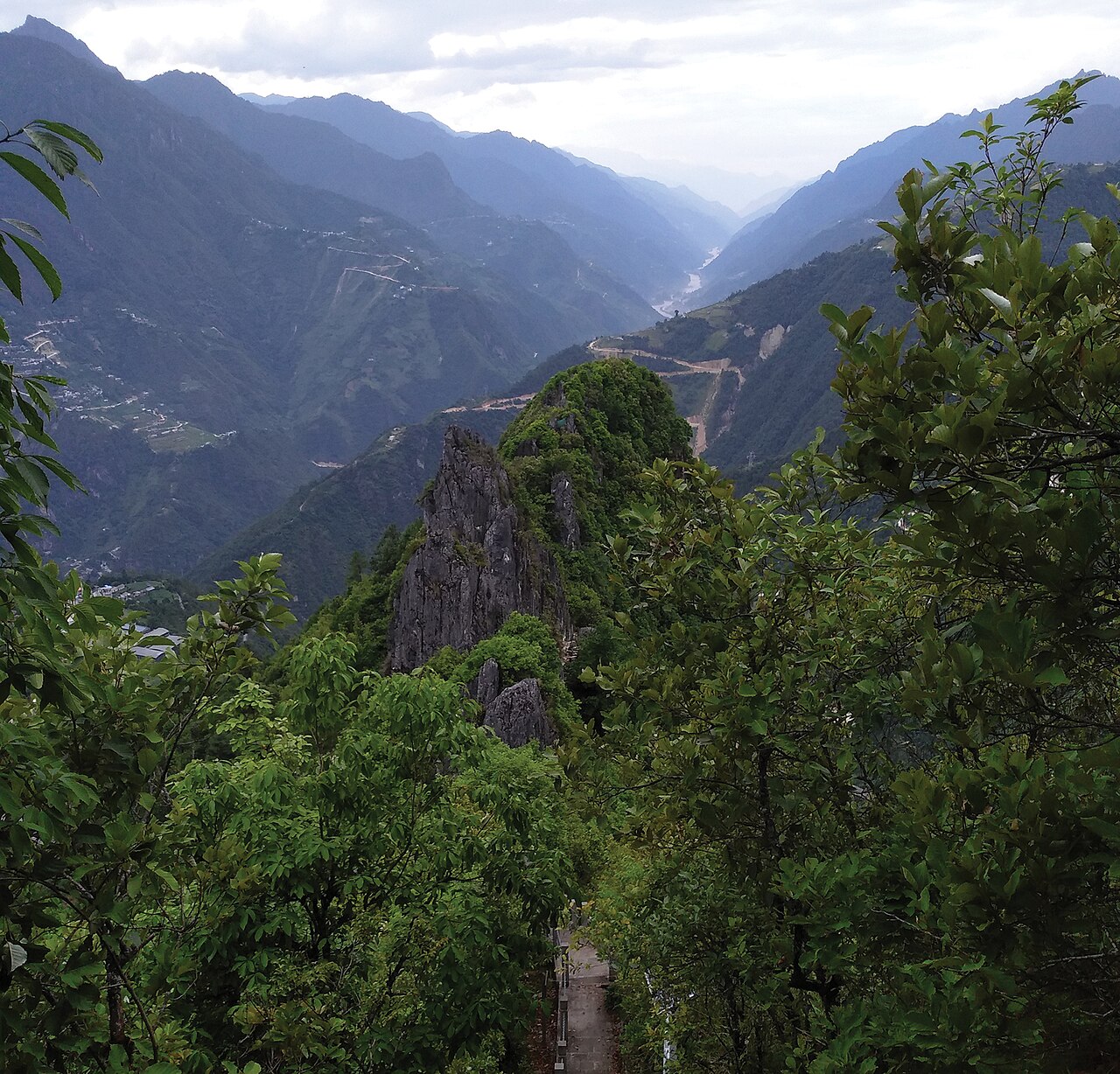
The path.
The path leaves the valley road and climbs the slope above Wuli on stone steps the villagers built and maintain — it is their footpath first, the fast way to the fields, and only incidentally the most photographed viewpoint in the valley. Thirty minutes of climbing through terraces and walnut trees, with the river getting lower and quieter below.
The hour.
The Nu valley generates its own weather, and on the right mornings — autumn and spring nights with moisture in the gorge — the cloud fills the valley floor to the brim. From the path, the effect is of a sea: green water in a stone bowl, the ridgelines standing in it, and Wuli's houses and fields sitting on the surface as if the valley had drowned and the village had floated.
The mist burns off from the ends, and the hour of maximum strangeness is short — catch it, or come back tomorrow. That is the honest deal the valley offers, and why the journeys here hold second mornings rather than promising the first.
The village.
Walk down into Wuli itself on the way back. The village is the reality the photograph abstracts: farm work, wood stacks, a village school, tea plants by the doors. Guests who arrive through the fog are guests; guests who arrive in a convoy are a photo opportunity. One of these is better, for everyone, and it takes an hour of walking to be the first kind.
Keep reading
Shaxi's Friday market
Yubeng morning mist
Tea-horse way stations