
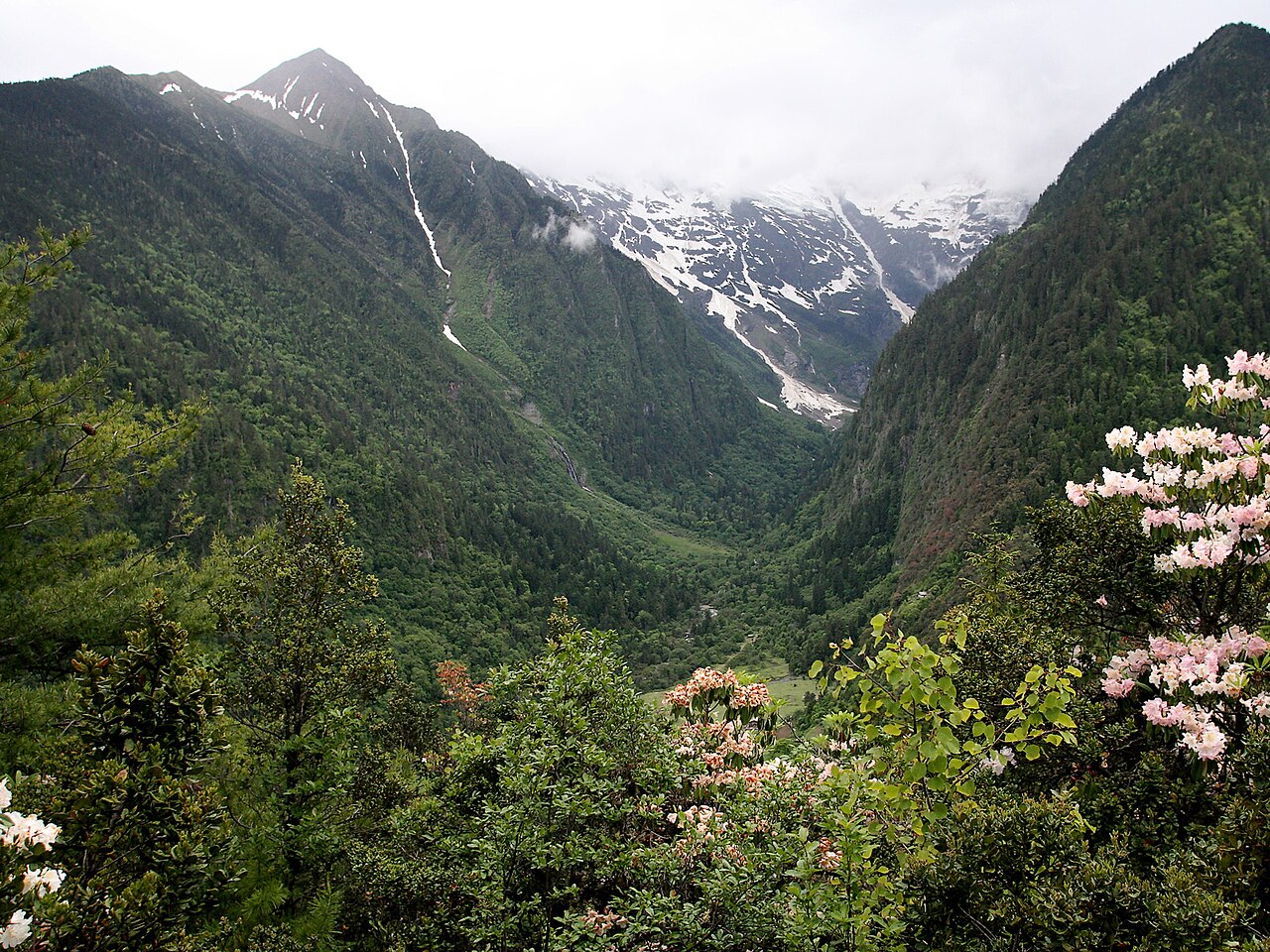
The pass.
There are exactly two ways into Yubeng: the 3,700-metre pass from the west, and the river gorge from the south. Both are on foot or horseback, because there is no road — the valley decided, or the mountains did, and the village kept its path in. The walk over the pass takes three hours with the horses carrying the bags, and the last stretch is a staircase of mani stones carved with the mantra, worn smooth by centuries of pilgrims' gloves.
You arrive, if you are doing it properly, tired and slightly short of breath at 3,200 metres, to a village of whitewashed farmhouses stacked on the slope with the great wall of the Meili range filling the sky above it. The guesthouses are simple and warm. The evening is soup, fire, and an early night — the mountain starts before you do.
The mist.
Yubeng's mornings begin in fog. The valley holds its cloud like a bowl holds water, and for the first hour the village exists in a white room with the sound of hooves in it: the horses are brought down through the lanes, the pilgrims' guesthouses empty, and the kora path fills with people walking clockwise under headlamps.
Then the fog starts to work. It thins from the top down, in folds, and the wall of Kawagebo appears in pieces — a buttress first, then the ridge, then the whole unclimbed face standing in air so clean it looks cut out. Nobody talks much. The photographers shoot; the pilgrims prostrate and carry on. The fog gives you ten minutes, sometimes forty, and then it closes again. You learn to stop planning and simply be there when it happens.
Guest of a pilgrimage.
The path to the holy waterfall is a pilgrimage route first and a hiking trail second, and the difference is behaviour. Walk clockwise. Give way to the prostrating pilgrims, who measure the kora in full-body lengths. Greet people. Do not sit on the mani stones, do not fly a drone through the prayer flags, and do not ask why nobody has climbed the mountain — the answer is not a regulation, it is a relationship, and it is not yours to relitigate.
In return the village gives you the kind of morning that reorganises a trip. The horses know the way. The fog knows its hour. And the mountain, unclimbed and undisturbed, does what it has always done at dawn — which is enough.
Keep reading
The mountain that said no
Meili mountain light
Shaxi's Friday market