It is not a chiru
Travel copy merges the two constantly. The chiru is the high-plateau migrant of Kekexili; this animal never leaves the lake, and it is smaller, paler and horned differently.
 Start your enquiry
Wildlife / Field guide
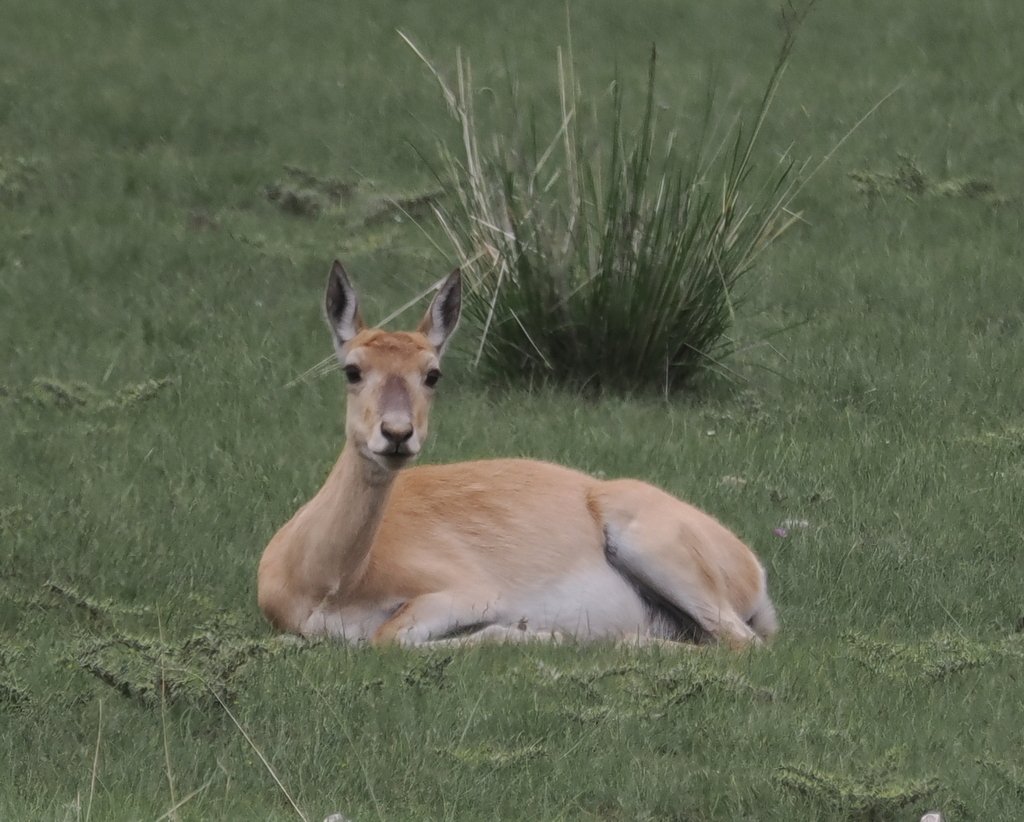
It once ranged across five provinces. Today every Przewalski’s gazelle on earth lives around one lake — 3,700 of them, on the steppe where the fences are finally the right height.
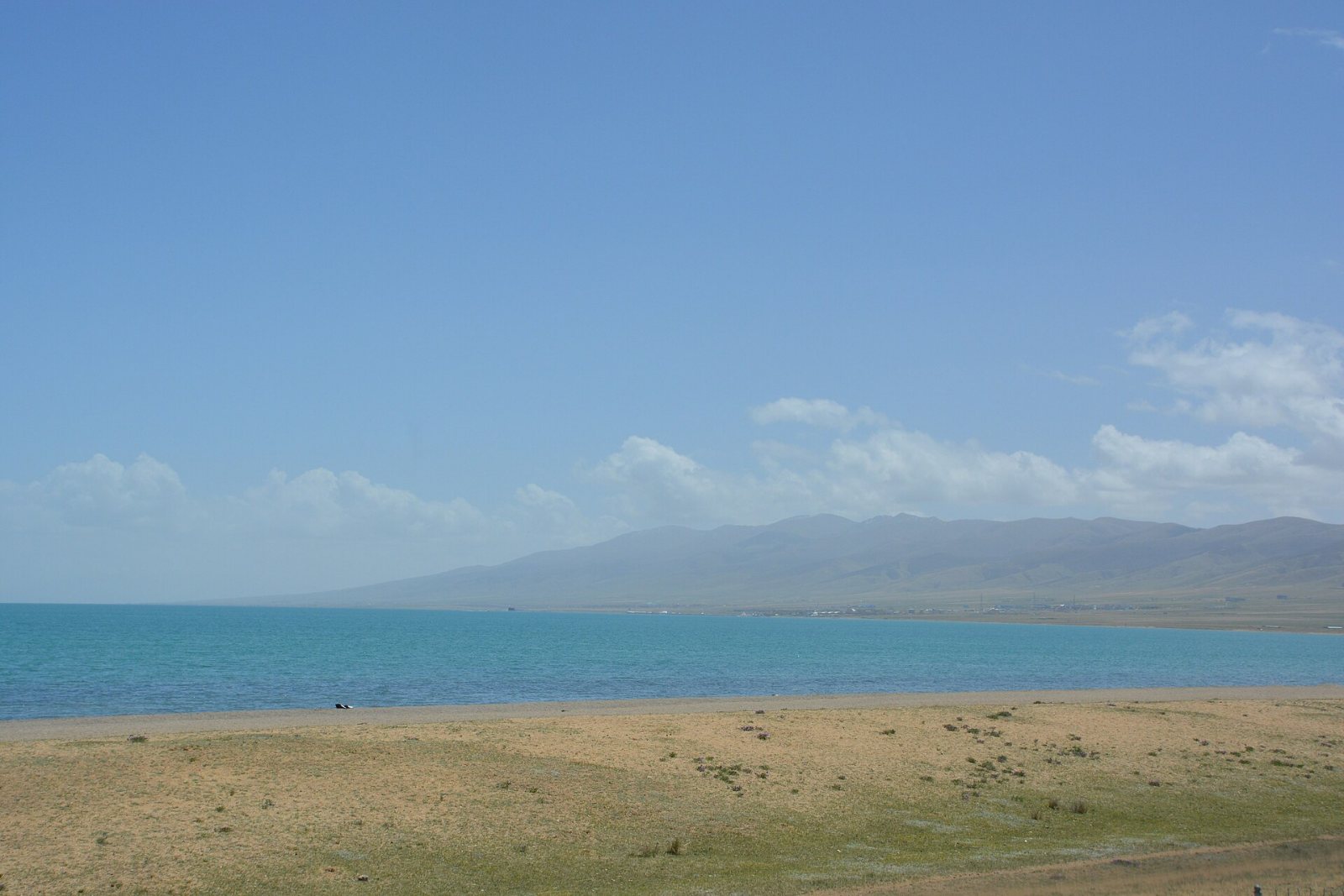
Start this journey briefQinghai Lake, Qinghai · Jonashtand · CC BY-SA 4.0
the basin around China’s largest lake at 3,200–3,500 m, plus the Gonghe basin to the south
the 2025 count, across fifteen populations
the early 2000s, before fence heights and patrols changed
winter herds of thirty to fifty animals on the lakeshore steppe
Nikolai Przewalski’s expedition found this animal in 1875 on the Ordos grasslands, and for a century it was scattered across Inner Mongolia, Ningxia, Gansu, Xinjiang and Qinghai. Today it lives in one place: the basin around Qinghai Lake. It is endemic to China and, until recently, it was heading the same way as the chiru.
The low point was under six hundred animals in the early 2000s. The 2025 count is 3,700 across fifteen populations — helped by measures that are easy to list and hard to deliver: lowering the height of grassland fences so animals can cross, a dedicated protected area at Halgai from 2007, a rescue and breeding station that produced the world’s first captive-bred Przewalski’s gazelle in 2004, and survey work that logged 2,731 sightings between 2020 and 2025.
It is a small antelope, twenty-three to twenty-seven kilos, sand-coloured with a heart-shaped white rump that flares when it runs. Males carry a pair of black ringed horns about thirty centimetres long that curve inward toward each other — hence the Chinese name, the paired-horn antelope. Winter gathers the herds; summer scatters them into small groups. The rut runs from November into January and the lambs arrive in July and August.
The lake’s north shore, past the two-and-a-half to three hour drive from Xining. Halgai, the “antelope town”, is the usual base.
Two thirty-one metre towers at the Halgai science base look over the steppe where the herds settle, with a small exhibition on the species underneath.
Six to nine in the morning and four to six in the evening are the feeding hours. A vehicle works as a blind; a person on foot at two hundred metres is a reason to run.
Fifty metres minimum, no chasing, no feeding, no drone. The herds here are used to cars on the lakeshore road, which is exactly why they can be watched at all.
Travel copy merges the two constantly. The chiru is the high-plateau migrant of Kekexili; this animal never leaves the lake, and it is smaller, paler and horned differently.
The recovery is largely a story about fence heights and corridors. Ask about it while you are there; it is the most interesting thing about the species’ politics.
November to March for the big groups. July and August are the lambing months, when the herds are dispersed and the animals are least approachable.
The Qinghai Lake drive already passes the north shore. The gazelle turns a scenic day into a wildlife day without adding a leg.
The Qinghai Lake circuit is one of the easiest high-altitude journeys in China: Xining, the lake, Chaka, and no pass above four thousand metres. The gazelle is the reason to give it a second morning rather than a photograph from the car.
Start a journey briefThe Qinghai Lake circuit · Snow leopard: Sanjiangyuan and Angsai · Qinghai: the lake and the plateau