Dusk is the headline
The sambar keep to the pond schedule in every season; autumn simply adds colour and the sharpest light. A midday visit sees the forest, not the animals.
 Start your enquiry
Wildlife / Labahe reserve
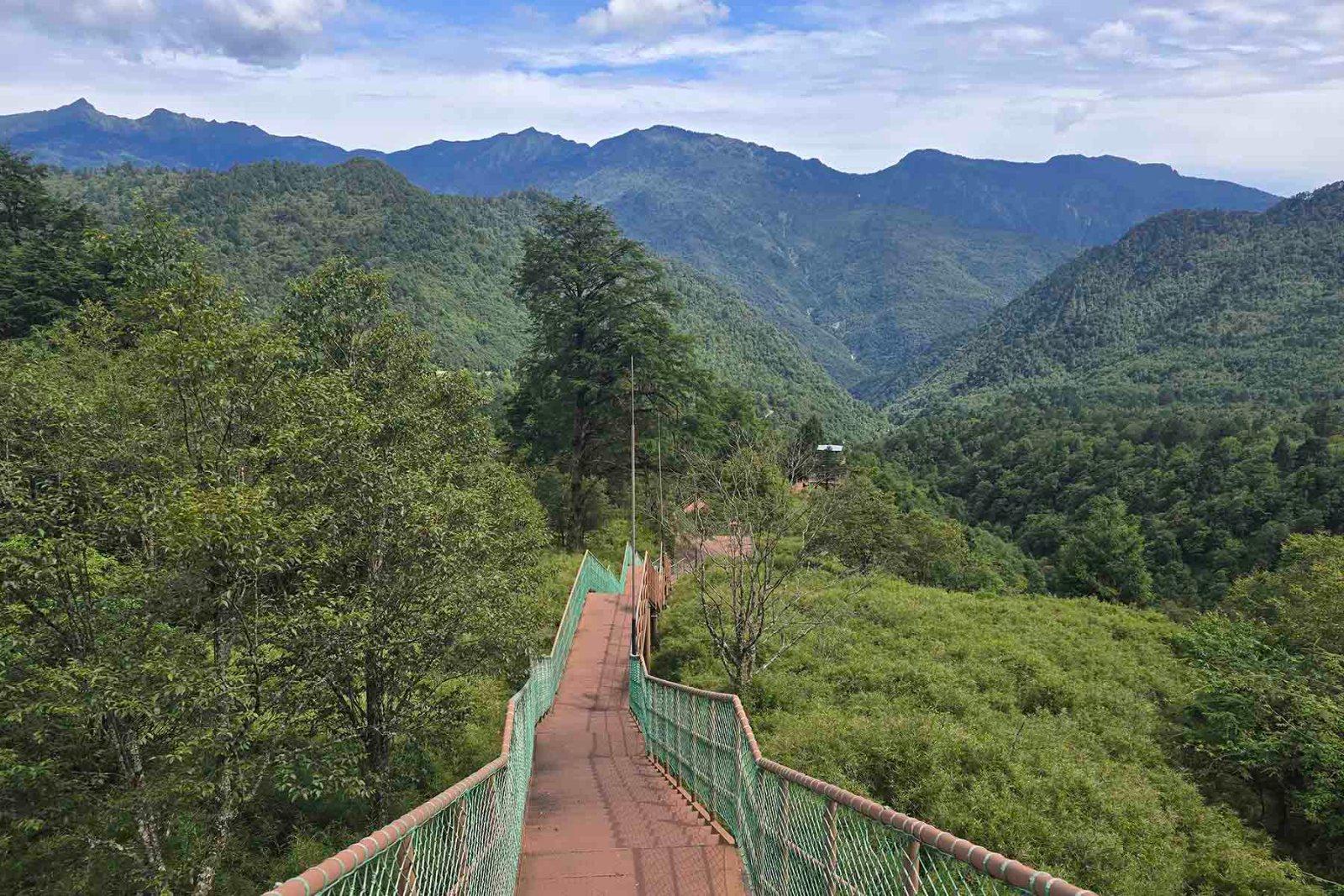
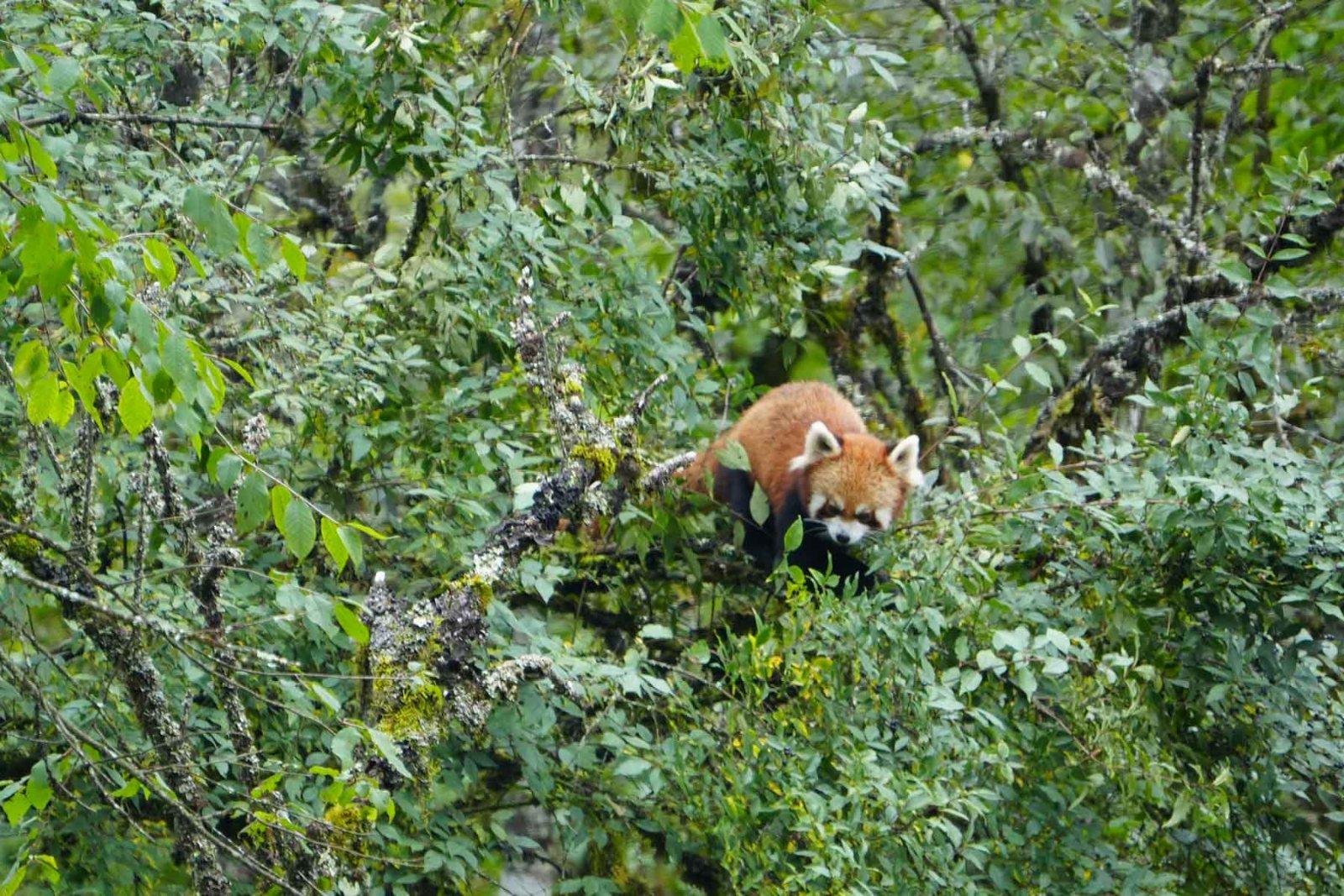
On the old Sichuan–Tibet road west of Ya'an, Labahe runs its wildlife clock in the evenings: sambar at the deer pond, herds moving as the light drops, red panda in the bamboo the rest of the day.
Start this journey briefSichuan · Tianquan County, Erlang mountains
Tianquan County, Ya'an — on the G318 corridor, two and a half to three and a half hours from Chengdu
the wet west face of the Erlang mountains, where Sichuan basin air climbs into the plateau
deer gather at the deer pond in the evenings; takin and macaque work the same slopes
autumn colour — and the clearest dusk light of the year for the pond
Labahe sits where the Sichuan basin's moist air hits the first big wall of the Erlang mountains — the wettest, greenest face on the drive west, and panda habitat at its margins. It is a working landscape of a reserve: a scenic area inside the wider protected ground, a boardwalk system over streams and red-stone shallows, and a small hotel positioned a walk from the animal ponds.
What makes Labahe worth a stop is its schedule. The sambar here have learned the valley's routine and hold to it: towards evening they move out of the timber to the deer pond and the open grass, in numbers you will not see at noon. Red panda live on the same slopes — our red panda journey is built around this valley — and takin, Tibetan macaques and golden pheasant round out the cast.
Drive in from Chengdu after lunch, walk the lower boardwalks in the last hours of light, and be at the deer pond as dusk settles — the sambar's appointment, not yours.
The hotel inside the scenic area puts you on the animals' timetable: a dawn walk before breakfast beats any mid-morning drive-in.
The panda lake, the red-stone shallows and the closed gorge trail run higher into the forest — quieter ground, better birding, and the day's best odds for macaque troops.
Labahe sits on the G318 line to Luding and Kangding. It chains naturally into a western Sichuan route — which is exactly how our mammal and red panda journeys use it.
The sambar keep to the pond schedule in every season; autumn simply adds colour and the sharpest light. A midday visit sees the forest, not the animals.
The deer come to the pond because the valley stays wild. Keep distance, keep food packed, and let the schedule keep working.
Boardwalks and valley trails stay slick in this damp air — the same waterproof-shoe rule as the Minshan applies here.
Two hours east is Chengdu; west through the Erlang tunnel is the plateau. Labahe is a first night, a last night, or both.
Labahe is the core of our red panda journey and a stop on the mammal tour.
Start a journey briefThe red panda tour: Labahe and Wawu · Red panda: when and where they actually show