Hearing is the outcome
A handful of visitors see animals in a week of trying. Most hear a duet and go home with that. We say so before you book rather than after.
 Start your enquiry
Wildlife / Field guide
Forty-four animals in seven groups, all of them on a single ridge in Bawangling. It is the only gibbon in the world whose population is rising — and you will almost certainly only hear it.
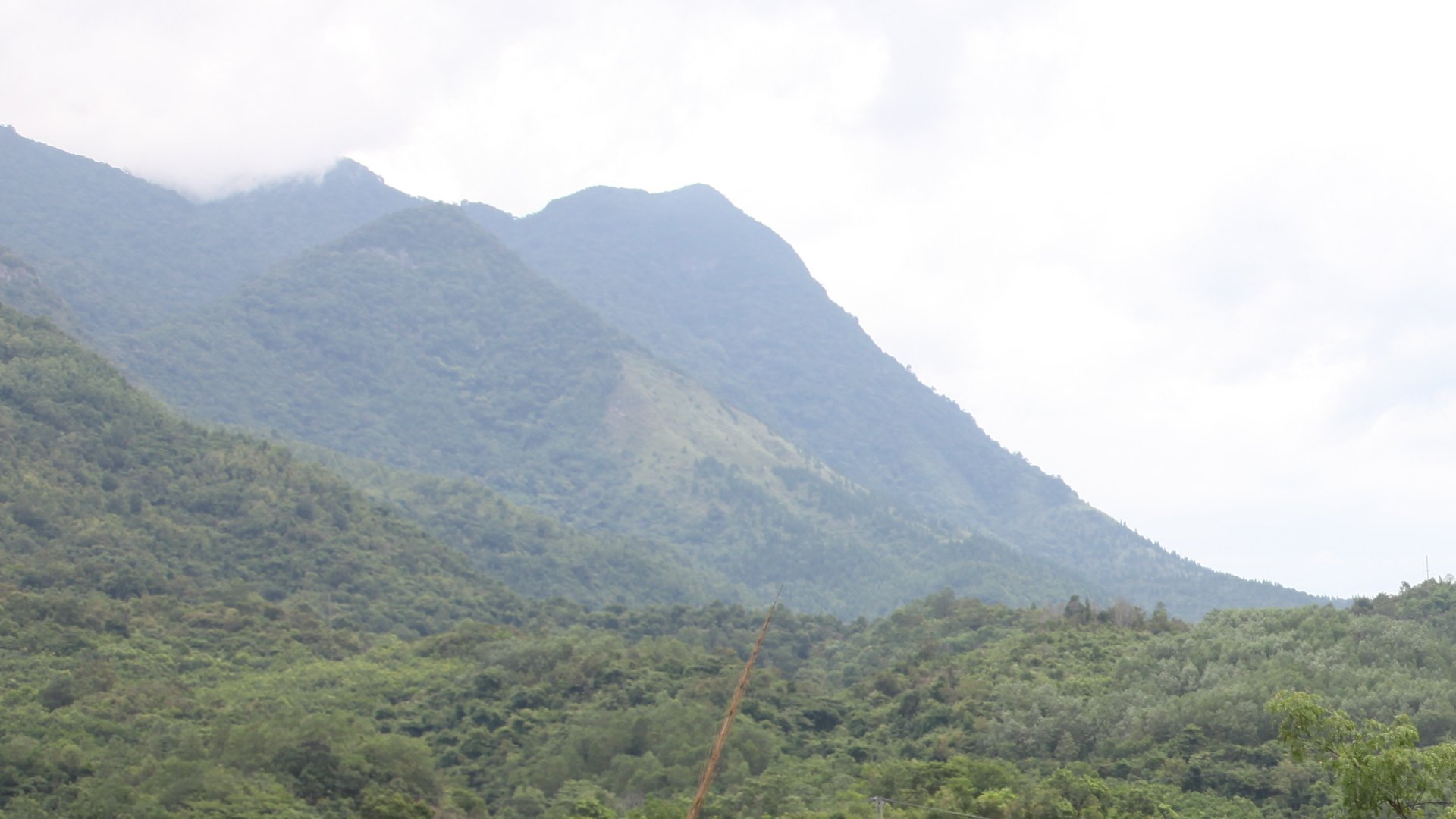
Start this journey briefThe Yinggeling ridges, Hainan · Chuanhaozi · CC BY 3.0
the western mountains of Hainan Tropical Rainforest National Park — 4,269 km² of island rainforest
the December 2025 monitoring count, up from 13 animals in two groups in 2003
the early 1980s, after commercial logging took the lowland forest
duets come one to four times a day, most reliably within four hours of dawn
In the 1950s more than two thousand Hainan gibbons lived across the island. Commercial logging, plantation expansion and hunting cut that to seven or nine animals by the early 1980s and to thirteen in two groups by 2003, at which point it was routinely described as the primate most likely to disappear this century. The count has since gone the other way: forty-four animals in seven groups by the end of 2025.
It is the only one of the world’s twenty gibbon species whose population is rising. The work behind the number is unglamorous. The monitoring team is out before dawn most days; the park has built thirty-eight canopy bridges across gaps in the habitat, planted more than three hundred thousand native trees and shrubs, restored over five thousand mu, moved 459 households out of its core zone and shut all twenty-five small hydropower stations inside it. Acoustic recorders now catch what patrols miss — a new male arriving, a family group forming.
What has not changed is the geography. The species survives on one ridge system in Bawangling, in the west of the island, with villages, rubber and farmland around it. Gibbons never come to the ground; they live thirty to forty metres up and travel through the canopy. That sets the terms for anyone visiting: this is a listening trip, not a viewing one.
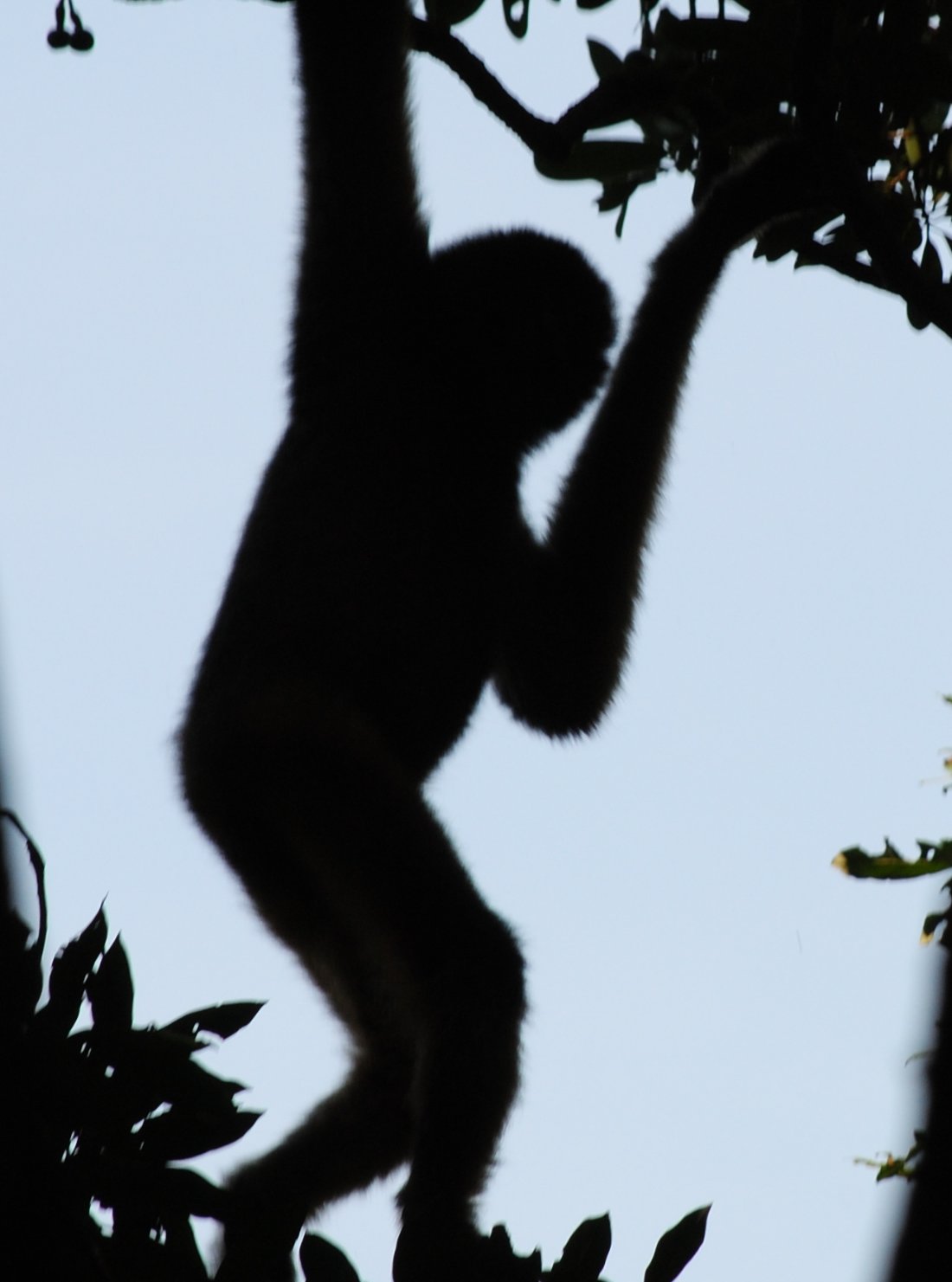
The habitat begins where the farmland does — Qingsong township on one side, the Bawangling forest-park townships on the other. Staying there rather than in Haikou is what makes a four-in-the-morning start possible.
Headtorch, a guide from the monitoring team, and a climb to a listening point above a valley the groups have been using. The walk is not long; the timing is everything.
The adult male calls first, the female answers, the family joins in. A bout runs three to thirty minutes and carries a kilometre or more. There are one to four bouts a day — miss the first and you wait for late morning.
The rest of the walk is the rainforest itself: four canopy layers, lianas, orchids, and the sound of an island forest that was nearly cut flat within living memory.
A handful of visitors see animals in a week of trying. Most hear a duet and go home with that. We say so before you book rather than after.
The park’s acoustic and infrared monitoring is research, run by the people who manage the population. We do not use recordings to pull animals in, and we do not fly over them.
Yajia and Baishitan are forest walks with waterfalls and boardwalks. There is no enclosure holding a gibbon and no guarantee of a call, which is the point of the place.
The drive west from Haikou to the Bawangling side takes about four hours. Add a night at the edge of the habitat — that night is the whole trip.
There is no fixed departure for the gibbon: the animals are not a product, and a morning that works needs a guide from the monitoring team, a valley in use that week, and weather. We build it into a longer Hainan journey — rainforest, coast, and two dawns in case the first one is silent.
Start a journey briefWatching without disturbing · Hainan: the island beyond the beaches · All wildlife field guides