March
Every region is usually still operating, the cold is less punishing and the crowds thin after the holidays. Powder is less likely; reliability is high.
 Start your enquiry
Our adventures / Skiing / Season board / Late season
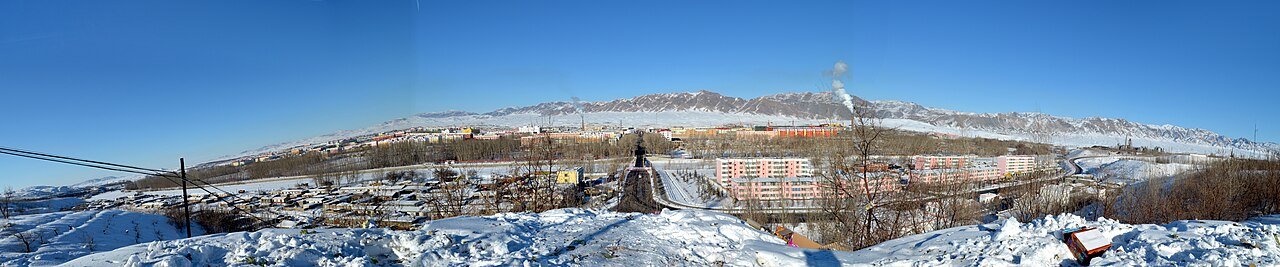
By March most of the country is thinking about spring. In the Altai the upper terrain can still be skiing. This is the season for longer days, softer light and an honest conversation about what the snow will and will not be.
Explore the guide ↓Xinjiang · the Altai · March into spring
China's ski season is longest where the snow arrives earliest. Koktokay opened on 20 October 2026, announced as the country's first opening, and its previous season ran into late April; Jikepulin above Hemu, with 1,466 metres of lift-served vertical, holds the highest terrain of any Chinese resort and is the usual last to close. Neither fact guarantees a specific day in a future spring. Both explain why a March or April ski trip in China is a real proposition rather than a consolation prize.
What changes is the snow itself. The deep cold of December to February gives way to longer days, a higher sun and repeated freeze–thaw cycles. Mornings can be firm and fast, afternoons heavy and wet, and a fresh snowfall is possible but not the default. A good late-season plan starts early, finishes before the mountain turns soft, and puts the rest of the day into the valley — a village walk, a long lunch, a drive along the river — rather than forcing a full-day lift ticket.
The other difference is access. The Hemu winter road, horse sleds and the small guesthouses that make an Altai week what it is all operate on winter conditions. As the season thins, some services close before the lifts do. We check the road, the open terrain and the guiding roster together, and we will say plainly when a late date is better spent as a walking or culture journey with a ski day attached than as a ski holiday.
An approximate shape — the mountain, not the calendar, decides.
Every region is usually still operating, the cold is less punishing and the crowds thin after the holidays. Powder is less likely; reliability is high.
Lower resorts have wound down. Koktokay and the upper Jikepulin terrain are the reason to travel; spring snow, soft afternoons, long light.
High terrain can still run in some seasons. Any itinerary this late is held as provisional until the resort confirms its operating plan.
Harbin Ice and Snow World normally closes in late February as temperatures rise. A late-season trip is not an ice-city trip.
Four things that change between February and April.
The firm morning surface is the best skiing of the day. A late start in April means missing the window entirely.
The minus-thirty kit list is wrong for a sunny March afternoon. Layers come off, waterproof outer layers matter more, and spare dry gloves still earn their place. Read more →
Freeze–thaw, wind and grooming produce very different snow on north and south aspects. The day is planned around what is actually open.
A hot spring, a valley walk or a village day is a better use of a soft afternoon than another lift ride. The itineraries hold that flexibility by design. Read more →
And which ones do not.
The natural fit — Three resorts and the Hemu nights still work in March, with the mountain order set by current snow and open lifts. Read more →
Only with a real storm window — Its extra storm days are designed for mid-winter. We do not sell that promise in April and will suggest the shorter week instead. Read more →
Early March at best — A short, easy trip while the valley is still operating; better re-framed as a city break with a ski day than as a late-season ski holiday. Read more →
Not in this window — Once the ice city has closed, the Harbin short break becomes a different journey entirely. We will say so rather than re-label it. Read more →
Send us your March or April window. We will come back with the current open-terrain picture, the road status and a journey that is honest about spring snow.
Start my journey brief ↗