
Hiking / Huangshan and Huizhou villages walk
Private hiking tour
The Huangshan & Huizhou walk.
Five days in the landscape that taught China how to paint mountains: two days walking the granite towers and cloud sea of Huangshan, then three in the Huizhou country below, where Ming merchant mansions, moon ponds and camphor-shaded stone paths are the mountain's own footnotes. The classic pairing, done on foot and unhurried.
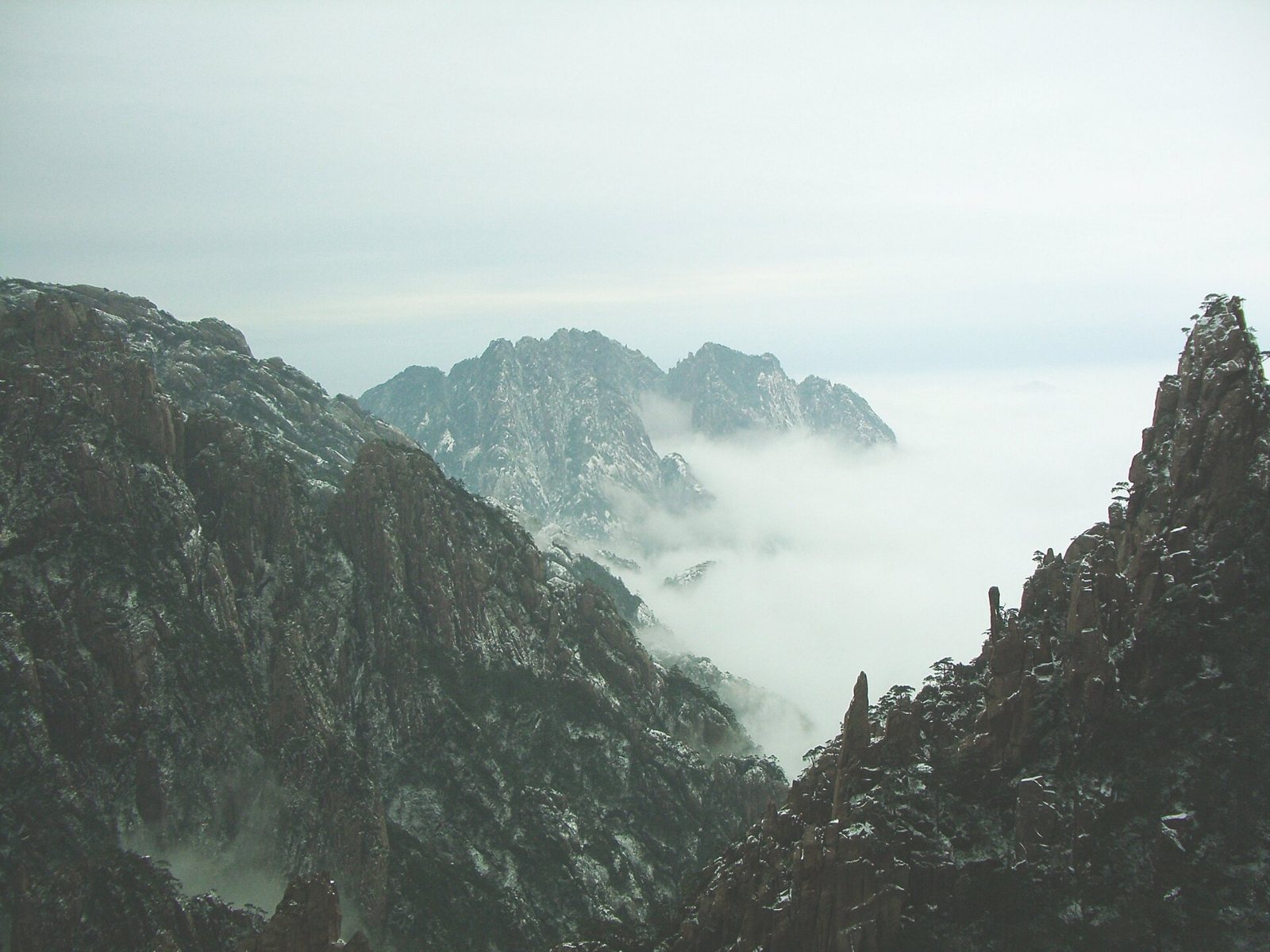
Ask about this itineraryHuangshan at dawn · the granite towers above the cloud sea
of granite on Huangshan, with Lotus Peak the highest at 1,864 m — a mountain range compressed into a single ridgeline
of artists climbing here: the Shanhaishan school built its whole visual language on these towers, and Li Bai was writing about them in the 700s
the year Hongcun and Xidi joined the UNESCO World Heritage list — the finest surviving Ming–Qing merchant villages in China
of Huizhou trade dominance: salt, tea and pawnshops built the mansions you will walk through, and sent the profits home as architecture
Why this route
The mountain, and the civilisation it taxed.
Huangshan is the most painted mountain in China, and the painting is accurate: towers of grey granite furred with pines, a sea of cloud that fills the valleys most mornings of the year, and a skyline so improbable that Li Bai, arriving in the eighth century, suspected immortals. Two days on the summit network lets you see it the way the painters did — dawn at the viewing platforms, the west sea canyon in the afternoon light, and one night on the mountain so the sunset and the sunrise are both yours.
But Huangshan is only half the story, and the half most trips skip. The mountain stands in the old Huizhou region, whose merchants ran China's salt and tea trade for four centuries and spent their fortunes on the villages below: Hongcun, whose moon pond mirrors the whole village and whose water system still works as designed in the Ming; Xidi, a museum of merchant mansions with the door lintels and lattice windows intact; and the farming hamlets between them, linked by stone paths built for porters carrying tea down to the rivers.
The route keeps both halves honest. The mountain days are genuinely strenuous — this is stair country, and we take the cableways where they spare the knees and the paths where the views repay the climb. The village days are gentle, walkable country between rapeseed fields and camphor trees, with the sites opened early to beat the coaches.
Route Briefing
Up the mountain's east side, over the summit ridge, down the west; then three days of village country on the plain below, walking and driving in easy alternation.
- undefinedundefinedundefined
- undefinedundefinedundefined
- undefinedundefinedundefined
- undefinedundefinedundefined
- undefinedundefinedundefined
Day by day
The five days.
The mountain first, while legs are fresh and weather windows longest; villages after, when the pace wants to slow. Every morning starts early — the mountain rewards it, and the villages empty of coaches by nine.
-
Day 01
Up the east side into the pines
Tunxi → Huangshan summit
Meet at Tunxi (Huangshan city) station and drive an hour to the mountain's east entrance. Take the Yungu cableway to save the lower staircase for the descent, then walk the summit's eastern network: the Begin-to-Believe peak first, where the towers of the north scarp assemble themselves exactly as the paintings promise.
Eight kilometres of ridge walking to the summit hotels by mid-afternoon, with the stone-pine towers in constant company. The hotels are functional and the sunset platforms are not: claim a spot on the west-facing terrace as the cloud sea lights up from underneath.
Dinner on the mountain, early night — tomorrow begins in the dark by design.
-
Day 02
Dawn, Bright Summit, and the west sea canyon
Huangshan summit ridge
Up before five for the dawn platforms: Guangmingding, the Bright Summit at 1,860 metres, and the Lion Peak headland, where the sunrise goes through its whole repertoire — cloud sea first, granite second, colour last. Breakfast back at the hotel while the day-tripper crowds are still assembling.
The day's walk is the mountain's best: the west side paths and, conditions permitting, the West Sea Grand Canyon loop — twelve kilometres of walkways bolted to the granite faces, down into the canyon country and back up through towers the summit hotels never see. This is Huangshan's full argument, and the legs will know it.
Descend by cableway on the west side by late afternoon and drive thirty minutes to Hongcun for the first of two village nights.
-
Day 03
The moon pond, and the bamboo valley
Hongcun
Hongcun early, before the coaches: the village is designed around water, and the system still runs as its Ming-dynasty engineers intended — the spring-fed crescent of the Moon Pond at the centre, the channels running down every lane for washing and gardens, the South Lake mirror at the village foot. An hour with the water system teaches more Huizhou architecture than any lecture.
Then out on foot: seven gentle kilometres through the Mukeng bamboo valley, the famous sea of green the films keep borrowing, and back by farm paths through the camphor trees.
Afternoon free in Hongcun's lanes — the wood-carving halls are worth an hour each — and dinner in the village, Huizhou cooking: stinky mandarin fish for the brave, bamboo-shoot stew for everyone.
-
Day 04
The merchant mansions, walked between
Xidi
Drive forty minutes to Xidi, the other half of the UNESCO pair: a village of merchant mansions built by families who made fortunes in salt and came home to spend them on gate lintels, brick carvings and lattice windows of absurd refinement. The houses are original, occupied, and open.
The walk today is the circuit between Xidi and the surrounding farming hamlets — nine kilometres of stone paths through rapeseed fields and persimmon orchards, the white-walled villages appearing and disappearing across the valley the way they do in every painting of this region.
Evening drive to a guesthouse near Chengkan, quieter than the famous pair and the best-preserved of the lot, with the largest ancestral hall in Huizhou waiting for morning.
-
Day 05
The old quarter, and departure
Chengkan → Tunxi
Chengkan early: the Longxi river loops around the village in the pattern the geomancers chose, and the Luogong ancestral hall — the largest timber hall in the region — holds its dark scale beautifully in the morning light. Five gentle kilometres of village paths, then the transfer back to Tunxi.
The old Tunxi quarter, Tunxi Laojie, is a kilometre of Song-style shopfronts still trading: tea houses, ink-stone workshops, the Hui-style pastry counters. Lunch here, an hour of shopping or ink-stone gossip, and the trip ends at the station or airport by mid-afternoon.
The summary you will actually give people: two days on the most painted mountain in China, three days inside the paintings' frame — and the frame, everyone admits, is where the life is.
What's included
What is included, and what is not.
A short list for a mountain-and-village trip. The left column is arranged before you leave; the right column is either yours or a question we are glad to answer.
Included
Arranged and paid in your price.
-
E
n
-
P
r
-
F
o
-
A
l
-
H
u
-
E
a
Not included
The honest column.
-
F
l
-
T
r
-
W
e
-
D
r
-
T
i
undefined
Enquiry
Ask us about this one.
Tell us your dates. We will come back with the mountain's weather odds for your window, which villages are quietest, and a written outline with a price.
- Difficulty
- Two demanding mountain days, gentle after
- Group size
- 2 – 8, private departures only
- Price
- From ¥5,200 per person
- Custom
- Add Qiyun Shan, or the ancient Shu road head
Enquiry sent
Thank you — your enquiry is with us.
We reply within one business day. A copy of what you sent has gone to your inbox.
Need to add something? Write to inquiry@chinadventure.com.
Back to the itineraryRead next