Pingyao old town
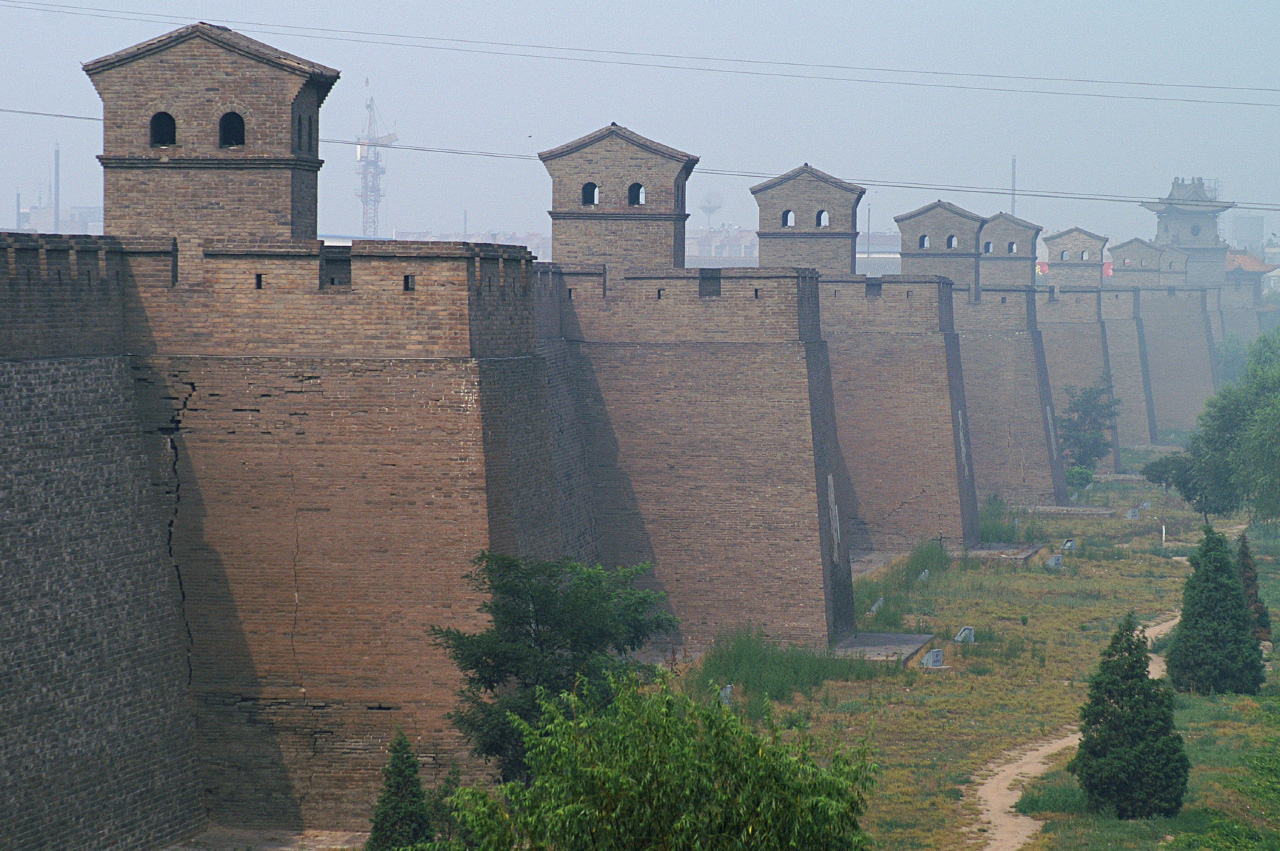
Walk the wall at dusk, descend into the bank courtyards, and sleep in a courtyard inn. Two unhurried nights is the right measure.
 Start your enquiry
Destinations / Shanxi
The province that kept what the rest of China lost: Ming city walls, Yuan and Tang timber halls, cave temples carved before Europe left Rome. All within one plateau.
Explore the guide ↓North China
Shanxi survives from another China. Dry air, a plateau position and relative historical neglect left it with more pre-Ming timber architecture than the rest of the country combined — over 80 percent of China’s surviving wooden structures before 1400 stand here.
Pingyao, UNESCO-listed in 1997, is a complete Ming county town: 6.4 km of crenellated wall around lanes, courtyard inns and Rishengchang, the draft bank founded in 1823 that effectively invented Chinese cheque banking.
Datong in the north holds the Yungang Grottoes — more than 51,000 Buddhist figures carved in the fifth century, UNESCO-listed in 2001 — plus the gravity-defying Hanging Temple beneath Hengshan. Between them rises Wutai Shan, the terrace-top sacred mountain of Manjusri at 3,061 m.
Three anchor regions and what they hold.
Walk the wall at dusk, descend into the bank courtyards, and sleep in a courtyard inn. Two unhurried nights is the right measure.
Fifth-century cave temples carved for the Northern Wei capital, with the great seated Buddhas of caves 5, 6 and 20. Go early; the light on the west caves is morning light.
A timber monastery pinned to a cliff face beneath Mount Heng since the Northern Wei. The visit is short, the engineering is the spectacle.
Five terraces around Taihuai town, temple compounds from Tang onward, and the high field-altitude walks between them. A working pilgrimage mountain.
The Sakyamuni Pagoda of Fogong temple, 67 m of interlocking timber built in 1056 — the oldest and tallest wooden pagoda standing.
A plateau province with cold winters and bright spring–autumn days.
The working windows: dry, bright, cool at night, and every site on its full schedule.
Quieter and cheaper; the high Wutai terrace can still hold snow into May.
Hard cold but extraordinary light on Pingyao’s rooftops. We plan short outdoor legs and warm interiors.
Connections, bases and the practical details that hold a good route together.
Beijing–Datong by high-speed rail in under two hours, then south via Wutai to Pingyao and Taiyuan. One direction, no doubling back.
Datong–Wutai and Wutai–Pingyao are road legs of two to three hours through loess country — good driving days, not dead time.
Courtyard inns in Pingyao, city hotels in Datong, monastery-adjacent guesthouses at Taihuai. Book Pingyao weekends early.
Make room for local life, food and cultural encounters.
Knife-cut noodles (daoxiao mian), vinegar from aged sorghum, oat flour rolls and Taiyuan head-meat soup for the brave. The noodles alone justify the trip.
The Shanxi merchants built the draft-bank system and the grand courtyards of Qixian and Lingshi. The Qiao family compound is the famous one.
Wutai Shan’s monasteries hold morning services open to visitors. Ask us which halls and what time.
Useful details to discuss when shaping your trip.
Yungang, Hanging Temple and Pingyao all use daily caps in season. We pre-book the sequence so a closed queue never rewrites the route.
Loess plateau air is dry and can be dusty. Layers, lip balm and a water bottle do more than any forecast.
Tell us how much temple country you want in a week and we will set the Datong–Pingyao line at the right pace.
Start my journey brief ↗