
The approach.
We leave Harbin in January, when the city sits around −15 to −30°C, and take the rail line south-east into the hills. The transfer is short enough to share a day with the city, but we rarely plan it that way. What we are after is the change in air: the cold follows us, the trees close in, and the built edge of the capital gives way to a forested ridge. We re-check the timetable before dates are fixed, since winter services follow conditions.
Yabuli sits in a band of low mountains where the cold holds without the exposure of the far north. Snow arrives and stays, and the resort does not argue with thaw the way lower hills do. We keep the first afternoon light. The body registers the temperature before the legs register any gradient, and an unhurried arrival is worth more than one more run before the lifts close.
The long runs.
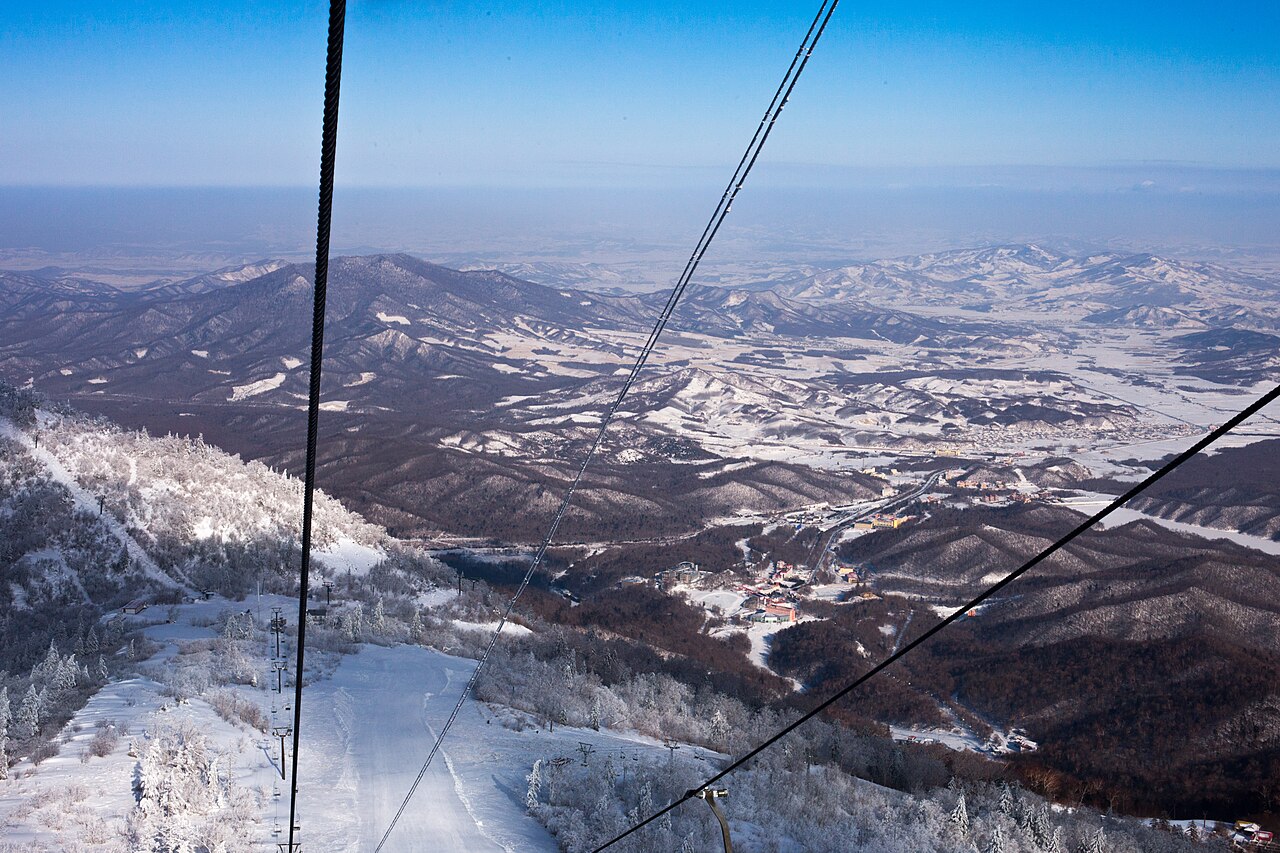
The older pistes here are laid along the fall line rather than across it. They run long and fairly straight down the wooded face, with the gradient holding steady instead of arriving in short steep pitches. Grooming is conventional: corduroy in the morning, softened and scraped by afternoon, with the tree edges collecting the snow the machines push aside. We ski them top to bottom rather than lap one short segment, because the point of these runs is their length.
That layout rewards a calm technique. There is little terrain to read and few surprises, so the day becomes a matter of rhythm, edge angle, and pacing the descents against the cold. Wind funnels along the cleared corridors and settles in the hollows; on the sheltered sections the snow keeps a drier texture. We watch the aspect more than the clock, moving to the lee side when the open upper slopes turn raw.
The other half.
Skiing is only half of a trip built out of Harbin. Daylight is short this far north, and the lifts stop while the afternoon is still young, so the day has a long indoor tail: drying gear, hot food, and the slow return of feeling to hands and feet. We plan around that tail instead of treating it as dead time. The cold sets the schedule more firmly than the mountain does.
The city at either end supplies the rest: winter streets, frozen riverbanks, and the ice architecture Harbin builds each season. None of it requires a lift ticket, and all of it is easier to enjoy when the skiing has been kept to its proper proportion. We go for the long runs, and we come back for the journey that holds them.
Keep reading
Building the ice city
The busiest week
Journeys A to Z