
Western Sichuan’s trails have a floor plan that predates all of us: the tea-horse road, the caravan network that carried brick tea from the humid tea country around Ya’an up and over the passes into the barley country of Kham, trading west for horses and salt. Our western routes use that same corridor — the day cards still name it. The Western Sichuan tour’s final day leaves a gap for “the tea country around Ya’an — the old tea-horse road country” on the drive home, which is the polite way of saying the trip ends where the tea started.
Tea west, horses east.
The trade’s logic was simple: the Tibetan plateau needed tea the way lowland China needed cavalry horses, and the only route between them ran over the passes. The tea was pressed into bricks because bricks travel — on human backs up the first gorges (porters, not mules, on the steepest sections), then by caravan across the grasslands. The footpaths those loads beat into the hillsides are, in places, the trails our treks walk. When the group trek climbs from Kangding on its first morning, it is leaving the tea door by the road the tea used.
Kangding: the door.
Every western route in the collection passes through or sleeps in Kangding, at 2,600 metres in its gorge below the Zheduo pass. Its position explains it: the last town of the tea country and the first of Kham, a frontier market where the caravans reorganised for the grassland. The town’s hot springs and its narrow valley street are the modern register of that history — and practically, it is why the sleeping ladder so often starts here: the door to the plateau was always also the first camp above the plain.
Tagong and the grassland.
Over the Zheduo pass the country opens, and Tagong is why the caravans aimed here: the grassland crossroads with its monastery, the Anigongma nunnery and the great mani wall — sacred furniture on the route west. The Yala trek finishes among exactly these: its last day runs out onto the grassland for the Muya temple, the nunnery and the mani wall, and the 24-day journey gives Tagong a full day of monastery, nunnery and a fifteen-kilometre grassland walk. The gold roofs you photograph are the same landmarks a muleteer navigated by.
Danba’s towers.
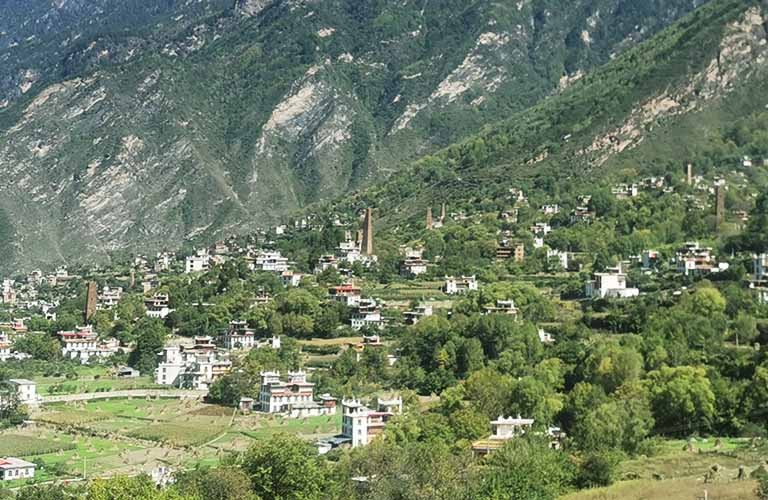
South of the main line, the Danba valleys hold the road’s most photogenic architecture: stone villages — Zhonglu and Jiaju among them — stacked on sunny slopes below ruined watchtowers. The towers guarded the valley crossings in the centuries when this corridor was worth taxing, and the villages below them farmed the tea-caravan traffic the way they farmed their terraces. The northern tours build an unhurried day here: “a hillside Tibetan village of stone houses and orchards below ruined watchtowers, among the most authentic in the province.”
The far country.
Only the 24-day journey follows the old road all the way into its far country, and its day cards name the sequence: the Dege printing-house country, and on the temple day the monastic universities the trade sustained — Dzongsar with its school of medicine, Palpung with its painting tradition, Katok, the Nyingma mother seat. Brick tea paid for more than butter tea; it paid for the institutions, and the institutions are what you walk past.
Walking the line.
You do not need the history to enjoy any of these routes — the passes and the lakes carry themselves. But knowing the floor plan changes what you notice in the trailside villages: why the stone houses face the way they do, why the towns sit where the gorges narrow, why the mani walls cluster at the path junctions. The season calendar tells you when to walk it; this page is the noticeboard of what you will be walking past. And if the far country pulls, the group trek is the shortest line onto the old road that still ends under the mountain.
Place names and route references checked 7 November 2026 against the route pages. The tea-horse road’s broad history is well documented; the local colour here follows our routes’ own notes.
Walk the old road?
The Western Sichuan tour, 9 days
The 24-day journey, Derge country included