
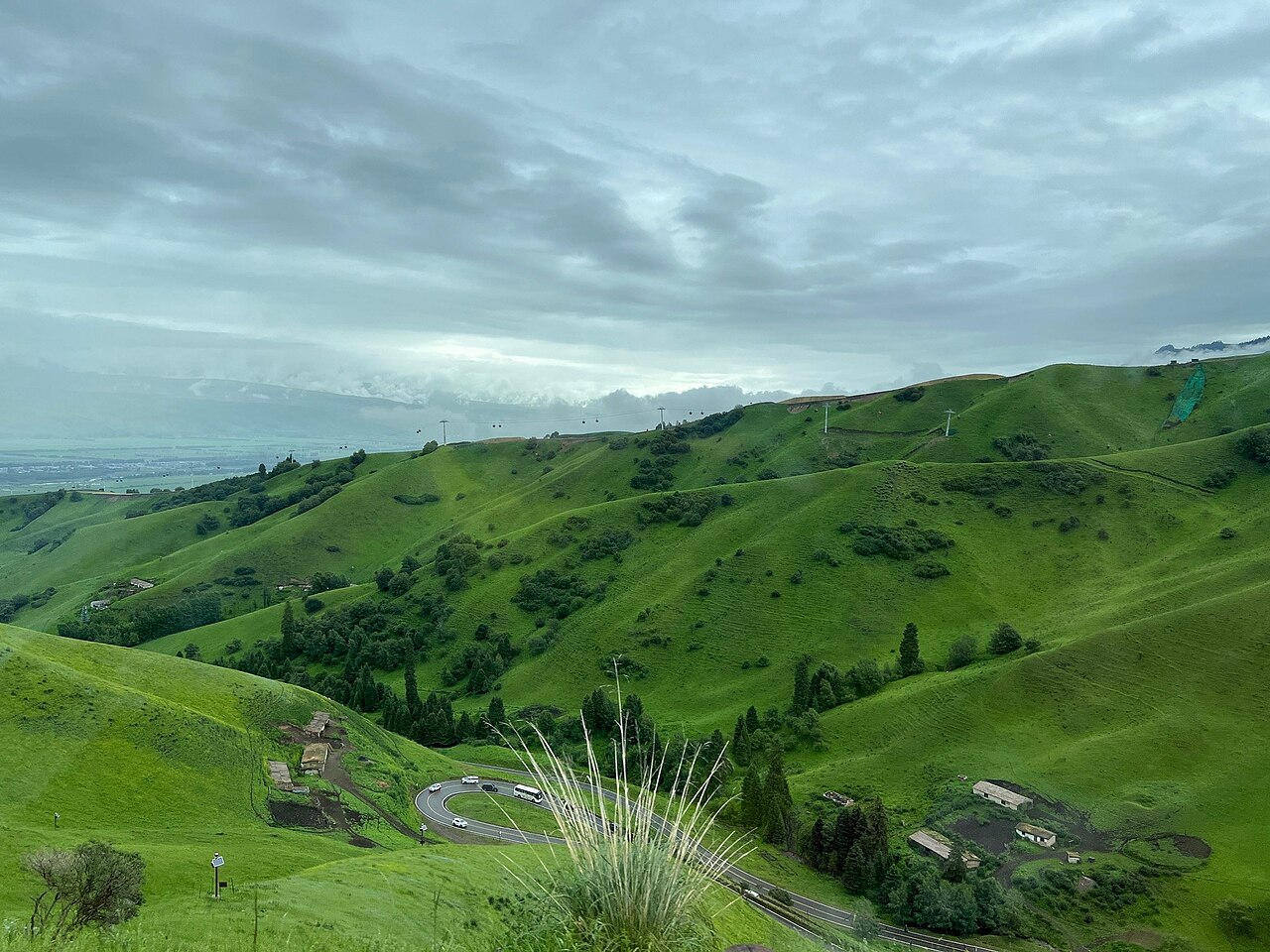
Every journey across the northern Tianshan crosses the pass and meets the lake — 454 square kilometres of intense blue at 2,070 metres, ringed by snow-patched mountains. The view from the highway is the postcard. The lake rewards a different treatment: a full day on the ring, unhurried, with the light doing most of the itinerary.
The lake in its bowl.
Sayram fills a tectonic bowl in the heart of the range — too high for the valley agriculture below, too cold in winter for anything but ice, and ringed by summer pasture that Kazakh herders have used for as long as the records bother to mention. The water is famous for its colour, and the colour is famous honestly: glacial rock flour suspended in the water takes the sky and turns it electric, most perfectly in the calm of early morning.
How the ring works.
A ring road — most of it new, all of it paved — runs the shoreline at roughly sixty kilometres, with lakeside pull-offs every few kilometres. Driven without stopping it is a two-hour disappointment; ridden or driven in stops it is a full day. The western and southern shores hold the big pasture bays and the yurt camps; the northern shore has the road and the view back across; the eastern arm, nearest the highway gate, is where most visitors stop and where the crowds are. The ring exists to take you past all three.
Light by hour.
Morning is glass — the reflection version of the lake, mountains upside down in the still water, best from the southern bays with the sun behind the camera. Noon flattens the colour but opens the pastures: this is the hour to walk inland from the shore toward the wildflower slopes, where the grazing country in June is a carpet of poppies and gentians. Evening belongs to the west shore, where the sunset drops the range wall into silhouette and the yurt camps light their stoves.
Wind by afternoon.
The lake earns its Kyrgyz name — blessing — in the morning and argues with you in the afternoon. The thermal wind builds after two, whitecaps cross the surface and the shoreline walks turn bracing rather than gentle. It is predictable enough to plan around: shore and photography early, pastures and lunch midday, and the final ring sections driven with the windows up, watching the weather the lake is having with itself.
Fitting the day in.
Our Ili journeys give the lake a night at the yurt camps on the west shore, which converts the day from visit to residence: sunset and stars, the flat morning, the flower walk, and the road south to Nalati in the afternoon. Guests who cross the pass, take the photo and continue have not wasted a stop — they simply have a reason to come back. Almost everyone, looking at the lake, plans to.
Where this leads
Guide: Sayram & Nalati
Lavender roads of the Ili valley
The Ili valley cycling week