
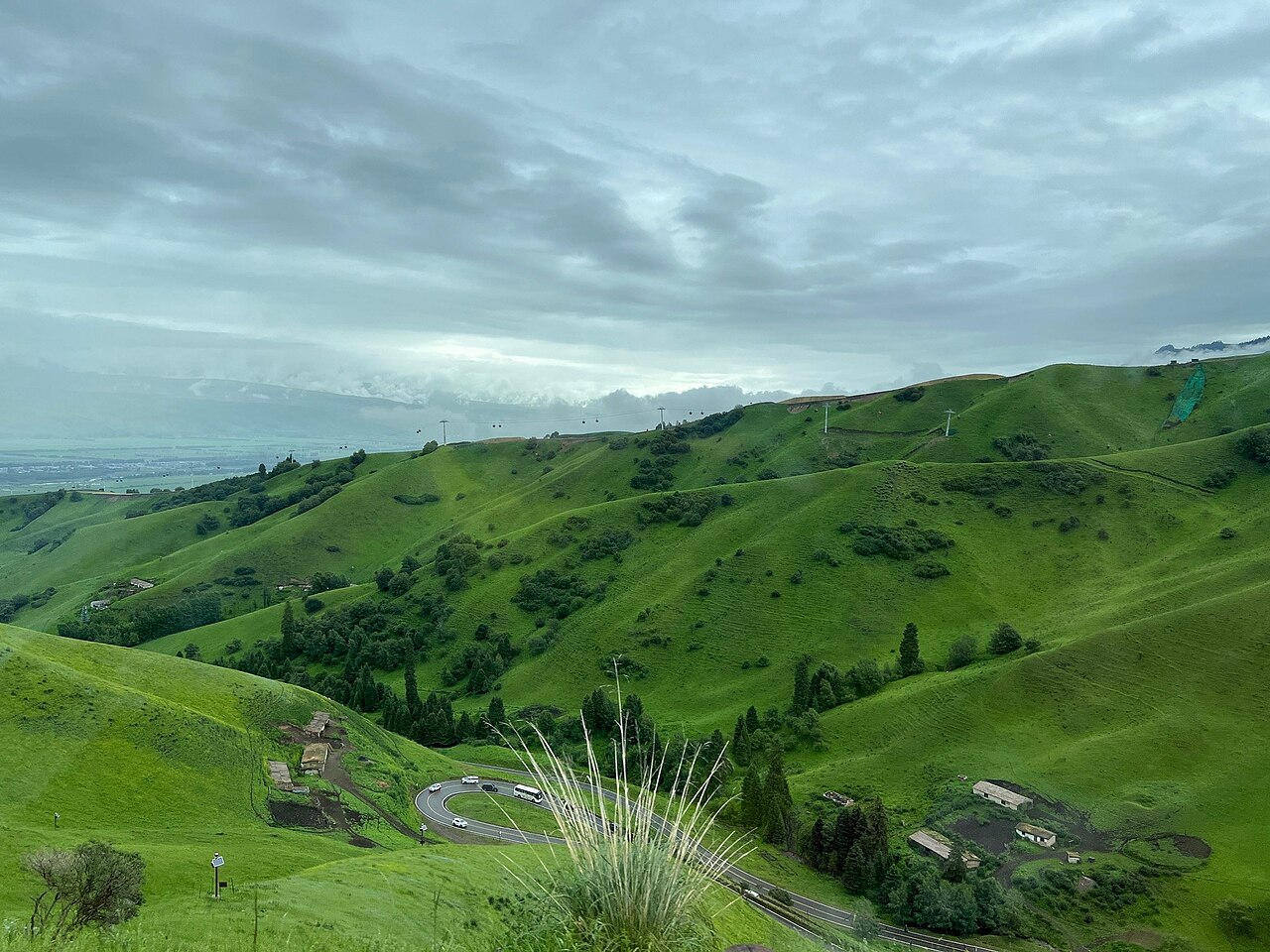
Xinjiang's public image is desert and snow, and the Ili valley exists to correct it. Tucked against the mountains in the far west, open to moist air the rest of the plate never receives, the valley runs green in a way that startles first-time visitors — and for three weeks at the start of every summer, part of that green is purple.
Why the valley is green.
The geography is the whole story. The Ili river drains a triangle of mountains whose passes open westward, catching the westerlies that deliver rain to the valley and merely dust to the basins east of the range. The result is a corridor of genuine agriculture — grassland, wheat, sunflowers, orchards — with a climate closer to central Europe than to the Turpan depression five hundred kilometres away. The valley was the Wusun horse country two thousand years ago for the same reason it farms so well now: the grass never stops.
The lavender weeks.
The lavender around Huocheng, west of Yining, arrived with Soviet-era agronomy in the 1960s and stayed — the valley turned out to sit at the right latitude, with the right winter chill and dry harvest weather, to grow the world's northern commercial fields. The bloom runs from the second week of June, peaks in the second half of the month, and is cut by early July; the harvest itself, with distilleries running, is the more interesting week to catch if the calendar allows.
The orchard half of the story.
Lavender gets the photographs, but the valley's deeper agriculture is fruit. Apricots ripen through July, apples and pears through August and September, and the roadside trade is constant: the same stretch of road sells flat peaches in one month and grape bunches the next. The melons of the region — famously, the hamigua — are at their best in the same late-summer weeks as the orchards, which is one more argument for the journey nobody regrets timing.
Seeing it by bike.
The valley is the flattest, quietest riding country on the plate — orchard lanes, irrigation tracks and low-traffic county roads — which is why we route our cycling week through it. A riding day in late June is lavender in the morning, orchard shade at noon, and the horse country meadows by the afternoon, with the van meeting the group at each hand-off. No other week on the site packs three different landscapes into eight days at so gentle an effort level.
Timing the early summer.
The honest calendar: lavender peaks June 10–25, the grassland passes open mid-June, the orchards run July to September. One window catches the first two together — late June — and it has become our most-rebooked departure season in the valley. Guests who can only travel in autumn get the orchards and the poplar gold instead, which is its own journey; but the purple weeks are the valley's signature, and they are brief.
Where this leads
The Ili valley cycling week
Guide: Yining & the Ili valley
The octagon city of Tekes