
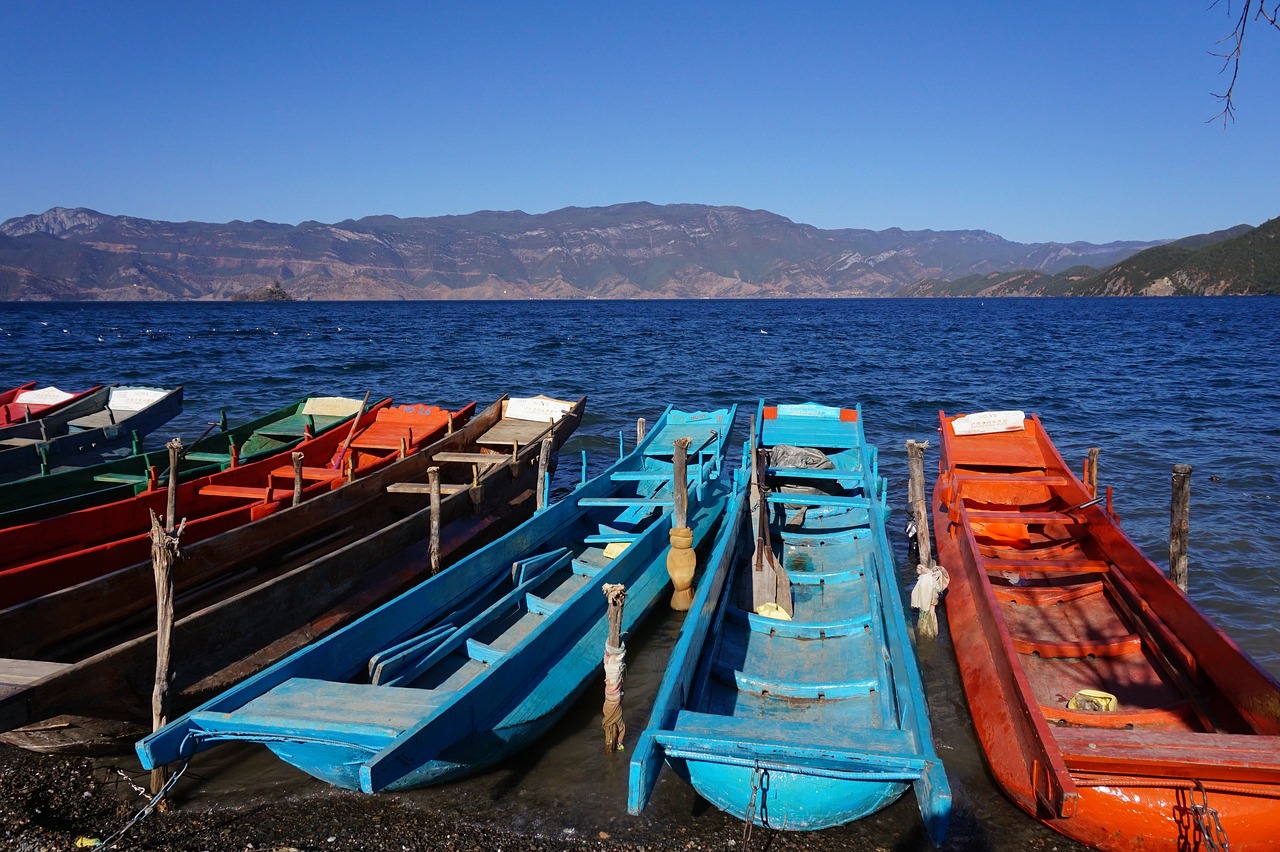
The boats.
A zhucaochuan — pig-trough boat — is a single log, split, adzed and hollowed until it holds six people and their nets. There is no keel, no frame, nothing between you and the lake but the tree you are sitting in. They look primitive and are not: the hull shape that survives on Lugu is the shape that survived a thousand winters of ice-edge work, and it handles the lake's morning chop better than most modern hulls want to admit.
The morning water.
Go at dawn. The lake at 2,690 metres lies flat before the wind arrives, the mist sits in the bays, and the oars make the only sound. The boatmen — Mosuo families who have rowed these waters for generations — read the reeds and the current with the casualness of people who have never needed a chart. An hour on the flat morning water between the reed beds, past the islets, with the mountains going pink, is the whole lake in miniature; everything after is scenery.
The slow change.
The boats are slowly being joined by fibreglass; the cable crossings of the villages by bridges; the lake's quiet by its deserved popularity. What protects the experience is the households themselves — the boatmen's co-operatives, the family-run guesthouses, the sense that the lake belongs to the people who row it. Go slowly, hire the families, and the pig trough stays what it has always been: the right boat for the water.
Keep reading
The lake circuits
The tie-dye village
Dongba notes