
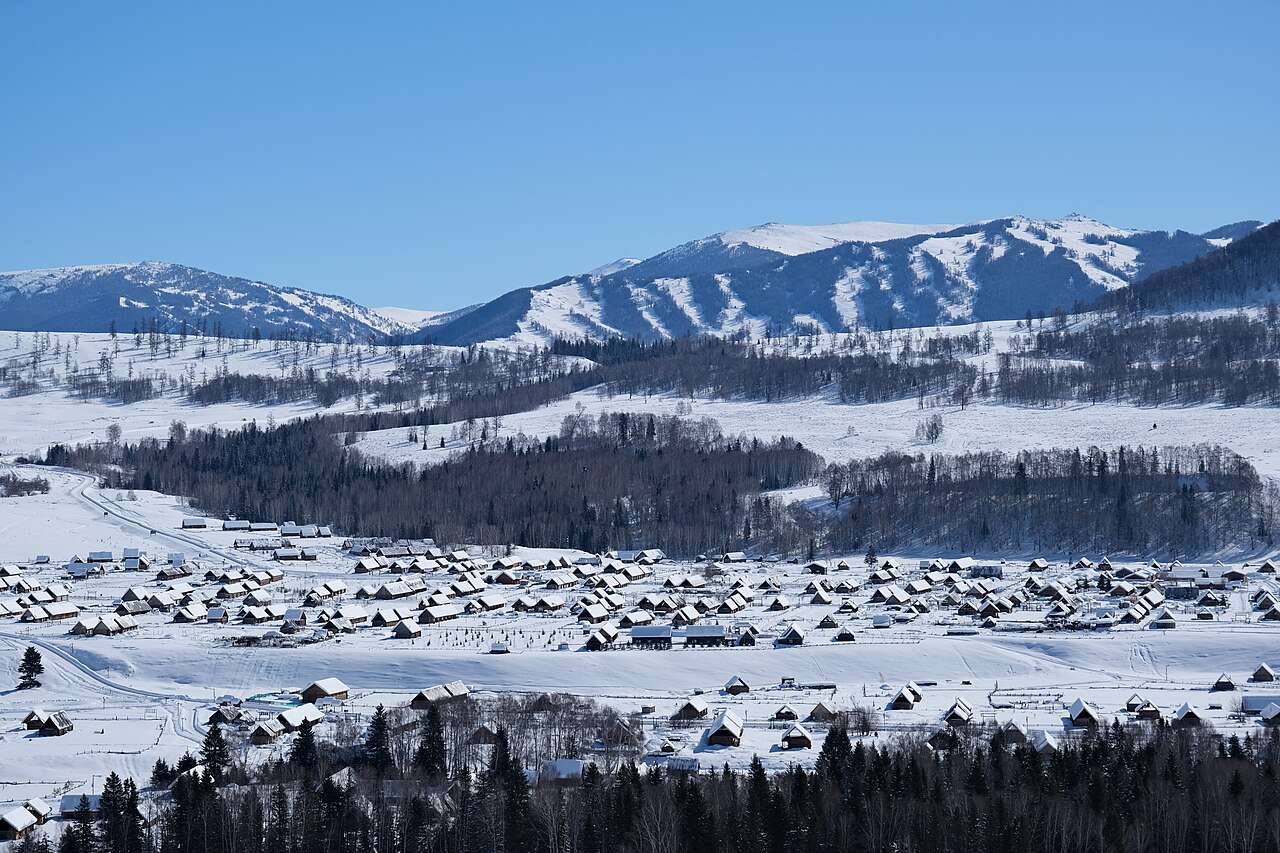
Everyone who photographs Hemu comes for October, and October deserves it — the birch gold against the log houses is the most reproduced valley view in the north. But the village's second season, the one almost no timetable captures, starts when the first real snow falls: some year in mid-October, some year in November, never twice on the same date.
The date is never certain.
The Altai is the coldest inhabited corner of China, and its autumn ends abruptly. A storm out of Siberia closes the passes in a night; the birches go from gold to bare in a week; and the valley road ices in the shadows before the calendar admits to winter. The first-snow date matters less than the fact of it: from late October onward, Hemu is a snow village, and everything about visiting changes.
What closes, what stays.
The honest list first. The road into the valley is kept open but storm cycles can close it for a day at a time; our winter plans always hold a flex night in Burqin for exactly this. The guesthouse fleet thins to a handful of winter-hardy operations; the village electricity holds, the plumbing in most houses does not, and the saunas work overtime. What stays: the bakery, the horses — the main winter transport inside the valley — and the light, which at that latitude sits low and gold for most of the day.
The village under snow.
Snow rebuilds Hemu. The timber houses wear a metre of it on their roofs; the lanes become sledge tracks between white walls; smoke stands over the chimneys from dawn. The Tuva and Kazakh families who winter here — a fraction of the summer population — run the season on horseback and snowmobile, and the village's remarkable quiet is the actual attraction. On a clear night the temperature falls past minus twenty and the stars do what they do at altitude: take over the sky entirely.
Snow on the slopes above.
The valley's other winter business is on the ridge above it: the Jikikpulin resort holds China's biggest lift-served vertical, and the snow that buries the village is the same dry, deep snow that makes the Altai the country's serious powder belt. Our ski week uses Hemu as its mid-week base — two nights in the village between resort days — because the combination is better than either half alone: lifts in the morning, sledge tracks and timber houses in the evening.
Planning a winter week.
Winter in the Altai rewards the flexible. We run the season from late October to early April, but the honest structure is: city powder at Jiangjunshan first, the big mountains at Koktokay second, the village last — in that order, so that a storm day at the far end costs a sledge morning rather than a flight. Guests who build that buffer in get the version of Hemu that October crowds never see.
Where this leads
The Altai ski week
Guide: skiing the Altai
Season board: the snow report