
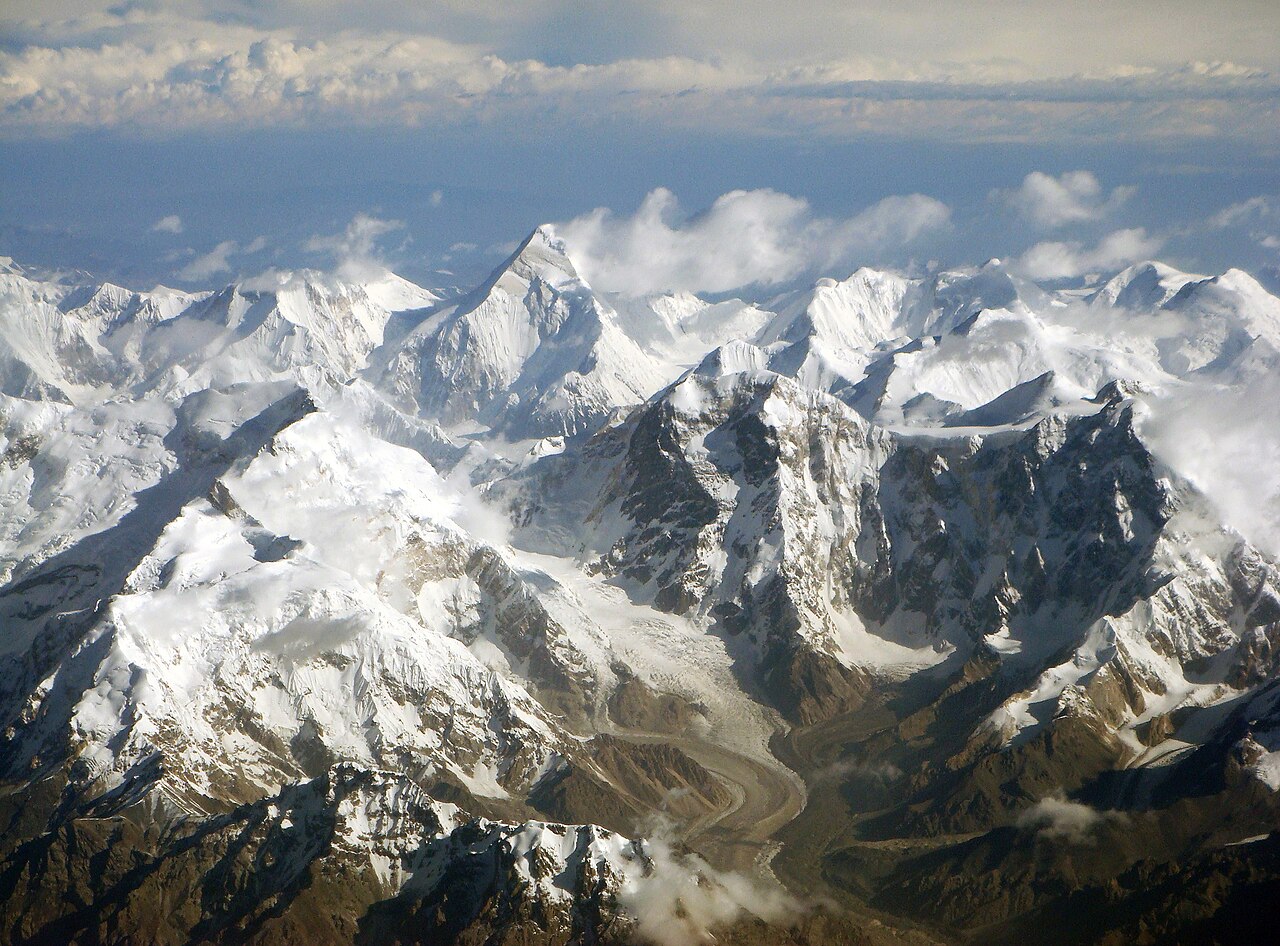
The Duku highway — Dushanzi to Kuqa, G217, 561 kilometres — is the great road crossing of the Tianshan, and the most common mistake made with it is scheduling. Driven flat-out it is one brutal day; driven properly it is two easy ones, and the difference between the two versions is the difference between a road and a checklist.
The number in the name.
Duku is a contraction: Du for Dushanzi at the northern foot, Ku for Kuqa at the southern one. Between them the road crosses the range on a shelf of roadbeds built, in parts, by soldiers of the Xinjiang Production and Construction Corps over nine years in the 1970s and '80s; a memorial cemetery near the midpoint honours the more than one hundred who did not finish the work. The road climbs four passes above 3,000 metres, threads the valley below the Tomur massif, and drops through the Kizil gorge country to the desert edge.
Two days, not one.
The night stop that splits the crossing sensibly is Bayanbulak or the road section near it — the high grassland basin on the northern slope, where swan lakes sit in meadow country and the light goes on until ten in June. A one-day crossing puts all 561 kilometres under a single afternoon of fatigue and weather; a two-day crossing gives the northern half its morning and the southern half its afternoon, which is when each photographs best.
The northern half: forest and switchbacks.
Leaving Dushanzi the road runs spruce forest, climbing in long switchbacks to the first pass. The country stays green and vertical for a hundred kilometres — this is the Tianshan that the postcards borrow, spruce against snowfield. The swan lake reserve at Bayanbulak is the reward and the rest point: flat, luminous grassland at 2,400 metres with the range wall behind it.
The southern half: gorge and red rock.
South of the grassland the road changes character entirely. It narrows, hugs cut rock, drops through the vast syncline of the Kuqa river gorge — a canyon of banded sandstone that glows toward evening — and finishes in the climate of another country: orchards, poplars and 35-degree heat at the desert's edge. The Kizil Thousand Buddha caves sit a short drive off the road near the southern end, and they are the best single reason not to rush the arrival: the earliest painted caves in China, some carved in the third century, close to visitors at six.
The season window.
The road is closed by snow for most of the year. The full season in recent reference years has run from the start of June to early October, with the exact dates announced each spring after clearance; night traffic inside the season is barred. Our self-drive journey runs its own vehicle and a lead car inside that window and crosses southbound — glaciers in the morning mirror, gorge light at the end — over days seven and eight of the route.
Where this leads
The Duku highway self-drive
Guide: driving the Duku
Season board: the 2026 window