
The heat.
The water comes up hot because the ground here is volcanic. Snowmelt and rain move down through fractured rock, are warmed at depth, and return along faults as mineral-carrying springs at the foot of the mountain. In winter the contrast is the whole experience: air cold enough to stiffen hands, water hot enough to loosen them again within minutes. We treat the springs as a place to sit still rather than a feature to tick off, and go in the afternoon once the cold has settled in.
The pools are modest and practical. Steam collects above the surface, edges ice over where the water cools, and the routine is unhurried: soak, cool, soak again. We keep sessions short and drink water between them, because heat and cold together are more tiring than either alone. Nothing is staged for visitors; the springs are a consequence of the geology, most useful in the coldest months.
The summit.
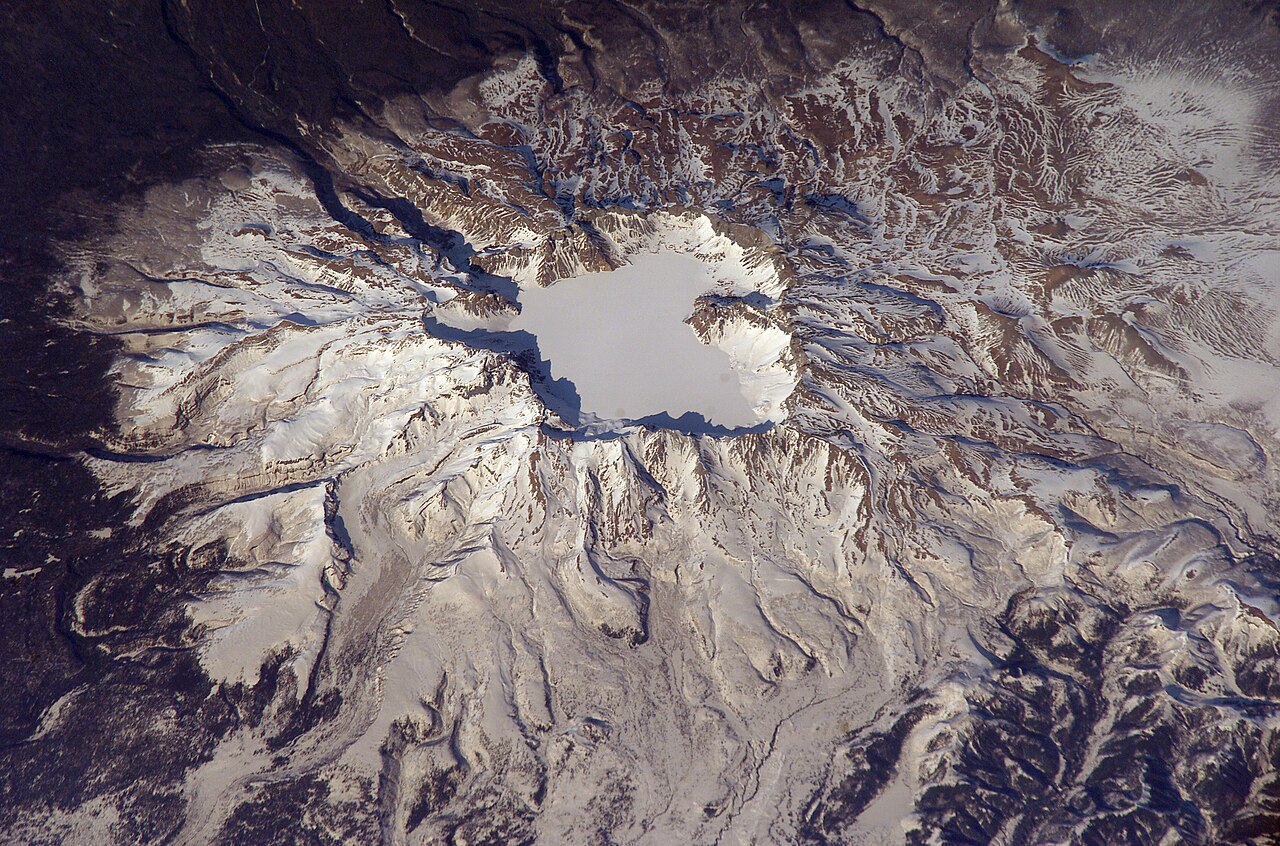
The crater lake above is a different matter. Reaching Tianchi in winter depends on the road, the wind, and visibility on the exposed slopes; the access we plan for is subject to weather and resort confirmation. From above, a satellite view shows the snow-covered caldera; from the ground, cloud can remove the view in minutes. We re-check before dates are fixed and hold the summit as an option.
That uncertainty is worth stating plainly. A clear morning gives the whole crater; a closed road gives none of it, and no planning changes a decision made on the day. We keep the summit separate so a cancellation costs us little. The mountain sets the terms. We build the trip so that agreeing to them costs us very little.
A recovery day.
Skiing at Changbaishan Wanda uses a 370 m vertical, modest enough that a day on snow does not demand a day of collapse afterwards. Still, we give the springs their own day. Cold, altitude, and repeated descents leave a particular kind of tiredness that rest and heat address better than an extra run. We ski in the morning, eat slowly, and spend the afternoon in the water, letting the temperature do the work.
Sequencing matters more than intensity here. We put the summit on the clearest available morning, the pistes on the day with the best snow, and the springs on the day that needs nothing from the weather. That way a storm costs us a view rather than the whole trip. The mountain is volcanic, the lake is high, and the water is reliably hot; a good itinerary uses all three without asking any of them to behave.
Keep reading
Beidahu's bowls
How rime forms
Winter storm watch